GEORGIA DIAGNOSTIC AND CLASSIFICATION STATE PRISON
Facility Information
- Original Design Capacity
- 500 (at 486% capacity)
- Bed Capacity
- 2,487 beds
- Current Population
- 2,428
- Active Lifers
- 147 (6.1% of population) · Oct 2026 GDC report
- Life Without Parole
- 135 (5.6%)
What the courts held in Brown v. Plata, and how Georgia compares →
- Address
- 2978 Hwy 36 West, Jackson, GA 30233
- Phone
- (770) 504-2000
- Fax
- (770) 504-2006
- Mailing Address
- P.O. Box 3877, Jackson, GA 30233
- County
- Butts County
- Opened
- 1968
- Operator
- GDC (Georgia Dept. of Corrections)
Security Classification
Last updated: October 2, 2026
979 of the 2,449 people held here are classified Close security (40.0%), as of September 23, 2026.
| Security level | People | Share |
|---|---|---|
| Close | 979 | 40.0% |
| Medium | 868 | 35.4% |
| Minimum | 598 | 24.4% |
| Not recorded | 4 | 0.2% |
| Total | 2,449 |
Earlier count (undated table, produced October 22, 2025): 449 of 2,396 Close (18.7%).
Restrictive housing beds
| Program | Beds | Occupied |
|---|---|---|
| STEP | 20 | 3 |
Source: Georgia Department of Corrections records produced to GPS under the Open Records Act (R031471-090226, R024615-101925, R031710-091426). A person's security level is GDC's classification of that person, which can differ from the prison's own designation.
Follow Georgia Diagnostic and Classification State Prison
Leadership & Accountability (as of 2026 records)
Officials currently holding positional authority at this facility, with deaths attributed to GPS-tracked records during their leadership tenure. Inclusion reflects role-based accountability, not legal findings of personal culpability. Death counts shown as facility / career.
| Role | Name | Since | Deaths this facility / career |
|---|---|---|---|
| Warden (facility lead) | Beasley, Jacob | 2025-07-16 | 19 / 46 |
| Deputy Warden of Security (facility deputy) | Clark, Reginald Tyrone | 2023-01-01 | 61 / 61 |
| Deputy Warden of Administration (facility deputy) | Rogers, Tandra Tiease | 2023-11-22 | 39 / 39 |
| Deputy Warden of Diagnostics (facility deputy) | Thurman, Terrion | 2025-09-01 | 17 / 17 |
| Deputy Warden of Security (facility deputy) | Brown, Nicholas | 2025-01-01 | 15 / 15 |
| Deputy Warden of Security (facility deputy) | Johnson, Jacinta Booker | 2026-04-01 | 9 / 9 |
| Deputy Warden of Care and Treatment (facility deputy) | Watts, Patricia | 2026-09-01 | — / — |
About
Last updated October 18, 2026.(DS)
Georgia Diagnostic and Classification State Prison (GDCP)
Georgia Diagnostic and Classification State Prison (GDCP) sits on the outskirts of Jackson in Butts County, and it is the door most men pass through on their way into the Georgia Department of Corrections. Opened in 1968 and renovated in 1998, GDCP is the state's largest prison and its central intake facility for men. It processes all male offenders entering the system, houses Georgia's male death-row unit, operates a 192-bed Special Management Unit for the most restrictive custody, and conducts state-ordered executions. Its housing includes eight cellblocks with single- and double-bunked cells, seven general-population dormitories, a 17-bed Segregated Transition Education Program (STEP) unit, and a medical unit; the facility also maintains a CERT Team, a Tactical Squad, and an on-site fire station.
That dual identity — diagnostic center and one of the system's highest-security prisons — is the analytical key to everything below. GDCP is where the state decides who a newly sentenced man will become, and it is also where the state keeps the people it has decided to kill. GPS has recorded 125 deaths at GDCP since January 1, 2020. The record assembled here describes a facility where medical care fails in ways a federal court has been asked to adjudicate, where the intake process itself is described by the people who passed through it as a scene of violence and humiliation, and where the paperwork that is supposed to follow a death repeatedly does not exist.
Intake, Violence, and the First Weeks Inside
The most detailed public account of what GDCP's intake actually looks like comes from Georgia Prisoners' Speak's Tell My Story series, which publishes curated first-person narratives from incarcerated people. In "The First Week," an author writing as Anonymous5555 describes arriving at Jackson in January 2015 and being placed in an open dorm with 100 men — "chaos," with people running, climbing, and yelling, many of them young and gang-affiliated. Within a week, the author writes, he watched about twenty men chase a middle-aged man around the aisles with broken broomsticks, canes, and sharpened pieces of metal, beat and stab him until he collapsed in front of the guard booth, and saw the guards watch from inside the booth until the man was dead. The author also describes the physical plant in terms that echo later complaints: "there is no glass in the windows. We were always freezing. No heat either."
A second Tell My Story account, published under the name Wynter, describes the intake strip-search as a mass humiliation — thirty grown men stripped naked, sprayed with chemicals — followed by placement in "the most violent dorm" despite no gang affiliation and no prior record, and a robbery at knifepoint on the second day. A third, published under the name Bandit, describes a CERT member throwing his intake paperwork, including his medical file, into a garbage can while a transporting deputy argued that he needed protective custody; he was told to strip to his boxers and join a line of more than 100 men in 35-degree weather. These are curated first-person narratives, not adjudicated findings, and GPS presents them as such — but they describe the same facility, the same intake function, and in the case of the cold, the same physical condition that a federal lawsuit would later put before a court.
The news record at GDCP is consistent with those accounts. The Atlanta Journal-Constitution reported that Shane Tassi, within days of being convicted of malice murder and sentenced to life without parole plus 80 years, was photographed on social media at GDCP displaying a homemade shank and making a gang gesture; he and two other incarcerated people received disciplinary sanctions. The AJC also reported that Charles Lee Broady Jr., despite requesting protection from threatening gang members, was moved to a location where six gang members attacked him with razor blades and nearly killed him. And in a case that captures the facility's classification problem in a single sentence, the AJC reported that a person who had assaulted someone at Coastal State Prison in March 2020 — with no investigation conducted — reentered the prison system in 2022 and strangled his cellmate to death at GDCP.
Cold, Work, and the Amputation of Ronald Allen's Hands
The most fully documented medical case in GDCP's public record belongs to Ronald Allen, a former inmate at the facility. GPS's own investigative coverage describes accounts that, in early April 2024, Allen was ordered into a kitchen freezer to separate hundreds of frozen beef patties by hand so they could be cooked quickly, and that he asked for protective gloves and was given thin disposable ones instead. A federal civil rights lawsuit was filed in the U.S. District Court for the Middle District of Georgia arising from Allen's injuries at GDCP, asserting Eighth Amendment deliberate indifference to serious medical needs, medical malpractice, and negligence, and naming the Georgia Department of Corrections as a defendant. Court filings record that Allen sustained cold-induced vascular injuries.
The case's evidentiary weight rests on an expert. Dr. Michael M. Neeki, listed as an expert witness in the litigation, opined that GDC and the defendants deviated from the standard of care in treating Allen's cold-induced vascular injuries — that they disregarded his escalating complaints, provided inadequate treatment, and conducted delayed evaluations. Family accounts go further, alleging that Allen suffered cold-induced vascular injuries to both hands, developed infections, underwent finger amputations, and lost his dominant hand. Those specific outcomes are family allegations, and GPS treats them as such; the court-found core is the injury and the standard-of-care opinion.
What makes Allen's case more than a single incident is the pattern GPS staff have observed at GDCP: rapid returns from the medical unit without adequate treatment, recurring across multiple cases. GPS records show 16 distinct sources alleging medical neglect at this facility over the past twelve months, spanning nine months and carrying critical, high, and moderate severity ratings, with the U.S. District Court for the Middle District of Georgia named as an external venue. GPS has received additional accounts of medical care failing at GDCP, including reports of inadequate mental-health treatment and of prescriptions canceled without clear justification.
Deaths in Custody, and the Paperwork That Does Not Follow
GPS's mortality registry records 125 deaths at GDCP since January 1, 2020 — 19 in 2020, 15 in 2021, 20 in 2022, 24 in 2023, 22 in 2024, 11 in 2025, and 14 so far in 2026. By cause, the registry lists 51 natural or medical, 41 unknown or pending, 18 suicides, 7 homicides, 4 overdoses, 2 accidents, 1 execution, and 1 medical neglect. Every one of those figures is a floor: GDC reports deaths roughly two months late, so the count lags the reality it describes. The full list is maintained at gps.press/georgia-prison-deaths.
The most recent deaths GPS has recorded at GDCP, with the cause as the registry currently shows it:
- Thomas Harold Broach died August 22, 2026, at Georgia Diagnostic and Classification State Prison; the registry lists the cause as Unknown/Pending. He was 81.
- Michael Wayne Forker died August 8, 2026, at Georgia Diagnostic and Classification State Prison; the registry lists the cause as Unknown/Pending. He was 74.
- Tommy L Tucker died August 6, 2026, at Georgia Diagnostic and Classification State Prison; the registry lists the cause as Unknown/Pending. He was 77.
- Walter Brown died August 3, 2026, at Georgia Diagnostic and Classification State Prison; the registry lists the cause as Unknown/Pending. He was 66.
- Shaun Corey Farrell died July 13, 2026, at Georgia Diagnostic and Classification State Prison; the registry lists the cause as Unknown/Pending. He was 48.
- James Nelson Hall died July 2, 2026, at Georgia Diagnostic and Classification State Prison; the registry lists the cause as Unknown/Pending. He was 67.
- Leonel Cedillo died June 27, 2026, at Georgia Diagnostic and Classification State Prison; the registry lists the cause as Unknown/Pending. He was 42.
- Mark Rutledge died June 26, 2026, at Georgia Diagnostic and Classification State Prison; the registry lists the cause as Homicide. He was 72.
- Phillip Dwayne Rogers died June 14, 2026, at Georgia Diagnostic and Classification State Prison; the registry lists the cause as Unknown/Pending. He was 66.
- Terry Junie Marshall died March 2, 2026, at Georgia Diagnostic and Classification State Prison; the registry lists the cause as Natural/Medical. He was 59.
- James Thompson died February 6, 2026, at Georgia Diagnostic and Classification State Prison; the registry lists the cause as Unknown/Pending. He was 76.
- Christopher Lee died January 31, 2026, at Georgia Diagnostic and Classification State Prison; the registry lists the cause as Natural/Medical. He was 19.
- Novice H Langston died January 12, 2026, at Georgia Diagnostic and Classification State Prison; the registry lists the cause as Natural/Medical. He was 60.
- Trevone Lavelle Lovett died January 10, 2026, at Georgia Diagnostic and Classification State Prison; the registry lists the cause as Natural/Medical. He was 33.
- Juan Jose Rodriquez died December 10, 2025, at Georgia Diagnostic and Classification State Prison; the registry lists the cause as Overdose. He was 53.
- Tabaya Marshall Gray died November 27, 2025, at Georgia Diagnostic and Classification State Prison; the registry lists the cause as Unknown/Pending. He was 52.
- Charles Ramen Coppeak died November 19, 2025, at Georgia Diagnostic and Classification State Prison; the registry lists the cause as Overdose. He was 26.
- Christopher Wayne Crook died August 5, 2025, at Georgia Diagnostic and Classification State Prison; the registry lists the cause as Unknown/Pending. He was 49.
- Daniel Claude Callahan died July 26, 2025, at Georgia Diagnostic and Classification State Prison; the registry lists the cause as Natural/Medical. He was 72.
- Woodrow Wilson Hodges died July 14, 2025, at Georgia Diagnostic and Classification State Prison; the registry lists the cause as Natural/Medical. He was 68.
- Jacob Scott Wilcox died June 28, 2025, at Georgia Diagnostic and Classification State Prison; the registry lists the cause as Natural/Medical. He was 27.
- Mark Smith died June 7, 2025, at Georgia Diagnostic and Classification State Prison; the registry lists the cause as Natural/Medical. He was 53.
- David Octavious Robbs died April 30, 2025, at Georgia Diagnostic and Classification State Prison; the registry lists the cause as Unknown/Pending. He was 37.
- Michael Scott West died March 6, 2025, at Georgia Diagnostic and Classification State Prison; the registry lists the cause as Accident. He was 46.
- William Rhodes died February 20, 2025, at Georgia Diagnostic and Classification State Prison; the registry lists the cause as Homicide. He was 38.
Mark Rutledge's death is the one the Department has spoken about publicly. GDC announced that Rutledge was pronounced dead at GDCP and that the Department's Office of Professional Standards was leading the investigation, with the body sent to a GBI crime lab to determine cause of death. GPS's registry independently codes the death as a homicide.
Around the deaths, GPS has received recurring accounts of how the scene is handled. Multiple sources at GDCP describe a practice in which a deceased person's body is moved from the cell before death is officially declared — purportedly so that "advanced life saving measures" can be documented — and describe orderlies being directed to clean the cell before investigators arrive. GPS has received accounts of in-custody deaths at GDCP in which the surviving documentation was a minimal incident report with no narrative. These are accounts, not findings; what is documented is the pattern of missing paperwork that runs through the facility's record.
The Death Chamber, and the Machinery Around It
GDCP is where Georgia executes. Stacey Ian Humphreys was scheduled to be executed by lethal injection at 7:00 p.m. on September 16, 2026, at the Georgia Diagnostic and Classification Prison in Jackson; the AJC reported that he would be the first person executed in Georgia that year and the 55th by lethal injection in the state since 1976. The Georgia Board of Pardons and Paroles denied clemency one day before the scheduled execution, following a clemency hearing set for September 15. The execution had previously been halted in December 2025 after Humphreys' lawyers argued that two Board members had conflicts of interest; a Fulton County judge ruled that Board member Kimberly McCoy had a conflict and must recuse herself, found no conflict as to the other member, and the Georgia Supreme Court declined to hear an appeal. A December 2025 clemency meeting was postponed amid that litigation. Humphreys was convicted in 2007 on two counts of murder for the 2003 killings of Cyndi Williams and Lori Brown, shot in a real estate office in Powder Springs.
The death row GDCP administers is not insulated from the violence of the rest of the facility. GPS's registry records one execution among its 125 deaths since 2020, but it also records homicides and suicides in the same population. GPS has received accounts of assaults and weapons incidents on the death-row units, and of a contraband cell phone used to stream live video from the unit. Separately, the AJC reported that GDCP officer Vera Jackson admitted in 2018 that she was paid several thousand dollars to provide death-row inmate Eric Perkinson with information on upcoming shakedowns and staff; she pleaded guilty to violating her oath and received five years' probation. In a more recent case reported by the AJC, Officer Vera Jackson's conduct was described as receiving thousands of dollars to provide Perkinson with information on upcoming shakedowns and staff.
Staffing, Contraband, and the Collapse of the Guard Line
The staffing picture at GDCP is a local instance of a systemwide finding GPS treats as structural. Officer vacancies in Georgia's prisons have run between 49.3% and 60% systemwide for multiple years, against a national standard of no more than 10%; the hiring pipeline cannot close the gap, with an acceptance rate under 15% and 82.7% of new hires leaving in their first year, and Georgia ranks last of 50 states for correctional-officer pay. The October 2024 DOJ findings letter concluded that "the leadership of the Georgia Department of Corrections has lost control of its facilities" and faulted GDC for placing "too much blame on gangs and insufficient emphasis on understaffing."
At GDCP, that structural condition surfaces in the record as a facility running short. GPS records show five distinct sources reporting staffing shortages at this facility over the past twelve months, carrying critical, high, and moderate severity ratings, with the U.S. Department of Justice named as an external venue. In a Facebook comment on September 13, 2026, Tony Jordan, who described having been held at GDCP, wrote that the facility was "poorly staffed" and that it took over 45 minutes for an incarcerated person who suffered a heart attack in J4 in March to receive help "due to no CO's being in the booth." That is his account, not a GPS finding, and GPS has not independently established the outcome for the person he describes.
Contraband is the other half of the same story. The AJC reported that at the time of Zavala's guilty plea, officers had seized 35 cellphones from him. Deivon Waller was sentenced to 240 months in federal prison plus a $2,000 fine and three years of supervised release after pleading guilty to conspiracy to possess with intent to distribute methamphetamine and marijuana; WGXA reported that Waller conspired to smuggle methamphetamine, marijuana and cell phones into multiple Georgia state prisons using drones. Asa James Ward, an inmate at GDCP, was sentenced to 56 months and a $1,500 fine, and Tristahn Ash to 92 months and a $1,500 fine, in cases GDC announced in September 2026.
Staff misconduct at GDCP has produced both criminal charges and civil liability. The AJC reported that former Counselor Gibbs was charged with violation of oath of office, conspiracy, and crossing the guard line, and was arrested on April 17, 2025 for failure to appear on an assault charge; Chief Counselor Bethune reported Gibbs's initial arrest to the Butts County Sheriff's Office. In a case that reached a jury, Cassady filed a federal lawsuit against CO Steven Douglas Hall for sexual assault at Georgia Diagnostic and Classification Prison in 2014, and a jury awarded him $150,000 in compensatory damages and $50,000 in punitive damages from Hall. GPS records show 20 distinct sources alleging named staff misconduct at this facility over the past twelve months, the largest single bucket in the facility's signal set, alongside 9 sources alleging unnamed staff misconduct.
Classification Drift, Protective Custody, and the Choice Nobody Should Have to Make
GDCP's central function is classification, and its record suggests that function is not working. GPS staff have observed a pattern at the facility in which incarcerated individuals opt for general-population placement over protective housing in order to access programming — a choice between safety and a case plan that no one should have to make — and have characterized it as a systemic issue warranting independent documentation. GPS staff also observed that incarcerated individuals at GDCP were asked to identify specific people who chose general-population placements at other facilities over remaining at GDCP, reportedly in connection with accessing case plans and therapeutic-community programming.
The GDC records around Trey Adams and Anthony Douglas Shoffner Jr. show what the classification machinery looks like when it is working against someone. Shoffner, a former GDC corrections officer at GDCP, is currently serving LWOP at the facility. GDC placed an involuntary protective custody profile on Trey Adams, and that profile acknowledged Shoffner's intent to harm him. An involuntary protective custody designation is the Department's own written statement that a threat exists; the question the record raises is what happens after that acknowledgment.
GPS records show 8 distinct sources alleging due-process violations at GDCP over the past twelve months, with the State Board of Pardons and Paroles named as an external venue, and 4 sources reporting unattended mental-health crises at critical and high severity. GPS has received accounts of incarcerated people at GDCP being placed in stripped cells on suicide watch, and of at least one death in a stripped cell. GPS has received accounts of a use-of-force incident at the facility in which a correctional officer allegedly directed other staff to beat an incarcerated person following an altercation, with CERT and additional staff then involved. GPS records show 3 sources alleging assault by staff and 3 alleging excessive force at GDCP over the past twelve months. These are accounts; GPS registers them and waits for corroboration.
Heat, Cold, and a Building That Does Not Work
The physical plant at GDCP is a 1968 structure with a 1998 renovation, and the record of what that means for the people inside is long. The AJC reported in March 2025 that almost every part of the Georgia Diagnostic and Classification Prison has been vandalized by prisoners, with widespread infrastructure failures. GPS staff have observed that heat conditions at GDCP have been a long-running advocacy issue, and GPS records show 6 distinct sources reporting inadequate climate conditions at the facility over the past twelve months, at critical, high, and moderate severity. GPS has received recurring accounts of air conditioning and heating that do not function in housing units, of a retrofit that was installed and then canceled, and of facility leadership declining to shut off steam heat in summer. GPS staff have documented that the facility has been installing air conditioning and heating in certain housing units, with electrical work beginning in 2026.
The cold cuts both ways. The Tell My Story account of January 2015 describes windowless dorms with no heat; the Ronald Allen case describes a kitchen freezer in April 2024. GPS has received accounts of a facility-wide confiscation of cold-weather bedding and clothing — sheets, extra blankets, jackets, state-issued clothing — leaving incarcerated people with minimal bedding during a period when nighttime temperatures remained cold, with the stated justification that it was summer. GPS records show 3 sources reporting sanitation failures at GDCP over the past twelve months and 3 reporting food-quality complaints. GPS staff have observed that caloric allotment and snack refusals at GDCP fit a pattern tracked across multiple facilities, and that a food-allergy accommodation refusal at the facility was a serious safety issue rather than an administrative matter.
Against all of this, the Georgia Department of Public Health's food-safety inspections of GDCP returned scores of 100, Grade A, on March 26, 2025 and again on May 27, 2026, both routine inspections. GPS has documented a systemic pattern in which DPH scores systematically fail to capture food-service sanitation failure across GDC kitchens, because inspections are scheduled walkthroughs that do not assess equipment under load. The contradiction between a perfect score and the accounts above is the analytical center of that finding, not a reason to doubt either record.
What the Record Adds Up To
GDCP is the facility where Georgia decides what a prison sentence will mean, and the record assembled here describes a place where that decision is made under conditions the Department's own documents acknowledge and do not fix. A man is classified into a dorm and robbed at knifepoint on his second day. A man asks for gloves in a freezer and loses the use of his hands, and a federal court is asked to say whether that was deliberate indifference. A man is placed on involuntary protective custody because the Department knows someone intends to harm him, and the record does not show what happened next. A man dies, and the incident report has no narrative in it.
GPS has recorded 125 deaths at this facility since 2020, and 1,918 across the system. The systemwide figure is a floor, and so is the facility figure, because GDC reports deaths roughly two months late. What the record shows is not a single failure but a facility in which the failures — medical, classificatory, custodial, and documentary — reinforce one another, and in which the paperwork that would let an outside reader check the work is frequently the first thing to go missing.
Sources
This analysis draws on reporting by the Atlanta Journal-Constitution, The Georgia Virtue, WRDW, WGXA, and WMAZ; on announcements and records from the Georgia Department of Corrections and the Georgia Department of Public Health, including DPH food-safety inspection reports for the facility; on federal court filings in the U.S. District Court for the Middle District of Georgia, including the Allen litigation and Hattaway v. Georgia Department of Corrections et al. (case number 5:2025cv00018); on the October 2024 U.S. Department of Justice findings letter and the 2024 Guidehouse assessment; on first-person narratives published in Georgia Prisoners' Speak's Tell My Story series; on a public Facebook comment by Tony Jordan dated September 13, 2026; on GPS's own investigative reporting and systemic findings; and on GPS's mortality registry, which records 125 deaths at this facility since January 1, 2020, and 1,918 in GDC custody systemwide. Facility leadership and population figures are drawn from GPS's personnel and facility records. Accounts collected by GPS staff and from family members and incarcerated witnesses inform the narrative's framing and are presented as accounts, not as adjudicated findings.
Special Designations
- Death Row
- Medical Hub
- Mental Health Services
- Protective Custody Unit
- Administrative Segregation
Mortality Statistics
131 deaths documented at this facility from 2020 to present.
Deaths by Year
- 2026: 18
- 2025: 12
- 2024: 22
- 2023: 24
- 2022: 20
- 2021: 15
- 2020: 20
County Public Health Department
Food service and sanitation at GEORGIA DIAGNOSTIC AND CLASSIFICATION STATE PRISON fall under the jurisdiction of the Butts County Environmental Health Department. Incarcerated people cannot choose where they eat — public health inspectors carry an elevated responsibility to hold this kitchen to the same standards applied to any restaurant.
Contact
- Title
- EH Specialist
- Name
- Robert Waggoner
- Address
-
463 Ernest Biles Dr., Suite A
Jackson, GA 30233 - Phone
- (770) 504-2230
- Robert.Waggoner@dph.ga.gov
- Website
- Visit department website →
Why this matters
GPS has documented black mold on chow-hall ceilings, cold and contaminated trays, spoiled milk, and pest contamination at Georgia prisons. The Department of Justice's 2024 report confirmed deaths from dehydration and untreated diabetes tied to food and water deprivation. Advance-notice inspections let facilities stage temporary fixes that disappear once inspectors leave.
Unannounced inspections by the county health department are one of the few outside checks on kitchen conditions behind the fence.
How you can help
Write to the county inspector and request an unannounced inspection of the kitchen and food service operation at this facility. A short, respectful letter citing Georgia food-safety regulations is more powerful than you think — inspectors respond to public concern.
Sample Letter
This is the letter Georgia Prisoners' Speak mailed to all county environmental health inspectors responsible for GDC facilities. Feel free to adapt it.
October 24, 2026
RE: Request for Unannounced Public Health Inspection of Food Service Operations at GEORGIA DIAGNOSTIC AND CLASSIFICATION STATE PRISON
Dear Robert Waggoner,
I am writing to respectfully request that your office conduct a thorough, unannounced inspection of food service and sanitation practices at GEORGIA DIAGNOSTIC AND CLASSIFICATION STATE PRISON, located in Butts County.
Documented concerns
Georgia Prisoners' Speak, a 501(c)(3) nonprofit investigative newsroom, has published extensive investigative reporting on food safety and nutrition failures across Georgia's prison system, including:
- Dangerous sanitation conditions — black mold on chow hall ceilings and air vents, contaminated food trays, and spoiled milk served to inmates.
- Severe nutritional deficiency — roughly 60 cents per meal; inmates receive only 40% of required protein and less than one serving of vegetables per day.
- Preventable deaths — the U.S. Department of Justice's 2024 report confirmed deaths from dehydration, renal failure, and untreated diabetes following food and water deprivation.
- Staged compliance — advance-notice inspections allow facilities to stage temporary improvements, then revert once inspectors leave.
Firsthand testimony
In Surviving on Scraps: Ten Years of Prison Food in Georgia, a person who has spent more than ten years in GDC custody describes no functional dishwashing sanitation, chronic mold on food trays, and roaches found on the undersides of trays at intake facilities. Full account: gps.press/surviving-on-scraps-ten-years-of-prison-food-in-georgia.
Specific requests
- Conduct an unannounced inspection of the kitchen and food service operations at this facility, with particular attention to dishwashing equipment, tray sanitation procedures, and food storage conditions.
- Evaluate compliance with applicable Georgia food safety regulations, including O.C.G.A. § 26-2-370 and the Georgia Food Service Rules and Regulations (Chapter 511-6-1).
- Verify permit status and confirm whether the facility is subject to the same inspection schedule as other institutional food service establishments in the county.
- Make inspection results available to the public, as permitted under Georgia's Open Records Act (O.C.G.A. § 50-18-70).
Incarcerated individuals cannot advocate for their own health and safety in the way a restaurant patron can — they cannot choose to eat elsewhere. This places an elevated responsibility on public health officials to ensure these facilities meet the same sanitation standards applied to any food service establishment.
Thank you for your attention to this important public health matter.
Sincerely,
[Your name]
Food Safety Inspections
Georgia Department of Public Health
What the score doesn't measure. DPH grades kitchen compliance on inspection day — food storage, temperatures, pest control. It does not grade whether today's trays are clean. GPS reporting has found broken dishwashers at most Georgia state prisons we've documented; trays go out wet, stacked, and visibly moldy — including at facilities with recent scores near 100.
Who inspects. Most Georgia state prisons sit in rural counties — often with fewer than 20,000 people, several with fewer than 10,000. The environmental health inspector lives in that community and often knows the kitchen staff personally. Rural inspection regimes don't have the structural independence you'd expect in a city-sized health department. Read the scores accordingly.
Read the investigation: “Dunked, Stacked and Served: Why Georgia Prison Trays Are Making People Sick”
Recent inspections
| Date | Score | Purpose | |
|---|---|---|---|
| May 27, 2026 | 100 | Routine | |
| Mar 26, 2025 | 100 | Routine |
May 27, 2026 — Score 100
Routine · Inspector: Robert Waggoner
No violations recorded for this inspection.
March 26, 2025 — Score 100
Routine · Inspector: Robert Waggoner
No violations recorded for this inspection.
Recent reports (15)
Source-attributed observations and allegations from news coverage and reports submitted to GPS. Each entry credits its source.
- ALLEGATION According to WGXA Published: Sep 11, 2026Waller conspired to smuggle methamphetamine, marijuana and cell phones into multiple Georgia state prisons using drones.
"Prosecutors said Waller was part of a team of inmates and outside conspirators who used drones and other methods to deliver contraband to Smith State Prison in Glennville, Telfair State Prison in McRae-Helena and other Georgia prisons from as early as 2019 through July 2024."
Read source → - ALLEGATION According to WRDW Published: Sep 9, 2026Stacey Humphreys' lawyers argued two State Board of Pardons and Paroles members had conflicts of interest.
"His execution was previously halted in December after his lawyers argued two State Board of Pardons and Paroles members had conflicts of interest"
Read source → - ALLEGATION According to The Georgia Virtue Published: Sep 1, 2026A Fulton County judge ruled that Board member Kimberly McCoy had a conflict of interest.
"This hearing comes after a December 2025 clemency meeting was postponed due to litigation challenging the participation of Board members Kimberly McCoy and Wayne Bennett, with a Fulton County judge ruling McCoy had a conflict of interest."
Read source → - ALLEGATION According to Atlanta Journal-Constitution Published: Jan 21, 2025Brandon Trace Burrell was assaulted by another inmate while under the effects of methamphetamine, reportedly suffering numerous stab wounds.
"Assaulted by another inmate while he was under the effects of methamphetamine. A TV station reported he had suffered numerous stab wounds."
Read source → - ALLEGATION According to Atlanta Journal-Constitution Published: Sep 5, 2024At the time of Zavala's guilty plea, officers had seized 35 cellphones from him.
"Court documents show that at the time of Zavala's guilty plea, officers had seized 35 cellphones from him."
Read source →
Timeline (43)
Source Articles (28)
Former leadership
Officials who previously held leadership roles at this facility.
| Role | Name | Tenure | Deaths this facility / career |
|---|---|---|---|
| WARDEN 3 (facility lead) | Emmons, Shawn F | 2023-07-01 → 2024-12-31 | 38 / 62 |
| WARDEN 3 (facility lead) | Caldwell, Antoine Galen | 2022-01-01 → 2023-06-30 | 34 / 61 |
| WARDEN 3 (facility lead) | Ford, Benjamin | 2018-01-01 → 2021-12-31 | 34 / 34 |
| Warden 3 (facility lead) | Carter, Curtis | 2026-08-27 → 2026-08-27 | — / 17 |
| DEPUTY WARDEN (facility deputy) | Hughes-Whiters, Crystal | 2021-01-01 → 2025-12-31 | 92 / 92 |
| Deputy Warden of Security (facility deputy) | King, Sheneca | 2022-01-01 → 2025-11-30 | 76 / 90 |
| DEPUTY WARDEN (facility deputy) | Agbaosi, Mark | 2023-11-22 → 2024-12-31 | 24 / 35 |
| Deputy Warden of Care and Treatment (facility deputy) | Tillman, Alexander | 2024-07-16 → 2025-08-31 | 15 / 15 |
| Deputy Warden of Security (facility deputy) | Jester, Teketa | 2023-01-01 → 2023-06-30 | 14 / 44 |
| Deputy Warden (facility deputy) | Smith, Lachesha Pleshette | 2023-11-22 → 2023-11-22 | — / — |
| Clinical Chaplain (specialty lead) | Keitt, Allan | 2026-08-27 → 2026-08-27 | — / — |
| Chaplain (specialty lead) | Wilson, Anthony | 2023-11-22 → 2026-08-27 | — / — |
| Chaplain (specialty lead) | Collier, Eddie F | 2023-11-22 → 2026-08-27 | — / — |
| Clinical Chaplain (specialty lead) | Miller, Henry | 2023-11-22 → 2023-11-22 | — / — |
Location
Aerial View
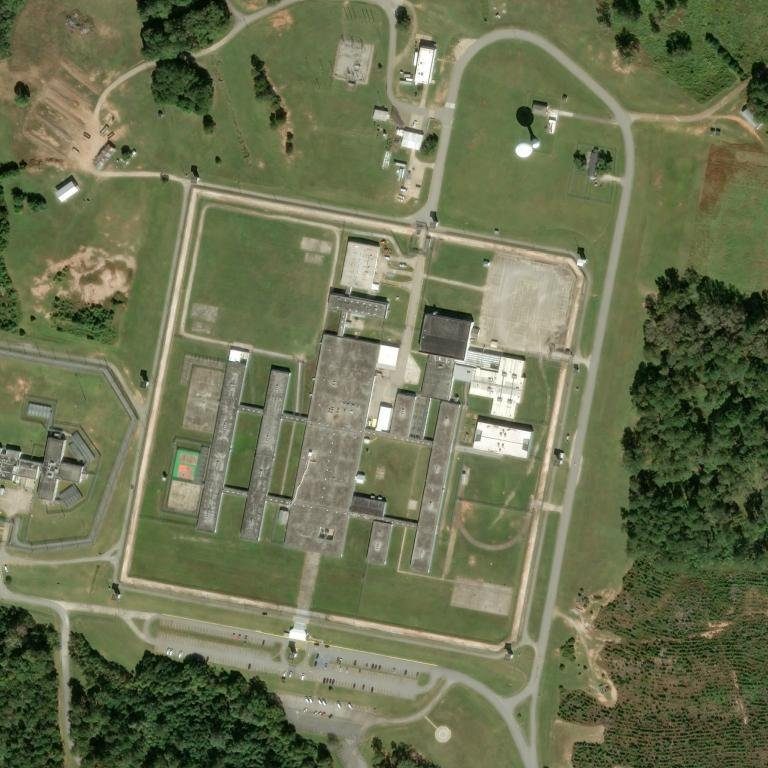
Satellite image: Esri World Imagery. Architecture documents what the building was designed to hold. See the system-wide receipts at gps.press/warehouse.
Then and now
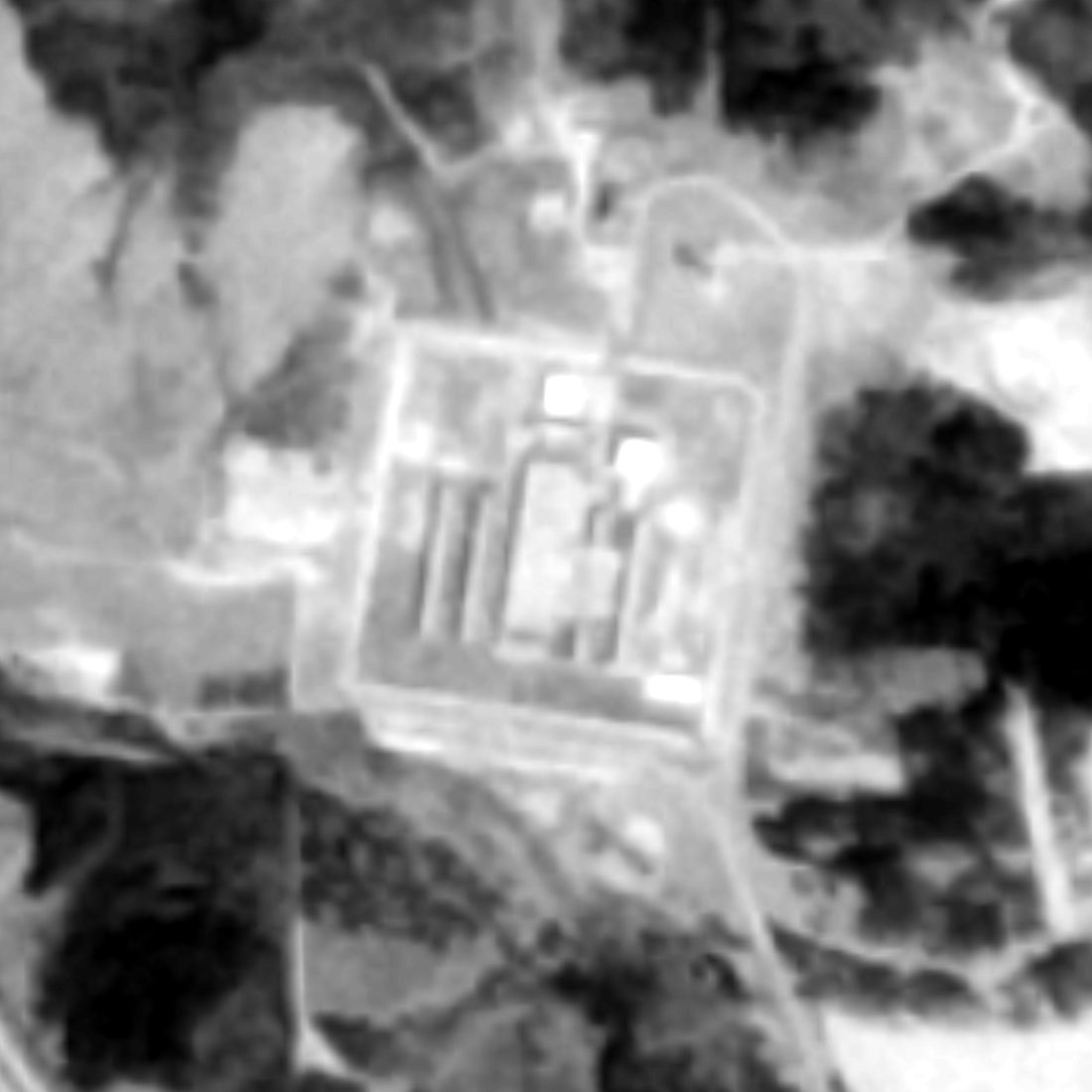
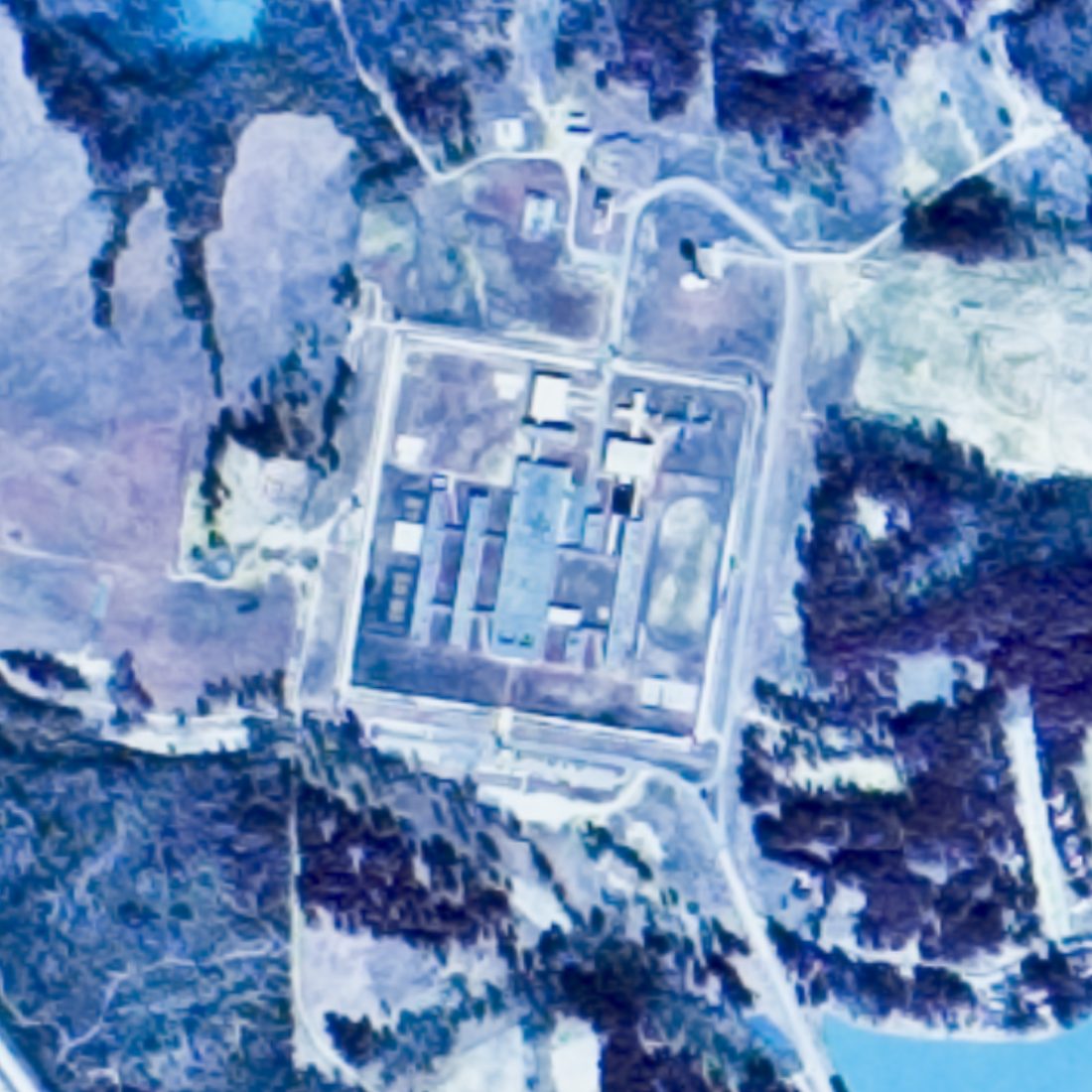
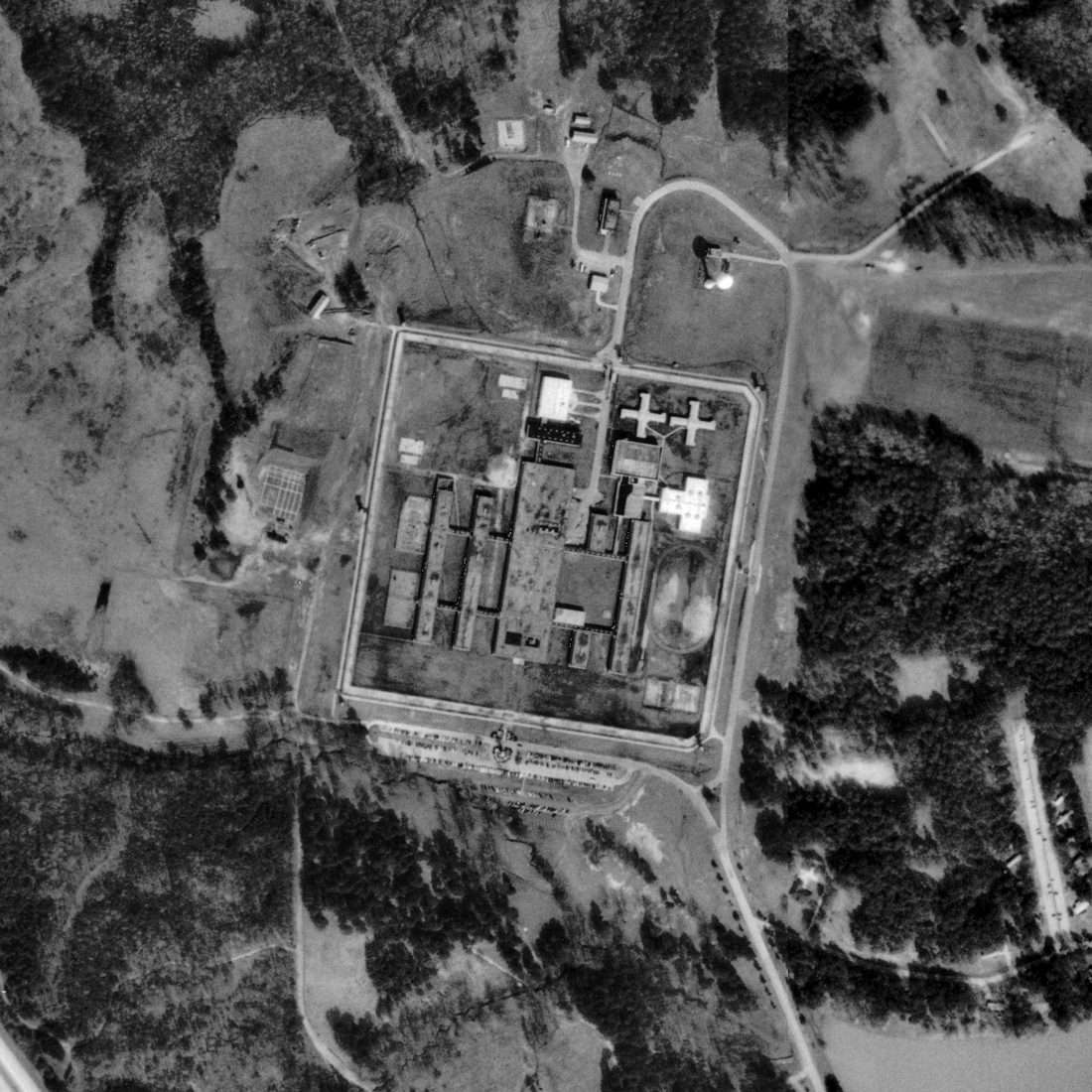
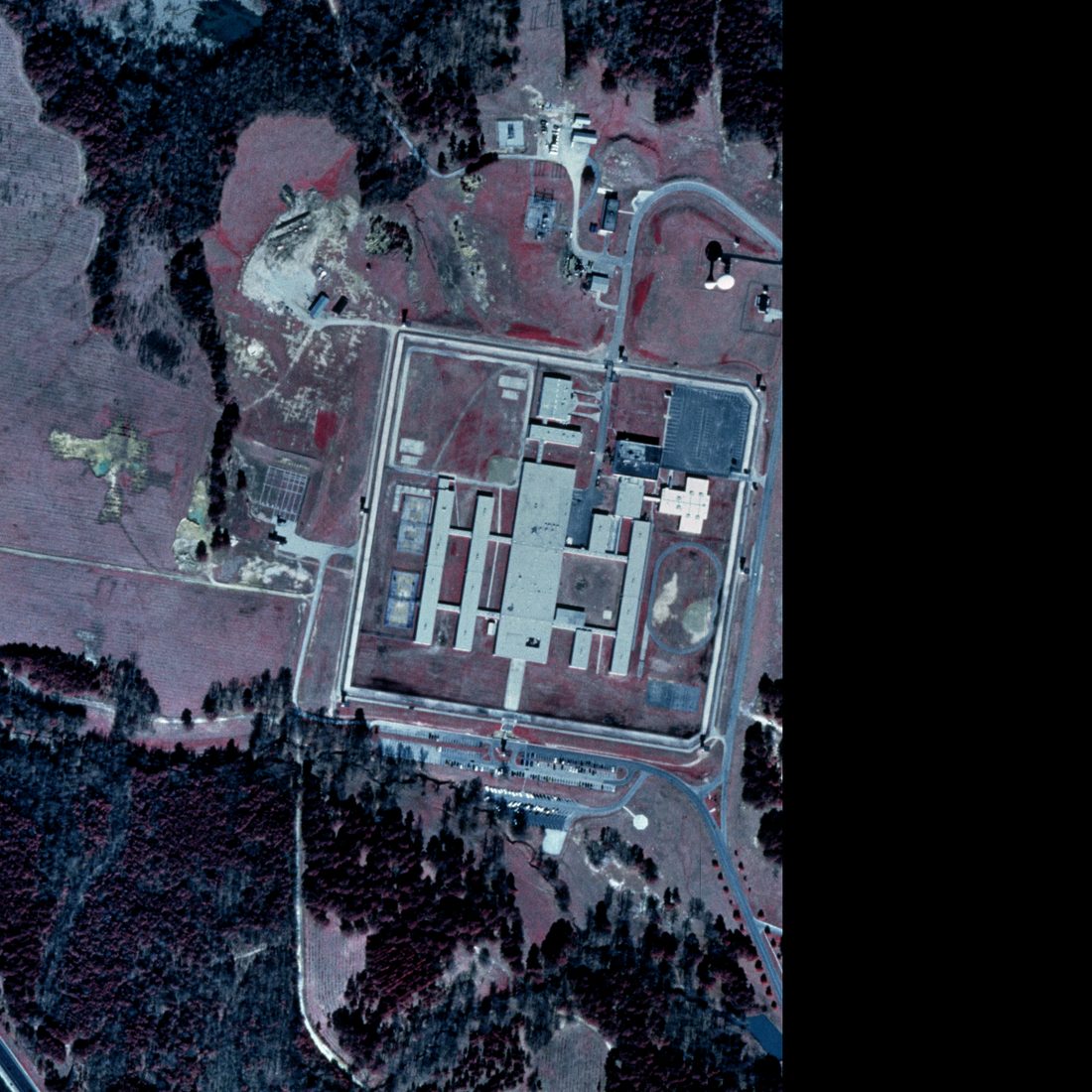
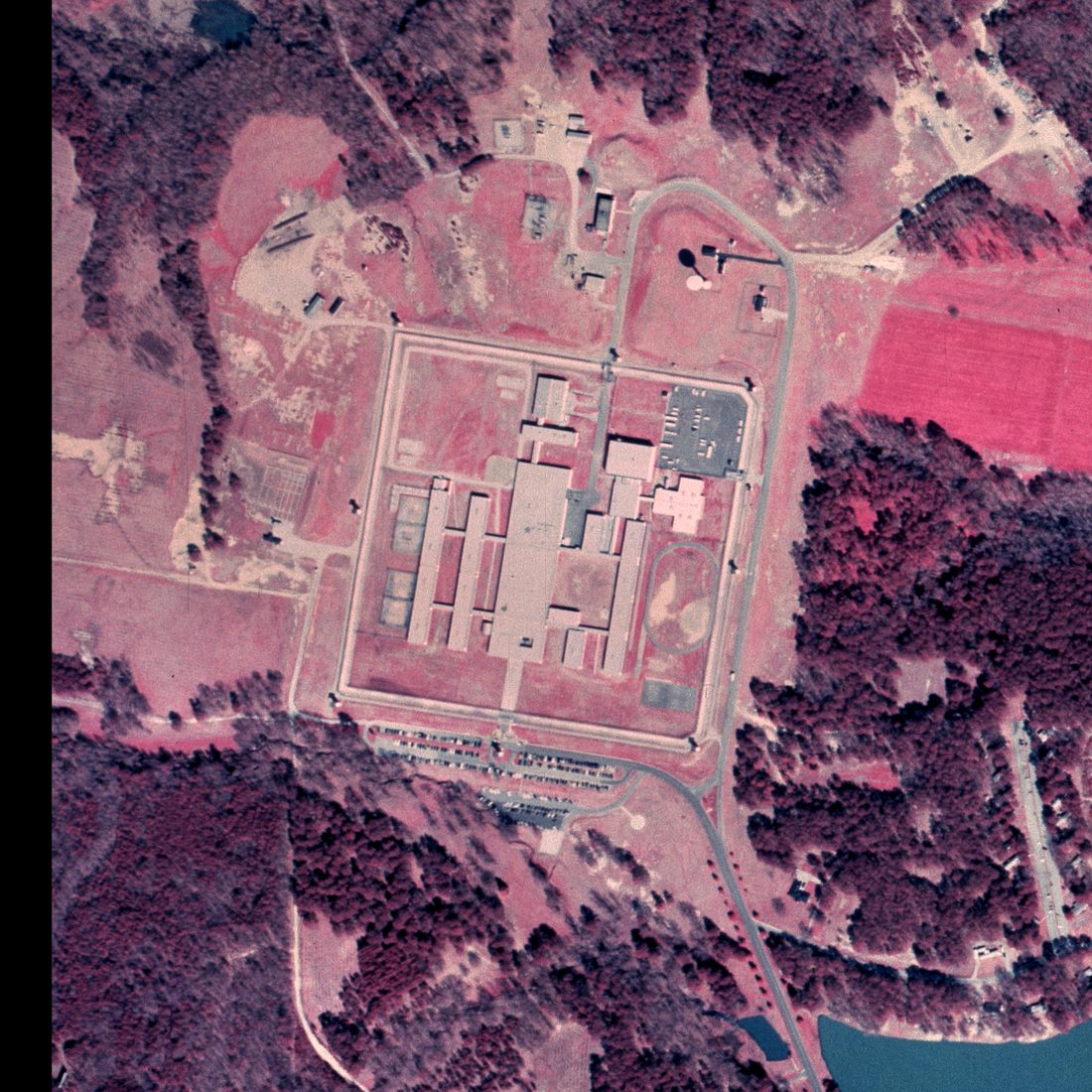
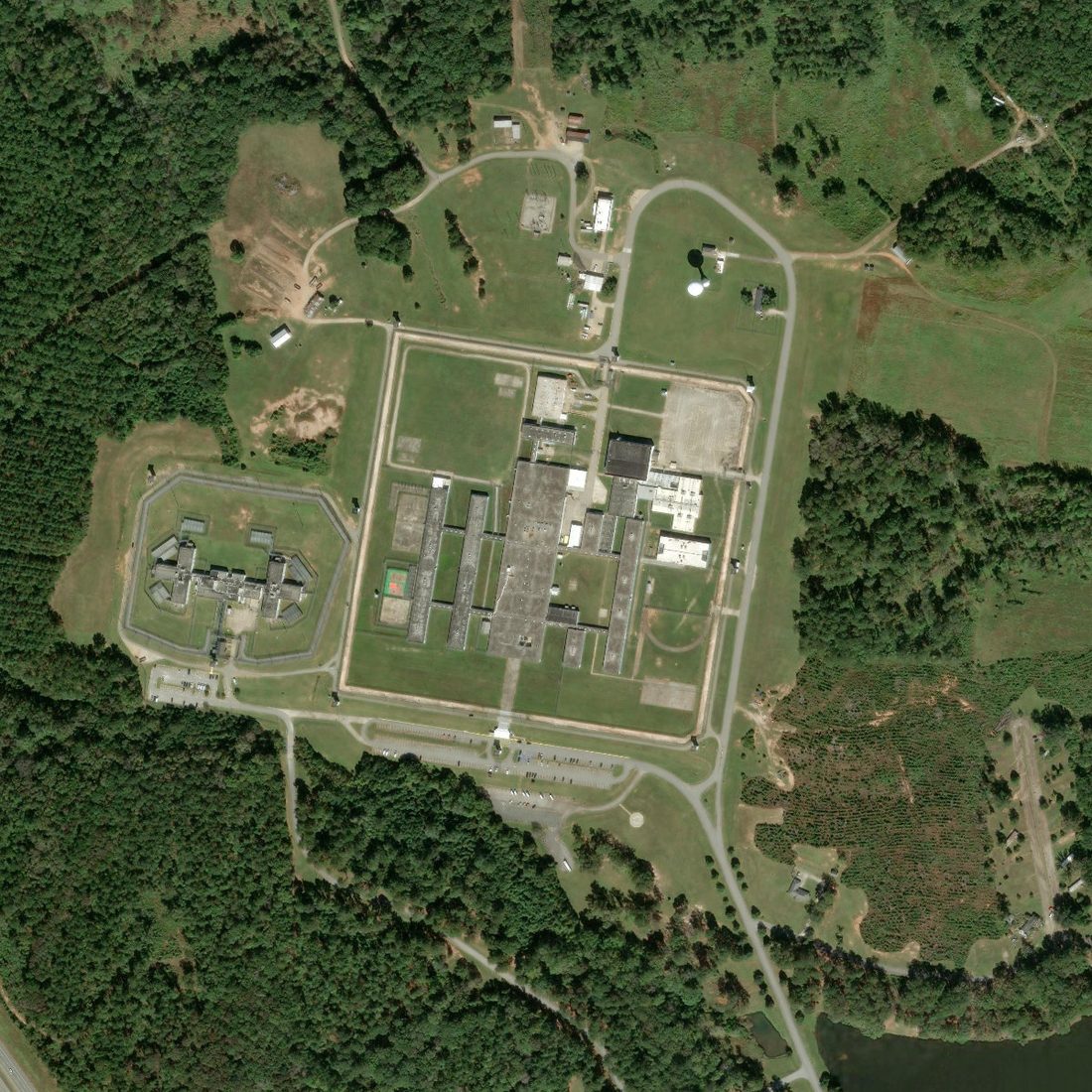
Each photo shows the same 1.2 km square, north up, so buildings line up from one year to the next. The older photos are U.S. Geological Survey aerial photographs. The photos from 1988 and earlier were taken on film and lined up with the later ones by their roads, so their positions are approximate. The early-1980s photos were taken from very high up and are less sharp. Select a photo to see it full size.