PHILLIPS STATE PRISON
Facility Information
- Original Design Capacity
- 600 (at 110% capacity)
- Bed Capacity
- 918 beds
- Current Population
- 660
- Active Lifers
- 167 (25.3% of population) · Oct 2026 GDC report
- Life Without Parole
- 31 (4.7%)
What the courts held in Brown v. Plata, and how Georgia compares →
- Address
- 2989 West Rock Quarry Road, Buford, GA 30519
- Phone
- (770) 932-4500
- Fax
- (770) 932-4544
- County
- Gwinnett County
- Opened
- 1991
- Operator
- GDC (Georgia Dept. of Corrections)
Security Classification
Last updated: September 23, 2026
271 of the 659 people held here are classified Close security (41.1%), as of September 23, 2026.
| Security level | People | Share |
|---|---|---|
| Close | 271 | 41.1% |
| Medium | 372 | 56.4% |
| Minimum | 16 | 2.4% |
| Total | 659 |
Earlier count (undated table, produced October 22, 2025): 274 of 763 Close (35.9%).
Source: Georgia Department of Corrections records produced to GPS under the Open Records Act (R031471-090226, R024615-101925). A person's security level is GDC's classification of that person, which can differ from the prison's own designation.
Follow Phillips State Prison
Leadership & Accountability (as of 2026 records)
Officials currently holding positional authority at this facility, with deaths attributed to GPS-tracked records during their leadership tenure. Inclusion reflects role-based accountability, not legal findings of personal culpability. Death counts shown as facility / career.
| Role | Name | Since | Deaths this facility / career |
|---|---|---|---|
| WARDEN 2 (facility lead) | Pineiro, Aaron Thomas | 2024-06-16 | 33 / 85 |
| Deputy Warden of Security (facility deputy) | Fulbright, Joshua Craig | 2024-10-01 | 22 / 22 |
| Deputy Warden of Administration (facility deputy) | Holloway, Remona Annette | 2025-11-01 | 7 / 70 |
| Deputy Warden of Security (facility deputy) | Andre, Dorothy | 2026-01-16 | 5 / 5 |
About
Last updated October 18, 2026.(DS)
Phillips State Prison: Deaths, Gang Control, and the Bed-Math That Kills
Phillips State Prison sits in Buford, in Gwinnett County — a facility officially classified as close-security for adult male felons, though many sources still call it medium security. It opened in 1991, and its rated capacity is 918 against an original design capacity of 600; GPS's current population figure for the facility is 660, or 71.9 percent of rated capacity. The physical plant is ten housing units mixing two-man and single-man cells, roughly 100 isolation and segregation cells, and a linked transitional center. Phillips has hosted a campus of the New Orleans Baptist Theological Seminary and offers education and faith-based programming. It has also been the site of a sustained pattern of lethal violence, a federal corruption history, and — per GPS's own mortality registry — 69 deaths since January 1, 2020, fourteen of them homicides.
A Death Toll That Keeps Climbing
GPS's mortality registry records 69 deaths at Phillips State Prison since January 1, 2020. The breakdown by cause is 36 natural or medical, 14 homicides, 8 suicides, 5 overdoses, 4 unknown or pending, 1 medical neglect, and 1 accident. That count is a floor: GDC reports deaths roughly two months late, so the true figure is higher.
The most recent deaths GPS has recorded at Phillips include Jacob Ray Nicholson, who died July 13, 2026, at age 29, with a cause listed as unknown or pending; Richard L. Thatcher, who died May 3, 2026, at 58, cause unknown or pending; and Rickie Lynn Rutherford, who died April 18, 2026, at 41, cause unknown or pending. Cornelius Burge died February 11, 2026, at 42, of natural or medical causes; Rodger Scales died February 9, 2026, at 40, natural or medical; and Willie Roseborough died January 13, 2026, at 54, natural or medical. Justin Curtis Kinsey died November 8, 2025, at 37, in an accident; Terry Nichols died October 14, 2025, at 42, by suicide; and Alonzo Carter Jr. died September 20, 2025, at 78, a homicide. Kendrick Keon Scales died August 27, 2025, at 35, of an overdose.
Further back in the registry: Joseph Ulrich died June 1, 2025, at 30, natural or medical; John Dean Tolbert died May 4, 2025, at 69, natural or medical; Taron Edmonds died March 31, 2025, at 32, natural or medical; Christopher Blake Hines died March 24, 2025, at 37, by suicide; Jerry Wayne Spencer died March 10, 2025, at 58, natural or medical; Harry Ray Taldon died February 22, 2025, at 57, natural or medical; Tommye Mobley died February 14, 2025, at 45, natural or medical; and Ricky Ray Breedlove died February 7, 2025, at 71, natural or medical. Thomas Nicely died January 23, 2025, natural or medical; Shun Pinkston died January 18, 2025, natural or medical; William Pate died January 14, 2025, natural or medical; and Jody Stokes died January 13, 2025, a homicide. Eddie Ray Scott died December 19, 2024, at 60, natural or medical; Corey Madison Cochran died December 18, 2024, at 29, a homicide; and Leroy Brooks died December 9, 2024, at 64, cause unknown or pending.
The full registry list is maintained at GPS's facility death page. For system-wide context, GPS has independently tracked 1,918 deaths in GDC custody since 2020.
The 2022 Killing Spree and the Gang War It Ignited
Between June and December 2022, six men died violently at Phillips in a span of under seven months, per the Atlanta Journal-Constitution's homicide-tracking coverage. Jamal Cymonne Johnson, 32, died June 11, 2022, from stab wounds to the head injuring the brain, with delayed effects. Sidney Sanchez Nealey, 22, died July 18, 2022, from stab wounds to the torso. Jacob Kendall Daniels, 19, died August 13, 2022, from a stab wound to the neck, shoulder, and arm. Quafabian Melik McBride, 19, died September 30, 2022, from stab wounds to the chest injuring the heart during a gang-related fight in the lockdown unit — and the AJC reported that officers had arranged for McBride to be brought to that lockdown unit on the day he was killed. Alim Rasheed Lovett, 33, died December 8, 2022, from stab wounds to the back injuring the right lung, with four other prisoners involved according to the incident report.
McBride's death did not stay at Phillips. The AJC, drawing on the DOJ's findings, reported that the killing triggered a gang war at multiple GDC prisons, with Bloods attacking Crips over several days and 20 prisoners hospitalized. The violence at Phillips in 2022 was not an isolated cluster but the flashpoint for a system-wide escalation.
The deaths continued into the following years. Arthur James Wimbush Jr., 46, died April 2, 2023, from blunt force trauma with fracture of the thyroid cartilage. David Fambro, 69, died July 24, 2024, from complications of facial fractures after an interval of 26 days; incident report data shows a homicide. Dave Stone, 61, died November 20, 2021, from closed head trauma with delayed effects — his sister told the AJC he was in a mental health ward when he was assaulted, apparently with two pipes wrapped in a cloth, after which his brain was no longer functioning and he was taken off life support.
Bed Math: When Segregation Is Full and a Man Is Thirty Days From Home
Wimbush's death is the case GPS has examined most closely. GPS's own reporting describes accounts that, two days before Wimbush was killed, the officer in charge of security at Phillips tried to move him to a safe placement and found there was nowhere to put him — every segregation bed was full. The Gwinnett County medical examiner certified the death a homicide. GPS's reporting on the case, published in English and Spanish, frames Georgia's bed arithmetic as the mechanism: a man who needed protecting, thirty days from release, with no cell to move him to.
That account is consistent with what families describe to GPS about segregation capacity at Phillips — recurring reports that administrative segregation beds were full and that people without disciplinary infractions were held in lockdown beds for months for lack of space. GPS has received accounts of in-custody deaths at Phillips in which the person had been moved out of protective segregation before being killed.
A Facility That Houses People Other Prisons Cannot
Multiple accounts collected by GPS describe Phillips as a facility that has historically housed individuals who could not be safely placed at other facilities — a receiving point for people other prisons would not keep. Those accounts describe a Special Management Unit, a dedicated mental health unit, a protective custody unit, and an Intensive Protective Custody unit operating at the facility. GPS has received accounts that roughly 40 percent of the population at Phillips is classified at mental health Levels 3 and 4.
GPS has received accounts of sexual violence at Phillips, including an allegation that a person was moved from mental health to general population after a payment, and an allegation that a sexual assault involving multiple individuals was videotaped. GPS has also received accounts of staff-on-inmate misconduct and of retaliation against people who tried to protect others. These are allegations GPS has received; they have not been independently corroborated in the public record.
Contraband, Corruption, and the Federal Record
Phillips has a documented history of federal corruption prosecutions over officers trafficking contraband and drugs, and the facility has been publicly associated with Operation Ghost Guard. The state's own liability ledger reflects the cost of what happens inside: a $700,000 settlement to Demitri Carter tied to a 2017 incident at Phillips, a $5,000 settlement to Steven A. Whitt tied to a 2019 incident, and a $2,500 settlement to Terry Allen tied to a 2018 incident, per the Georgia Department of Audits and Accounts Risk Management settlement ledger obtained through open records.
The broader federal record is stark. A DOJ investigation cited Eighth Amendment violations at Phillips State Prison in October 2024. That finding sits inside a system-wide conclusion: the October 2024 DOJ findings letter stated that "the leadership of the Georgia Department of Corrections has lost control of its facilities," faulted GDC for placing "too much blame on gangs and insufficient emphasis on understaffing," and concluded that sexual assault in GDC facilities is "rampant." Of 456 sexual-abuse allegations recorded in 2022, only 35 were substantiated — 7.7 percent. GDC's own consultants, PREA Auditors of America, reviewed 388 PREA investigation files in May 2022 and found that not one met the law's standards.
Staffing Collapse as the Force Multiplier
GPS treats staffing collapse and gang assumption of facility control as the integrated structural finding that explains the per-facility violence, classification, and mortality narratives — and Phillips fits the pattern. Officer vacancies in Georgia's prisons have run between 49.3 percent and 60 percent systemwide for multiple years, against a national standard of no more than 10 percent. The hiring pipeline cannot close the gap: acceptance rate under 15 percent, and 82.7 percent of new hires leave in their first year. Georgia ranks last of 50 states for correctional-officer pay. Approximately 31 percent of the system's roughly 49,000 incarcerated population are validated members of 315 different security threat groups — more than double the national average — and both DOJ and the Guidehouse 2024 consultant assessment independently concluded that gangs effectively run multiple facilities, controlling access to phones, showers, food, and bed assignments.
GPS has documented that most GDC facilities are 30 to 40-plus years old, with deferred maintenance producing systemwide infrastructure failures — broken cell-door locks, inoperative surveillance and fire-alarm systems, mold and water failures, and pest infestations. Phillips, opened in 1991, is inside that cohort. A former Phillips resident, Harold Lamon Slaughter, wrote on Facebook on September 3, 2026, that in 2024, two days before his release date, another person set a cell on fire beneath his and it took officers 30 to 45 minutes to arrive and begin letting people out — an account he offered in his own words, not a GPS finding.
Families, the Ombudsman, and the Silence After
The families of people who die at Phillips describe a system that does not call back. Renee Johnson wrote on Facebook on September 23, 2026, that her son was killed at Phillips State Prison in 2017 and that "Nobody ever called me back or your wrote me." GPS records show four external complaints filed to the Georgia prison ombudsman in the twelve months through September 2026, three of them concentrated in September 2026 alone.
GPS staff have acknowledged a current gap in firsthand source intelligence coverage at Phillips State Prison — a candid admission that the public record here is thinner than the death count warrants. What the record does show is a facility where 69 people have died since 2020, where a nineteen-year-old was walked into a lockdown unit on the day he was stabbed, where a man thirty days from release was killed because no segregation bed existed, and where the state's own Justice Department found the system's leadership had lost control.
Sources
This analysis draws on the Atlanta Journal-Constitution's homicide-tracking coverage of GDC deaths and its reporting on the DOJ findings; the U.S. Department of Justice's October 2024 findings letter on Georgia's prison system; the Georgia Department of Audits and Accounts Risk Management settlement ledger obtained through open records; the Guidehouse 2024 consultant assessment; GPS's mortality registry and facility records; GPS's own investigative reporting on the Wimbush case and on classification, staffing, and infrastructure patterns across GDC facilities; a Tell My Story narrative published by Georgia Prisoners' Speak; and public Facebook comments by Renee Johnson and Harold Lamon Slaughter, cited as their own accounts.
Mortality Statistics
69 deaths documented at this facility from 2020 to present.
Deaths by Year
- 2026: 6
- 2025: 16
- 2024: 18
- 2023: 5
- 2022: 10
- 2021: 11
- 2020: 3
County Public Health Department
Food service and sanitation at PHILLIPS STATE PRISON fall under the jurisdiction of the Gwinnett County Environmental Health Department. Incarcerated people cannot choose where they eat — public health inspectors carry an elevated responsibility to hold this kitchen to the same standards applied to any restaurant.
Contact
- Title
- Director of Environmental Health, GNR Public Health (Gwinnett/Newton/Rockdale)
- Name
- Jason Reagan, REHS, CP-FS, CSC
- Address
-
455 Grayson Hwy, Suite 600
Lawrenceville, GA 30046 - Phone
- (770) 963-5132
- jason.reagan@gnrhealth.com
- Website
- Visit department website →
Why this matters
GPS has documented black mold on chow-hall ceilings, cold and contaminated trays, spoiled milk, and pest contamination at Georgia prisons. The Department of Justice's 2024 report confirmed deaths from dehydration and untreated diabetes tied to food and water deprivation. Advance-notice inspections let facilities stage temporary fixes that disappear once inspectors leave.
Unannounced inspections by the county health department are one of the few outside checks on kitchen conditions behind the fence.
How you can help
Write to the county inspector and request an unannounced inspection of the kitchen and food service operation at this facility. A short, respectful letter citing Georgia food-safety regulations is more powerful than you think — inspectors respond to public concern.
Sample Letter
This is the letter Georgia Prisoners' Speak mailed to all county environmental health inspectors responsible for GDC facilities. Feel free to adapt it.
October 24, 2026
RE: Request for Unannounced Public Health Inspection of Food Service Operations at PHILLIPS STATE PRISON
Dear Jason Reagan, REHS, CP-FS, CSC,
I am writing to respectfully request that your office conduct a thorough, unannounced inspection of food service and sanitation practices at PHILLIPS STATE PRISON, located in Gwinnett County.
Documented concerns
Georgia Prisoners' Speak, a 501(c)(3) nonprofit investigative newsroom, has published extensive investigative reporting on food safety and nutrition failures across Georgia's prison system, including:
- Dangerous sanitation conditions — black mold on chow hall ceilings and air vents, contaminated food trays, and spoiled milk served to inmates.
- Severe nutritional deficiency — roughly 60 cents per meal; inmates receive only 40% of required protein and less than one serving of vegetables per day.
- Preventable deaths — the U.S. Department of Justice's 2024 report confirmed deaths from dehydration, renal failure, and untreated diabetes following food and water deprivation.
- Staged compliance — advance-notice inspections allow facilities to stage temporary improvements, then revert once inspectors leave.
Firsthand testimony
In Surviving on Scraps: Ten Years of Prison Food in Georgia, a person who has spent more than ten years in GDC custody describes no functional dishwashing sanitation, chronic mold on food trays, and roaches found on the undersides of trays at intake facilities. Full account: gps.press/surviving-on-scraps-ten-years-of-prison-food-in-georgia.
Specific requests
- Conduct an unannounced inspection of the kitchen and food service operations at this facility, with particular attention to dishwashing equipment, tray sanitation procedures, and food storage conditions.
- Evaluate compliance with applicable Georgia food safety regulations, including O.C.G.A. § 26-2-370 and the Georgia Food Service Rules and Regulations (Chapter 511-6-1).
- Verify permit status and confirm whether the facility is subject to the same inspection schedule as other institutional food service establishments in the county.
- Make inspection results available to the public, as permitted under Georgia's Open Records Act (O.C.G.A. § 50-18-70).
Incarcerated individuals cannot advocate for their own health and safety in the way a restaurant patron can — they cannot choose to eat elsewhere. This places an elevated responsibility on public health officials to ensure these facilities meet the same sanitation standards applied to any food service establishment.
Thank you for your attention to this important public health matter.
Sincerely,
[Your name]
Food Safety Inspections
No inspection records are on file with the Georgia Department of Public Health for this facility. GPS has filed an open records request asking where these records are maintained.
What the score doesn't measure. DPH grades kitchen compliance on inspection day — food storage, temperatures, pest control. It does not grade whether today's trays are clean. GPS reporting has found broken dishwashers at most Georgia state prisons we've documented; trays go out wet, stacked, and visibly moldy — including at facilities with recent scores near 100.
Who inspects. Most Georgia state prisons sit in rural counties — often with fewer than 20,000 people, several with fewer than 10,000. The environmental health inspector lives in that community and often knows the kitchen staff personally. Rural inspection regimes don't have the structural independence you'd expect in a city-sized health department. Read the scores accordingly.
Read the investigation: “Dunked, Stacked and Served: Why Georgia Prison Trays Are Making People Sick”
Recent reports (4)
Source-attributed observations and allegations from news coverage and reports submitted to GPS. Each entry credits its source.
- ALLEGATION According to Atlanta Journal-Constitution Published: Jan 21, 2025Officers allegedly arranged for McBride to be brought to the lockdown unit on the day he was killed in a gang-related stabbing.
"McBride was housed elsewhere in the prison and had been brought to lockdown that day through the arrangements of officers."
Read source → - ALLEGATION According to Atlanta Journal-Constitution Published: Jan 21, 2025Dave Stone was allegedly assaulted while in a mental health ward, apparently with two pipes wrapped in a cloth, resulting in brain death.
"His sister told the AJC that he was in a mental health ward when he was assaulted, apparently with two pipes wrapped in a cloth. After the attack, his brain was no longer functioning and he was taken off life support, she said."
Read source →
Timeline (19)
Source Articles (14)
Former leadership
Officials who previously held leadership roles at this facility.
| Role | Name | Tenure | Deaths this facility / career |
|---|---|---|---|
| Warden (facility lead) | Jones, Deshawn B | 2022-01-01 → 2024-06-15 | 22 / 138 |
| Correctional Superintendent (facility lead) | Baly, Verona | 2023-11-22 → 2026-08-27 | — / — |
| DEPUTY WARDEN (facility deputy) | McDay, Courtney | 2022-01-01 → 2025-12-31 | 49 / 49 |
| Correctional Asst. Supt (facility deputy) | Brown, Wanda S | 2023-11-22 → 2023-11-22 | — / 2 |
| Deputy Warden (facility deputy) | Polite, Joseph L | 2023-11-22 → 2023-11-22 | — / — |
| Deputy Warden of Administration (facility deputy) | Dills, Allen L | 2012-01-01 → 2012-12-31 | — / 32 |
| Chaplain (specialty lead) | Footmon, Darryl | 2026-08-27 → 2026-08-27 | — / — |
| Chaplain (specialty lead) | Harris, Stacey D | 2023-11-22 → 2023-11-22 | — / — |
| Chaplain (specialty lead) | Stacy, Matt | 2023-11-22 → 2023-11-22 | — / — |
Location
Aerial View
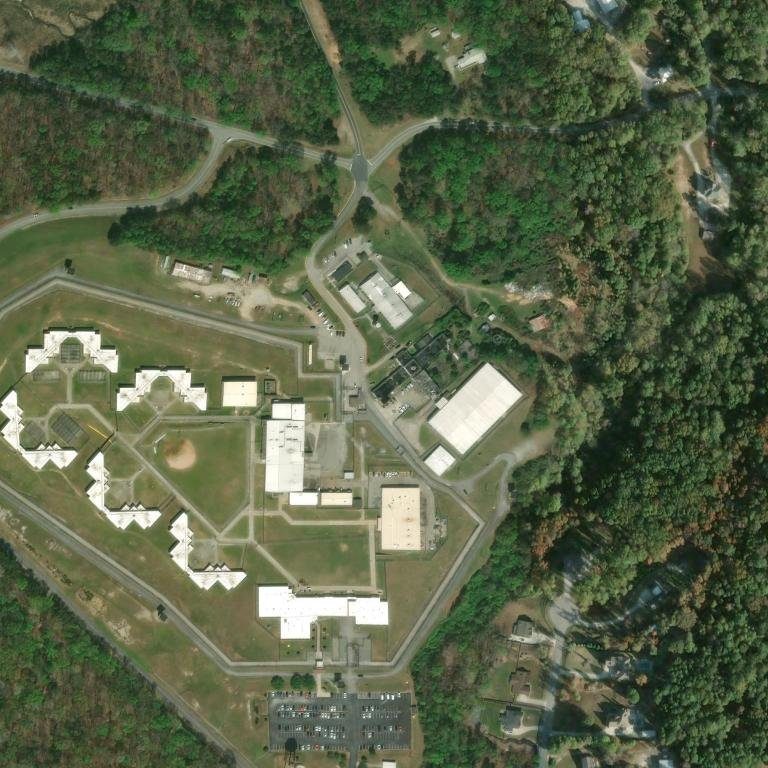
Satellite image: Esri World Imagery. Architecture documents what the building was designed to hold. See the system-wide receipts at gps.press/warehouse.
Then and now
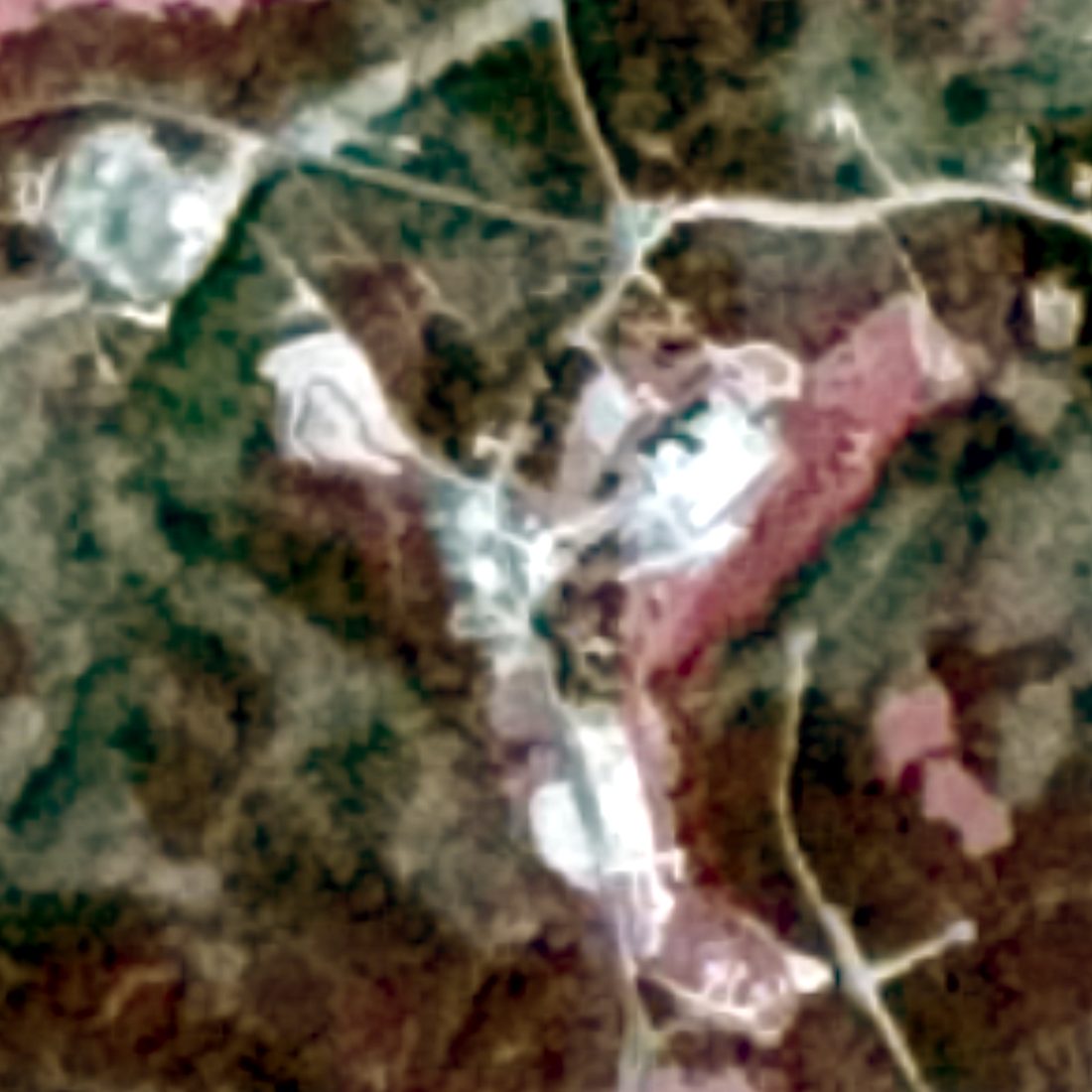
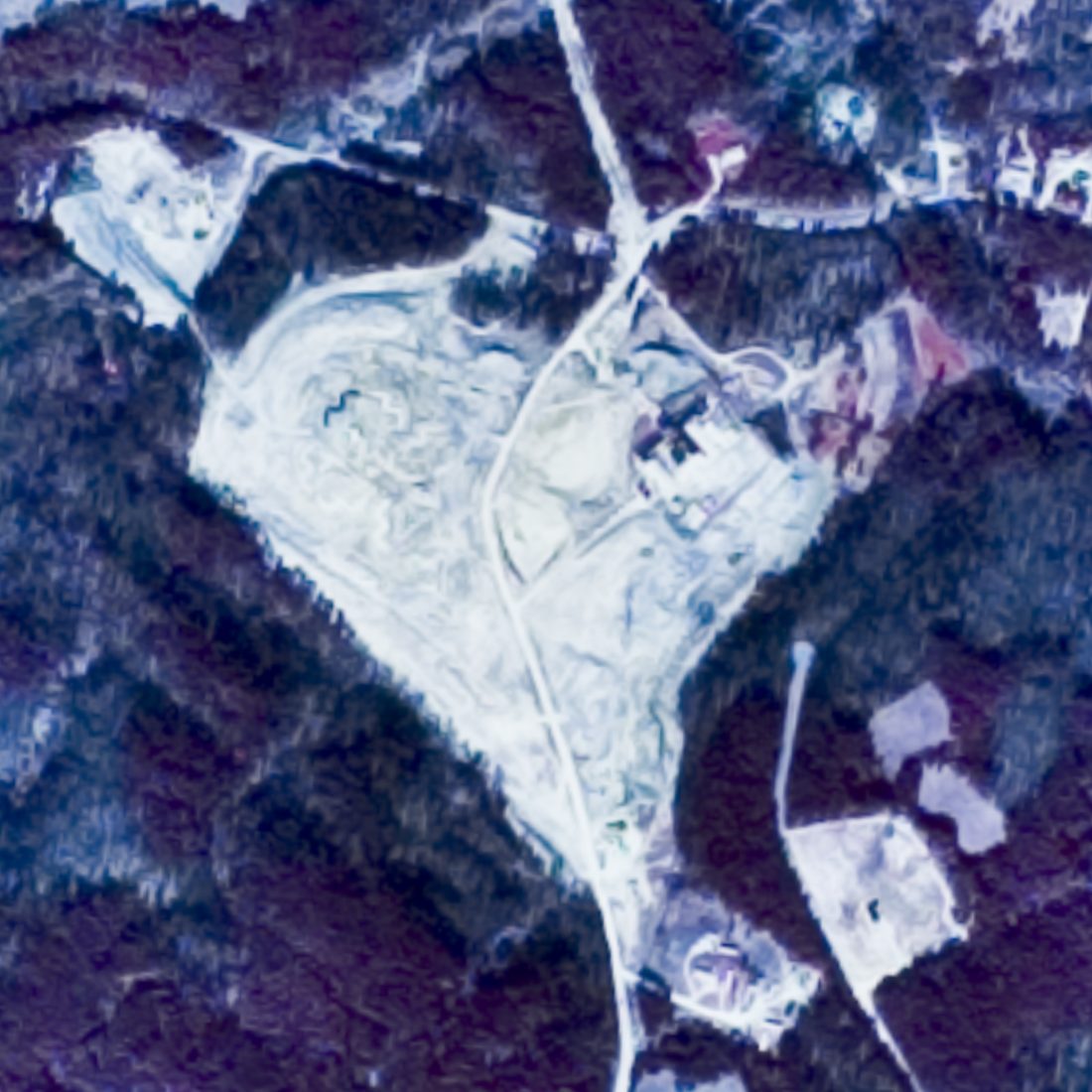
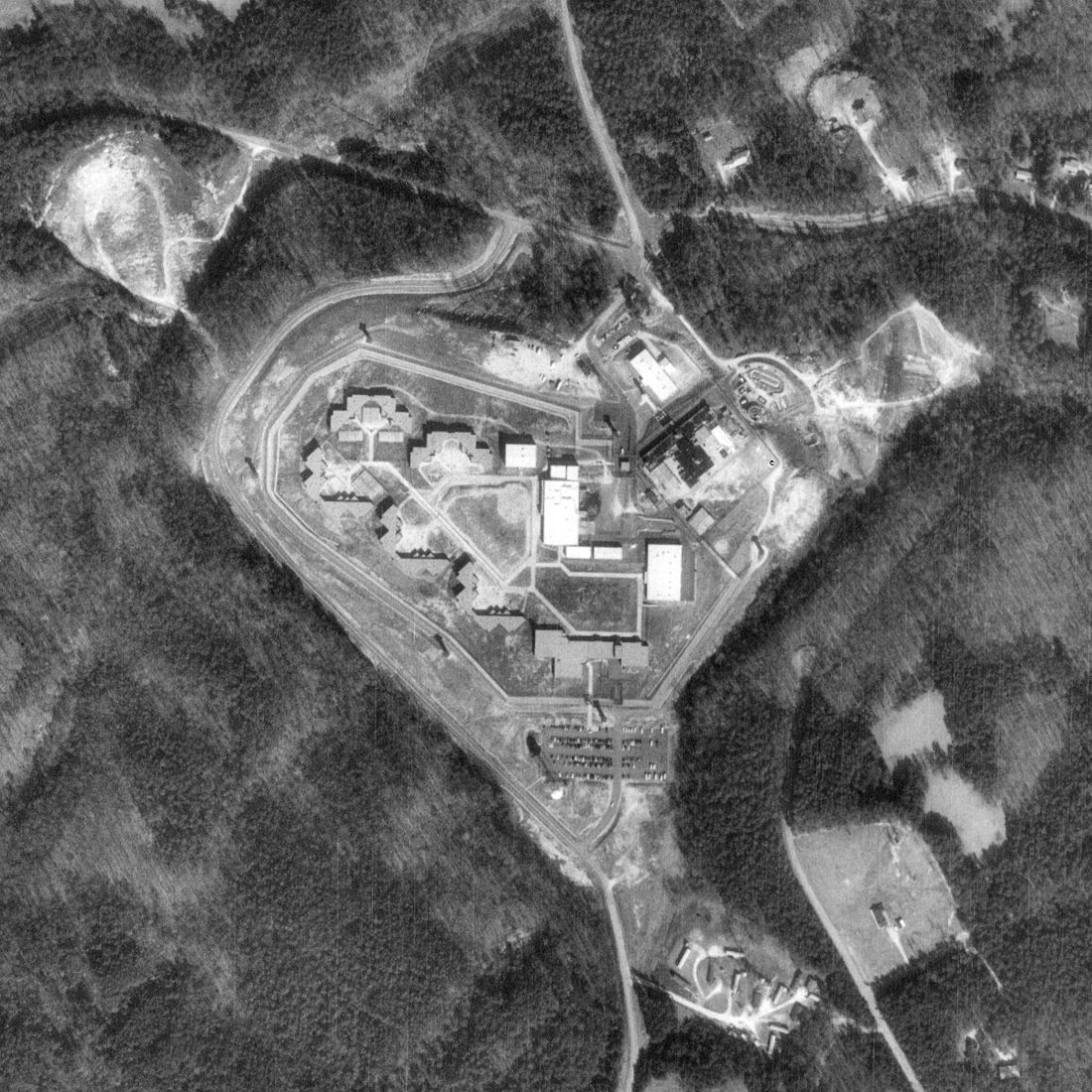
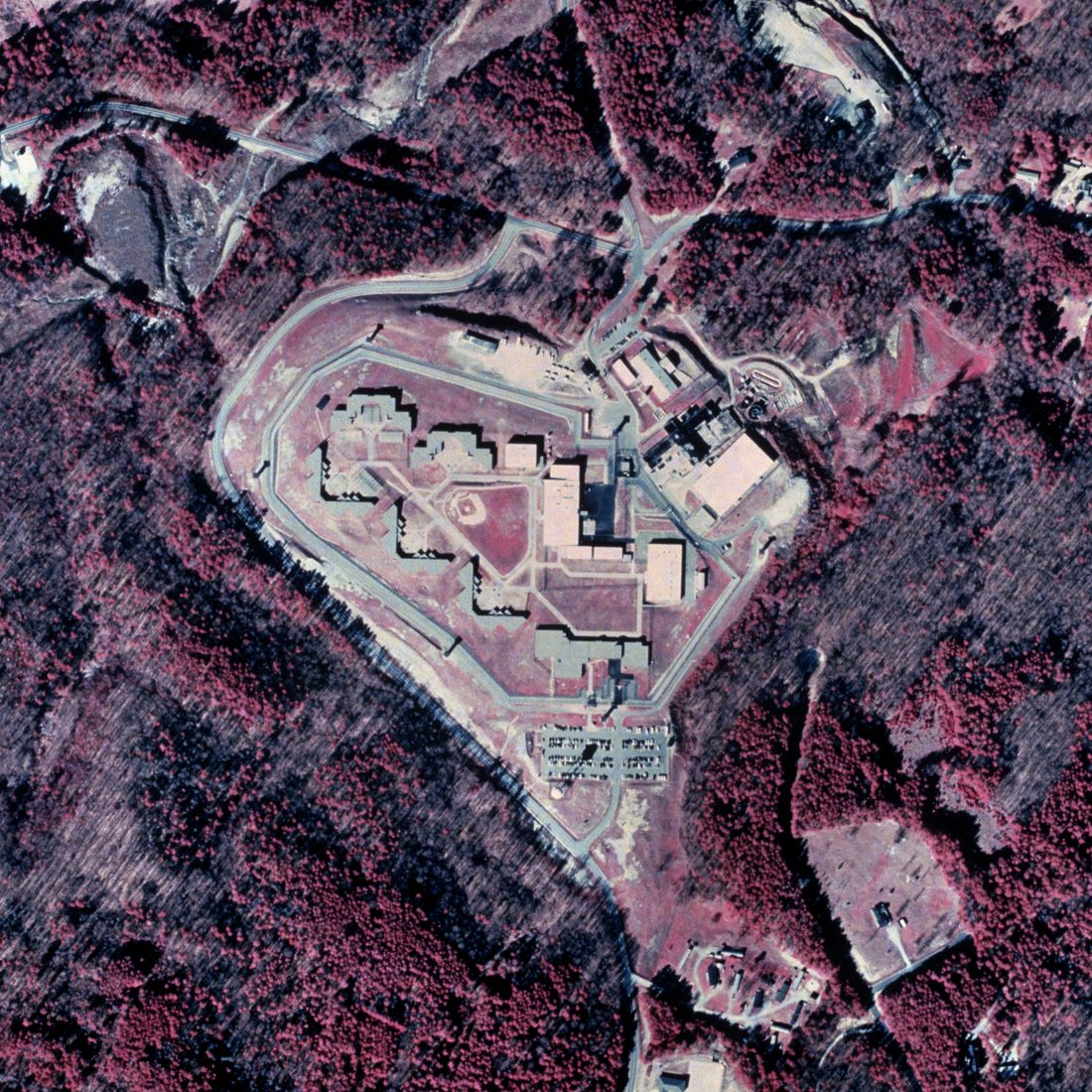
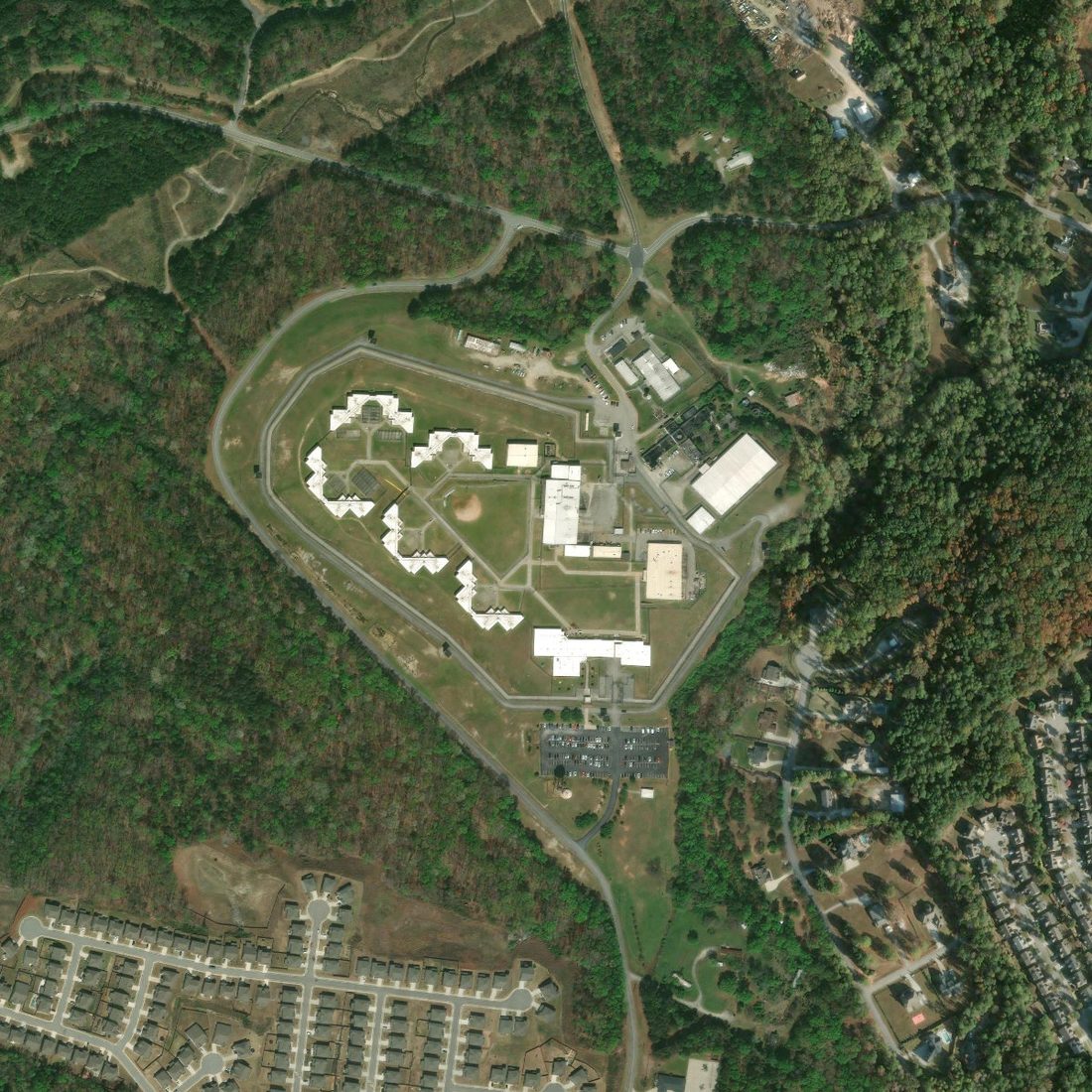
Each photo shows the same 1.2 km square, north up, so buildings line up from one year to the next. The older photos are U.S. Geological Survey aerial photographs. The photos from 1988 and earlier were taken on film and lined up with the later ones by their roads, so their positions are approximate. The early-1980s photos were taken from very high up and are less sharp. Select a photo to see it full size.