BALDWIN STATE PRISON
Facility Information
- Original Design Capacity
- 660 (at 147% capacity)
- Bed Capacity
- 925 beds
- Current Population
- 969
- Active Lifers
- 158 (16.3% of population) · Oct 2026 GDC report
- Life Without Parole
- 33 (3.4%)
What the courts held in Brown v. Plata, and how Georgia compares →
- Address
- 140 Laying Farm Road, Hardwick, GA 31034
- Phone
- (478) 445-6472
- Fax
- (478) 445-6507
- Mailing Address
- P.O. Box 1480, Hardwick, GA 31034
- County
- Baldwin County
- Opened
- 1976
- Operator
- GDC (Georgia Dept. of Corrections)
Security Classification
Last updated: September 23, 2026
301 of the 955 people held here are classified Close security (31.5%), as of September 23, 2026.
| Security level | People | Share |
|---|---|---|
| Close | 301 | 31.5% |
| Medium | 603 | 63.1% |
| Minimum | 51 | 5.3% |
| Total | 955 |
Earlier count (undated table, produced October 22, 2025): 230 of 773 Close (29.8%).
Source: Georgia Department of Corrections records produced to GPS under the Open Records Act (R031471-090226, R024615-101925). A person's security level is GDC's classification of that person, which can differ from the prison's own designation.
Following Baldwin State Prison?
Leadership & Accountability (as of 2026 records)
Officials currently holding positional authority at this facility, with deaths attributed to GPS-tracked records during their leadership tenure. Inclusion reflects role-based accountability, not legal findings of personal culpability. Death counts shown as facility / career.
| Role | Name | Since | Deaths this facility / career |
|---|---|---|---|
| Warden (facility lead) | Ivey, George | 2026-09-06 | — / 15 |
| Deputy Warden of Care and Treatment (facility deputy) | Farmer, Jeffrey A | 2021-01-01 | 60 / 60 |
| Deputy Warden of Administration (facility deputy) | Reaves, Jessica | 2023-11-22 | 33 / 33 |
| Deputy Warden of Security (facility deputy) | Rowland, Brandon Carl | 2024-01-01 | 30 / 30 |
| Deputy Warden of Security (facility deputy) | Walker, Gerald | 2026-04-16 | 5 / 5 |
About
Last updated October 4, 2026.(DS)
Baldwin State Prison: Deaths, Contraband, and a Grievance System That Doesn't Answer
Baldwin State Prison sits in Hardwick, in Baldwin County, part of the Middle Georgia prison complex. It opened in 1976, grew out of the former Georgia Women's Correctional Institution, and was converted to house only men after a major sexual-abuse scandal in the early 1990s involving hundreds of women and multiple prosecutions of staff. Today it is a medium-security facility for adult male felons with a mix of cell and dormitory housing and an adjoining boot-camp unit. Its original design capacity was 660; its current rated capacity is 925. As of GPS's most recent facility record, it holds 836 men — about 90.4 percent of rated capacity. George Ivey has served as warden since September 2026, with deputy wardens Jessica Reaves, Jeffrey A. Farmer, Gerald Walker (Security), and Brandon Carl Rowland.
What follows is an analysis of the record GPS has assembled on Baldwin: a mortality count that runs to 64 deaths since January 2020, a homicide rate that has made the facility a recurring datapoint in Georgia's prison-violence crisis, a federal lawsuit over a 2024 stabbing death that alleges officers stood down, a contraband economy in which staff were convicted of smuggling for a gang leader, and a documented pattern of families and incarcerated people unable to get anyone — the facility, the Ombudsman, or the press — to answer.
Sixty-Four Deaths Since 2020, Eleven Classified as Homicides
GPS's mortality registry records 64 deaths at Baldwin State Prison since January 1, 2020. That figure is a floor, not a ceiling: GDC reports deaths roughly two months late, and the registry counts only what GPS has been able to document. By cause, 43 are classified Unknown/Pending, 11 as Homicide, seven as Natural/Medical, and three as Other.
The yearly distribution shows no abatement. Five deaths were recorded in 2020, nine in 2021, nine in 2022, twelve in 2023, twelve in 2024, six in 2025, and eleven already in 2026. The 2026 count alone exceeds any full year since 2023.
The most recent 25 people in that registry are named below. GPS lists them because the count is not the story — the people are.
- Edward Allen Pitt died July 24, 2026, at Baldwin State Prison; GPS's registry lists the cause as Natural/Medical. He was 65.
- Terry Lee Goolsby died July 15, 2026, at Baldwin State Prison; the cause is Unknown/Pending. He was 45.
- Artinez Rafael Ceaser died July 3, 2026, at Baldwin State Prison; the cause is Unknown/Pending. He was 35.
- Richard Lyle Timmons died May 19, 2026, at Baldwin State Prison; the cause is Unknown/Pending. He was 37.
- James Monroe Dailey died May 10, 2026, at Baldwin State Prison; the cause is Unknown/Pending. He was 64.
- Ricky Carroll Mathis died April 5, 2026, at Baldwin State Prison; GPS's registry lists the cause as Homicide. He was 38.
- Ronald Gene McGhee died March 21, 2026, at Baldwin State Prison; the cause is Unknown/Pending. He was 66.
- Derek Oneal Boyd died March 21, 2026, at Baldwin State Prison; the cause is Unknown/Pending. He was 68.
- Leroy Keye died March 4, 2026, at Baldwin State Prison; the cause is Unknown/Pending. He was 71.
- Melvin A. Greene died January 15, 2026, at Baldwin State Prison; the cause is Unknown/Pending. He was 80.
- Isaac Evan Robinson died January 2, 2026, at Baldwin State Prison; GPS's registry lists the cause as Homicide. He was 41.
- Jack Eubanks died October 24, 2025, at Baldwin State Prison; the cause is Unknown/Pending. He was 73.
- Cedric Phillips died September 14, 2025, at Baldwin State Prison; the cause is Unknown/Pending. He was 48.
- Douglas Jerome Salter died March 27, 2025, at Baldwin State Prison; the cause is Unknown/Pending. He was 87.
- Mark Tyrone Miller died February 7, 2025, at Baldwin State Prison; the cause is Unknown/Pending. He was 62.
- Walter Brown died January 22, 2025, at Baldwin State Prison; the cause is Unknown/Pending.
- Henry Finley died January 19, 2025, at Baldwin State Prison; GPS's registry lists the cause as Homicide.
- Al Mir Harris died December 31, 2024, at Baldwin State Prison; the cause is Unknown/Pending. He was 23.
- James Leon Floyd died October 10, 2024, at Baldwin State Prison; the cause is Unknown/Pending. He was 49.
- Michael Jerome Brown died October 8, 2024, at Baldwin State Prison; the cause is Unknown/Pending. He was 52.
- Jerry W. Hulsey died September 19, 2024, at Baldwin State Prison; the cause is Unknown/Pending. He was 75.
- Richard Lee Davenport died September 2, 2024, at Baldwin State Prison; the cause is Unknown/Pending. He was 64.
- Vincent Reshad Dyer died August 21, 2024, at Baldwin State Prison; GPS's registry lists the cause as Homicide. He was 50.
- Fred Leon Lewis died June 24, 2024, at Baldwin State Prison; the cause is Unknown/Pending. He was 63.
- Tyrone Eugene Level died May 3, 2024, at Baldwin State Prison; the cause is Unknown/Pending. He was 50.
The full registry for this facility is published at https://gps.press/georgia-prison-deaths/facility/baldwin-state-prison/.
A Federal Lawsuit Alleges Four Officers Stood Down
Vincent Reshad Dyer, 50, died on August 21, 2024, from sharp force chest trauma after being stabbed by others with sharp instruments, according to the Atlanta Journal-Constitution's homicide tracking; incident report data shows a homicide, a fight, and contraband. On April 13, 2026, a federal lawsuit was filed in the Middle District of Georgia by Gary Moore accusing four Baldwin State Prison correctional officers of failing to protect Dyer, 13WMAZ reported.
The allegations in that filing are specific. According to 13WMAZ, Dyer reported threats and asked to be moved shortly before his death; an officer allowed other incarcerated people into his dormitory; officers did not respond during or after the attack; and logbook entries failed to accurately document what happened. The same outlet reported that four Baldwin correctional officers failed to protect Dyer from the fatal stabbing.
A separate case, also reported by 13WMAZ, involves Akeim Burgest, who filed a lawsuit in February against an officer and a lieutenant over an alleged shanking. According to the outlet's account of the filing, an officer threw a water bottle at Burgest, then later returned with a shank and stabbed him while a lieutenant stood by and watched, failing to intervene. A federal judge ordered the Georgia Department of Corrections to preserve all records related to the case, including any camera footage.
The two cases share a structural feature worth naming: both allege that the violence was survivable and that the failure was in the response — or the non-response — of the people paid to intervene.
Contraband, Gang Coordination, and Staff on the Payroll
Baldwin's violence has a documented economic layer. In November 2023, the Atlanta Journal-Constitution reported a 12-count federal indictment charging 23 defendants — including 11 incarcerated people and three former correctional officers — with alleged murders, assaults, drug trafficking, and fraud carried out over more than a decade. The same reporting described Ryan Brandt, an incarcerated man, as having allegedly led a criminal enterprise operating inside and outside multiple Georgia prisons, coordinating drug trafficking, murders, and gang discipline.
Baldwin appears in that enterprise directly. The AJC reported that former correctional officer Kierra Williams was alleged to have been instructed by Brandt to smuggle drug-laced sheets into Baldwin State Prison, and that former officer Tracey Wise was alleged to have conspired to possess a controlled substance with intent to distribute while working as a correctional officer, smuggling drug-laced sheets into the prison for Brandt. In February 2021, per the AJC's account, Brandt contacted Wise to coordinate delivery of 50 drug-laced sheets, which were placed in a bag with $4,000 left in a trash can for Wise to retrieve.
Wise's case resolved. The AJC reported that he pleaded guilty and was sentenced to five years' probation, and that he had smuggled K-2-laced papers for Brandt three times, receiving $2,500 each time. In January 2026, the AJC reported that Wise admitted to smuggling the K-2-laced papers for the Bloods gang member three times at that rate.
The contraband problem is not confined to Baldwin. An AJC investigation found that at least 360 Georgia prison employees have been arrested since 2018 on charges related to bringing drugs, cellphones, or other contraband into prisons, and the paper reported that correctional officers across the state allegedly helped incarcerated people carry out violence or drug trafficking by supplying contraband. Prison officials, per the AJC, acknowledge that contraband fuels violence among incarcerated people. Advocates told the paper that incarcerated people are not adequately protected from violence because the state lacks sufficient officers to keep watch and intervene effectively.
Extortion by Phone, and a Grievance System That Doesn't Answer
GPS staff have observed a pattern at Baldwin consistent with organized extortion activity: incarcerated individuals or their families report repeated phone-based demands for money accompanied by threats of physical violence. GPS staff note the pattern is consistent with extortion operations coordinated via contraband cell phones inside Georgia prisons — the same contraband economy documented in the federal smuggling cases above.
Families who try to escalate run into a wall. GPS staff observed that outreach attempts to Baldwin State Prison, the Ombudsman, and media outlets went unanswered, consistent with systemic grievance-access failure patterns documented at Georgia facilities. GPS records show six grievance-obstruction signals at this facility over the past twelve months across four months, and five signals of contact with family severed across three months.
The aggregate picture from GPS's intelligence system over the last year is of a facility where families cannot get through and fear the worst. GPS records eight family-fear-for-life signals across six months, six family-safety-concern signals, and ten external complaints filed — to the DOJ Civil Rights Division, the GDC Ombudsman, the Georgia Ombudsman, the GDC Southeast Region, and the U.S. District Court for the Middle District of Georgia, among others. Five media-outreach attempts were logged, to 13WMAZ and to Georgia Prisoners' Speak.
GPS has received accounts of inmate-on-inmate assault at Baldwin, and records eleven assault-by-inmate signals over the past twelve months across seven months, with a concentration in August 2026. GPS has also received accounts of medical neglect at the facility; the intelligence system records ten medical-neglect signals across five months, with a February 2026 concentration. Four PREA-violation signals are recorded across two months. None of these are individual incidents — each bucket represents at least three distinct sources.
Deaths That Drew Investigations, and One That Drew a Conviction
Several Baldwin deaths have generated official inquiries. Ricky Mathis died April 5, 2026, at Baldwin State Prison; the GDC reported no signs of altercation and the cause of death has not been released pending investigation. The GDC's Office of Professional Standards opened an investigation as standard procedure, and the body was sent to the GBI crime lab to determine the official cause. GPS's registry classifies Mathis's death as a homicide.
Johnny Lee Vaughn, 39, died on October 4, 2023, from a stab wound to the torso after a fight involving multiple inmates, per the Atlanta Journal-Constitution. His death was investigated by the GDC's Office of Professional Standards, with autopsy results pending from the Georgia Bureau of Investigation. In May, a Baldwin County jury convicted Traquan Bangs of malice murder for the stabbing; he was sentenced to life without parole plus five years, 13WMAZ reported.
Fredrick Louis Spears Jr., 27, died on May 2, 2023, from a stab wound to the torso. Bedarius Clark, 26, was found unresponsive in the prison's segregation unit on August 21, 2021; the GDC described the death as an assault. Edward Jamar McCloud, 40, died July 23, 2021, from a sharp force injury to the neck. Jose Martin Ibarra Garcia, 41, died June 15, 2021, from multiple stab wounds to the head, torso, and extremities.
Jamari McClinton was 21 when he was stabbed and killed on August 11, 2021 — five days after being transferred from Phillips State Prison, where he had been in protective custody following gang threats. The AJC reported that his protection was removed upon transfer. Joshua Emanuel Williams, 22, died July 3, 2020, from multiple sharp force injuries; a lawsuit filed by his mother alleges he was placed in a cell with an incarcerated person who had previously stabbed other inmates.
A 33-year-old incarcerated man was found dead alone in his cell at Baldwin, pronounced dead around 7 p.m. on a Friday with the time of death determined to be several hours earlier; an autopsy was scheduled at the GBI Crime Lab. The Baldwin County Coroner's Office and the GDC's Professional Standards Office investigated.
Settlements, an Escape, and a Death in Custody
Georgia's Open Records settlement ledger records three liability payouts tied to Baldwin State Prison. The largest is $52,286 in the Chanlez Driskell matter, incident year 2016. Johnnie D. Jackson's 2022 incident produced a $5,000 payout, and Ramon Perez's 2020 incident a $1,000 payout.
In March 2023, William Knight, convicted of manslaughter, fled a work detail at Baldwin State Prison. The AJC noted that the public learned of the escape through a Washington County Sheriff's Office alert rather than a GDC news release.
In October 2023, Correctional Officer Robert Clark, 42, died after inmate Layton Lester assaulted him from behind with a homemade weapon. Lester is serving a life sentence for murder. Clark's death is a reminder that the violence at Baldwin runs in both directions — and that the same contraband-driven weapons economy that killed Vincent Dyer and Johnny Vaughn also killed a corrections officer.
What the Kitchen Scores Don't Show
Baldwin's food-safety record, on paper, is spotless. The Georgia Department of Public Health has scored the facility 100 (Grade A) on routine inspections on September 11, 2023; April 15, 2024; December 20, 2024; June 30, 2025; and December 17, 2025.
GPS has documented a systemic pattern of food-service sanitation failure across GDC kitchens that DPH inspection scores systematically fail to capture: tray-sanitizing dishwashers broken for sustained periods, sustained roach and rodent infestation in kitchen and serving areas, and meals served on visibly contaminated trays. The pattern is hidden from DPH scores because inspections are scheduled walkthroughs that do not assess equipment under load, and because GPS has documented professional overlap between inspectors and facility staff in small-county settings. High DPH scores at GDC facilities coexist with sustained witness reports of equipment failure and food contamination.
The broader context is fiscal. GDC spends approximately $1.69 per person per day on food (2024) and has proposed $1.60 per day in FY27 — under 60 cents per meal — against the FDA Thrifty Food Plan estimate of roughly $10 per day for an adult man's nutritionally adequate diet. The state spends approximately 14 times more on medical care for incarcerated people ($432 million) than on their food. The Marshall Project independently reported on the pattern in May 2026, documenting rats in kitchens, insects in food, moldy trays, and visible malnutrition across Georgia facilities, and quoting GPS connecting chronic underfeeding to the violence pattern the DOJ documented in October 2024.
The Structural Context: Staffing, Gangs, and a System the DOJ Says Has Lost Control
Baldwin's individual incidents sit inside a systemwide failure that GPS treats as the integrated structural finding explaining per-facility violence, classification, mortality, and infrastructure collapse.
Officer vacancies in Georgia's prisons have run between 49.3 percent and 60 percent systemwide for multiple years, against a national standard of no more than 10 percent. The hiring pipeline cannot close the gap: acceptance rate under 15 percent, and 82.7 percent of new hires leave in their first year. Georgia ranks last of 50 states for correctional-officer pay. The October 2024 DOJ findings letter concluded that "the leadership of the Georgia Department of Corrections has lost control of its facilities" and faulted GDC for placing "too much blame on gangs and insufficient emphasis on understaffing." Approximately 31 percent of the system's roughly 49,000 incarcerated population are validated members of 315 different security threat groups — more than double the national average. DOJ and the Guidehouse 2024 consultant assessment independently concluded that gangs effectively run multiple facilities, controlling access to phones, showers, food, and bed assignments.
Most GDC facilities are 30 to 40-plus years old, with documented patterns of deferred maintenance that have produced systemwide infrastructure failures: broken cell-door locks, inoperative surveillance and fire-alarm systems, mold and water failures, broken kitchen sanitization equipment, and pest infestations. Baldwin, opened in 1976, is squarely within that cohort.
Sexual violence in GDC facilities is systemic, per the October 2024 DOJ findings letter, which concluded that sexual assault is "rampant" and that GDC does not reasonably protect incarcerated people, including LGBTI individuals, from sexual harm. Of 456 sexual-abuse allegations recorded in 2022, only 35 were substantiated — 7.7 percent. GDC's own consultants reviewed 388 PREA investigation files in May 2022 and found that not one met the law's standards. Georgia has never submitted a PREA certification of full compliance to the U.S. Department of Justice in the law's two-decade history.
At Baldwin specifically, GPS records four PREA-violation signals over the past two months, and GPS's derived analysis notes a PREA report filed at the facility in 2026 that had reportedly received no response roughly two days later.
Sources
This analysis draws on reporting from the Atlanta Journal-Constitution, 13WMAZ, and The Marshall Project; Georgia Department of Public Health food-safety inspection records; the Georgia Department of Administrative Services Risk Management settlement ledger obtained through Open Records; federal court filings in the Middle District of Georgia; the October 2024 U.S. Department of Justice findings letter and the 2024 Guidehouse assessment; GPS's own mortality registry, which has recorded 64 deaths at Baldwin State Prison since January 1, 2020; GPS's intelligence-system aggregate signal records; and inmate, family, and staff accounts collected by GPS. GPS has independently tracked 1,896 deaths in GDC custody system-wide since 2020.
Mortality Statistics
69 deaths documented at this facility from 2020 to present.
Deaths by Year
- 2026: 16
- 2025: 6
- 2024: 12
- 2023: 12
- 2022: 9
- 2021: 9
- 2020: 5
County Public Health Department
Food service and sanitation at BALDWIN STATE PRISON fall under the jurisdiction of the Baldwin County Environmental Health Department. Incarcerated people cannot choose where they eat — public health inspectors carry an elevated responsibility to hold this kitchen to the same standards applied to any restaurant.
Contact
- Title
- EH County Manager
- Name
- Colin Duke, REHS
- Address
-
P.O. Box 459
Milledgeville, GA 31061 - Phone
- (478) 445-1591
- Colin.Duke@dph.ga.gov
- Website
- Visit department website →
Why this matters
GPS has documented black mold on chow-hall ceilings, cold and contaminated trays, spoiled milk, and pest contamination at Georgia prisons. The Department of Justice's 2024 report confirmed deaths from dehydration and untreated diabetes tied to food and water deprivation. Advance-notice inspections let facilities stage temporary fixes that disappear once inspectors leave.
Unannounced inspections by the county health department are one of the few outside checks on kitchen conditions behind the fence.
How you can help
Write to the county inspector and request an unannounced inspection of the kitchen and food service operation at this facility. A short, respectful letter citing Georgia food-safety regulations is more powerful than you think — inspectors respond to public concern.
Sample Letter
This is the letter Georgia Prisoners' Speak mailed to all county environmental health inspectors responsible for GDC facilities. Feel free to adapt it.
October 9, 2026
RE: Request for Unannounced Public Health Inspection of Food Service Operations at BALDWIN STATE PRISON
Dear Colin Duke, REHS,
I am writing to respectfully request that your office conduct a thorough, unannounced inspection of food service and sanitation practices at BALDWIN STATE PRISON, located in Baldwin County.
Documented concerns
Georgia Prisoners' Speak, a 501(c)(3) nonprofit investigative newsroom, has published extensive investigative reporting on food safety and nutrition failures across Georgia's prison system, including:
- Dangerous sanitation conditions — black mold on chow hall ceilings and air vents, contaminated food trays, and spoiled milk served to inmates.
- Severe nutritional deficiency — roughly 60 cents per meal; inmates receive only 40% of required protein and less than one serving of vegetables per day.
- Preventable deaths — the U.S. Department of Justice's 2024 report confirmed deaths from dehydration, renal failure, and untreated diabetes following food and water deprivation.
- Staged compliance — advance-notice inspections allow facilities to stage temporary improvements, then revert once inspectors leave.
Firsthand testimony
In Surviving on Scraps: Ten Years of Prison Food in Georgia, a person who has spent more than ten years in GDC custody describes no functional dishwashing sanitation, chronic mold on food trays, and roaches found on the undersides of trays at intake facilities. Full account: gps.press/surviving-on-scraps-ten-years-of-prison-food-in-georgia.
Specific requests
- Conduct an unannounced inspection of the kitchen and food service operations at this facility, with particular attention to dishwashing equipment, tray sanitation procedures, and food storage conditions.
- Evaluate compliance with applicable Georgia food safety regulations, including O.C.G.A. § 26-2-370 and the Georgia Food Service Rules and Regulations (Chapter 511-6-1).
- Verify permit status and confirm whether the facility is subject to the same inspection schedule as other institutional food service establishments in the county.
- Make inspection results available to the public, as permitted under Georgia's Open Records Act (O.C.G.A. § 50-18-70).
Incarcerated individuals cannot advocate for their own health and safety in the way a restaurant patron can — they cannot choose to eat elsewhere. This places an elevated responsibility on public health officials to ensure these facilities meet the same sanitation standards applied to any food service establishment.
Thank you for your attention to this important public health matter.
Sincerely,
[Your name]
Food Safety Inspections
Georgia Department of Public Health
What the score doesn't measure. DPH grades kitchen compliance on inspection day — food storage, temperatures, pest control. It does not grade whether today's trays are clean. GPS reporting has found broken dishwashers at most Georgia state prisons we've documented; trays go out wet, stacked, and visibly moldy — including at facilities with recent scores near 100.
Who inspects. Most Georgia state prisons sit in rural counties — often with fewer than 20,000 people, several with fewer than 10,000. The environmental health inspector lives in that community and often knows the kitchen staff personally. Rural inspection regimes don't have the structural independence you'd expect in a city-sized health department. Read the scores accordingly.
Read the investigation: “Dunked, Stacked and Served: Why Georgia Prison Trays Are Making People Sick”
Recent inspections
| Date | Score | Purpose | |
|---|---|---|---|
| Aug 25, 2026 | 100 | Routine | |
| Dec 17, 2025 | 100 | Routine | |
| Jun 30, 2025 | 100 | Routine | |
| Dec 20, 2024 | 100 | Routine | |
| Apr 15, 2024 | 100 | Routine | |
| Sep 11, 2023 | 100 | Routine |
August 25, 2026 — Score 100
Routine · Inspector: William Minton
No violations recorded for this inspection.
December 17, 2025 — Score 100
Routine · Inspector: William Minton
No violations recorded for this inspection.
June 30, 2025 — Score 100
Routine · Inspector: William Minton
No violations recorded for this inspection.
December 20, 2024 — Score 100
Routine · Inspector: William Minton
No violations recorded for this inspection.
April 15, 2024 — Score 100
Routine · Inspector: William Minton
No violations recorded for this inspection.
September 11, 2023 — Score 100
Routine · Inspector: William Minton
No violations recorded for this inspection.
Recent reports (19)
Source-attributed observations and allegations from news coverage and reports submitted to GPS. Each entry credits its source.
- ALLEGATION According to 13WMAZ Recorded by GPS: Aug 24, 2026Four Baldwin State Prison correctional officers failed to protect Vincent Dyer from a fatal stabbing.
"A federal lawsuit accusing four Baldwin State Prison correctional officers of failing to protect Vincent Dyer, who was fatally stabbed on August 21, 2024, is moving into discovery."
Read source → - ALLEGATION According to 13WMAZ Recorded by GPS: Aug 24, 2026Dyer reported threats and asked to be moved shortly before his death, an officer allowed inmates into his dormitory, officers did not respond during or after the attack, and logbook entries failed to accurately document the attack.
"The suit, filed April 13, 2026 in the Middle District of Georgia by Gary Moore, Dyer's father and anticipated estate administrator, alleges Dyer reported threats and asked to be moved shortly before his death, that an officer allowed inmates into his dormitory, that officers did not respond during or after the attack — other inmates pushed him to medical in a laundry bin — and that logbook entries failed to accurately document the attack."
Read source → - ALLEGATION According to 13WMAZ Recorded by GPS: Aug 24, 2026Logbook entries failed to accurately document the attack on Vincent Dyer.
"and that logbook entries failed to accurately document the attack."
Read source → - ALLEGATION According to 13WMAZ Published: Apr 21, 2026An officer shanked inmate Akeim Burgest after throwing a water bottle at him.
"the lawsuit says that the officer then stabbed him."
Read source → - ALLEGATION According to 13WMAZ Published: Apr 21, 2026A lieutenant stood by and watched as the officer stabbed Burgest, failing to intervene.
"The lieutenant, according to the lawsuit, stood by and watched as the officer pulled the shank."
Read source →
Timeline (54)
Source Articles (13)
Former leadership
Officials who previously held leadership roles at this facility.
| Role | Name | Tenure | Deaths this facility / career |
|---|---|---|---|
| Warden (facility lead) | Berry, Walter L | 2020-12-01 → 2024-11-15 | 41 / 41 |
| WARDEN 2 (facility lead) | Jester, Teketa | 2024-11-16 → 2025-12-31 | 19 / 43 |
| DEPUTY WARDEN (facility deputy) | Gardner, Rodney | 2023-11-22 → 2025-12-31 | 18 / 18 |
| Deputy Warden (facility deputy) | Clark, Reginald Tyrone | 2023-11-22 → 2023-11-22 | — / 67 |
| Chaplain (specialty lead) | Watson, Norman Scott | 2023-11-22 → 2026-08-27 | — / — |
Location
Aerial View
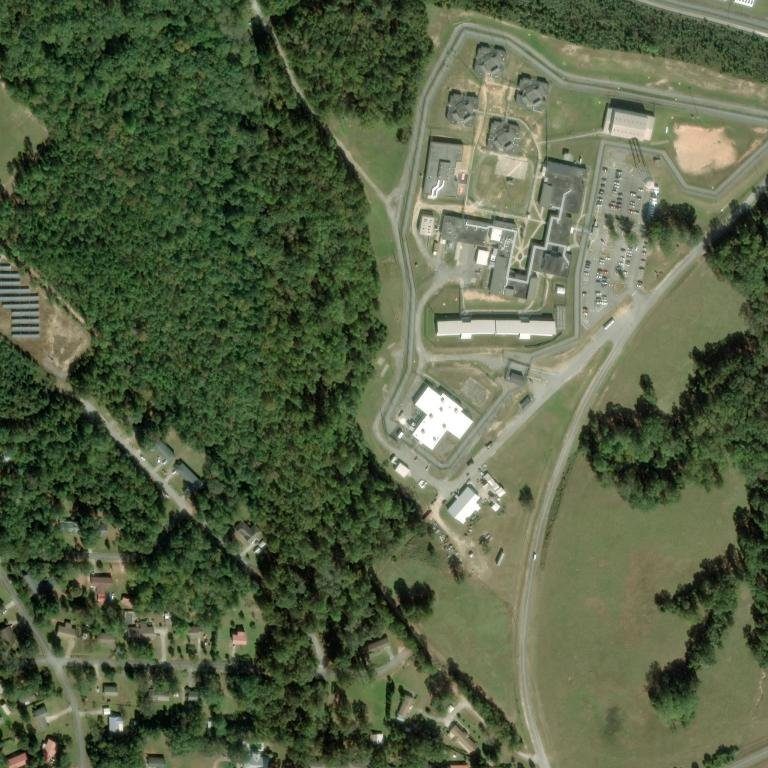
Architecture documents what the building was designed to hold. See the system-wide receipts at gps.press/warehouse.