JOHNSON STATE PRISON
Facility Information
- Original Design Capacity
- 500 (at 307% capacity)
- Bed Capacity
- 1,612 beds
- Current Population
- 1,534
- Active Lifers
- 202 (13.2% of population) · Oct 2026 GDC report
- Life Without Parole
- 1 (0.1%)
What the courts held in Brown v. Plata, and how Georgia compares →
- Address
- 290 Donovan-Harrison Rd, Wrightsville, GA 31096
- Phone
- (478) 864-4100
- Fax
- (478) 864-4104
- Mailing Address
- P.O. Box 344, Wrightsville, GA 31096
- County
- Johnson County
- Opened
- 1992
- Operator
- GDC (Georgia Dept. of Corrections)
Security Classification
Last updated: September 23, 2026
250 of the 1,532 people held here are classified Close security (16.3%), as of September 23, 2026.
| Security level | People | Share |
|---|---|---|
| Close | 250 | 16.3% |
| Medium | 1,192 | 77.8% |
| Minimum | 89 | 5.8% |
| Standard | 1 | 0.1% |
| Total | 1,532 |
Earlier count (undated table, produced October 22, 2025): 163 of 1,573 Close (10.4%).
Source: Georgia Department of Corrections records produced to GPS under the Open Records Act (R031471-090226, R024615-101925). A person's security level is GDC's classification of that person, which can differ from the prison's own designation.
Follow Johnson State Prison
Leadership & Accountability (as of 2026 records)
Officials currently holding positional authority at this facility, with deaths attributed to GPS-tracked records during their leadership tenure. Inclusion reflects role-based accountability, not legal findings of personal culpability. Death counts shown as facility / career.
| Role | Name | Since | Deaths this facility / career |
|---|---|---|---|
| Warden (facility lead) | Beland, Ryan | 2026-06-16 | 1 / 13 |
| Deputy Warden of Care and Treatment (facility deputy) | Davis-Bragg, Chabara L | 2022-01-01 | 54 / 54 |
| Deputy Warden of Security (facility deputy) | Sailem, Tiffany C | 2025-04-01 | 24 / 24 |
| Deputy Warden of Security (facility deputy) | Carr, Willie E | 2024-11-01 | 23 / 23 |
| Deputy Warden of Administration (facility deputy) | Newkirk, Matthew | 2026-08-16 | — / — |
About
Last updated October 18, 2026.(DS)
Johnson State Prison: A Medium-Security Prison That Keeps Producing Homicides
Johnson State Prison sits on the edge of Wrightsville in Johnson County, a medium-security institution for adult men that opened in 1992 and was built to hold 500 people. It now holds roughly 1,534 against a rated capacity of 1,612 — about 95 percent full — across 15 housing units that include general-population dorms, mental-health supportive-living units, and segregation. The facility has run labor details for local governments and offers standard education, counseling, and faith-based programs, and in July 2023 the Georgia Department of Corrections cut the ribbon on a 4,800-square-foot Medical Intensive Infirmary there, designed by NELSON Worldwide, as part of a statewide modular construction program. What the public record shows alongside that construction is a prison that has produced at least 13 homicides since 2020, a $4 million wrongful-death settlement, a documented escape that GDC never announced, and a food-service operation that failed two consecutive state inspections in December 2023.
The Henegar Case: Five Hours, a Locked Door, and a $4 Million Payout
The defining case in Johnson's recent history is the death of David Lamar Henegar, 44, on October 16, 2021. The Atlanta Journal-Constitution reported that Henegar was beaten to death over approximately five hours by his cellmate, Antone Hinton-Leonard, and was found with a broken neck and ribs, a fractured nose and breastbone, a torn lung and liver, and brain and scalp hemorrhages. The AJC's homicide tracking records the cause as manual strangulation and blunt force trauma to the head.
A lawsuit filed by Betty Wade and David Jacob Henegar alleges that Hinton-Leonard — described in the litigation as a mentally ill cellmate who had previously attacked Henegar — choked, stomped, and strangled him over the course of hours while neighboring prisoners screamed for officers to intervene and none did. The AJC reported the suit's allegation that staff had failed to act on repeated warnings from other prisoners about Hinton-Leonard's mental health problems and a prior choking incident a week before the fatal attack, and that prison officials kept Henegar in custody past his scheduled release date because of an administrative delay — leaving him in the cell where he died. Hinton-Leonard was charged with murder and, as of April 2026, was awaiting trial with the criminal case scheduled to begin later that month.
The state's own settlement ledger, obtained through open records, records a $4,000,000 liability payout to Betty Wade for the Estate of David Lamar Henegar, tied to Johnson State Prison and to a documented death record. It is the largest of nine Johnson-related settlements in the ledger, which run from $1,500 to Antione Caldwell in 2020 to $400,000 to Ucollos Owens in 2015, and include $1,449,640 to Jerry Brown in 2020, $100,000 to Andrick Jackson in 2023, $40,000 to Cleveland D. Dunn in 2018, and $2,000 to Larry Singletary in 2016.
Eighty-Eight Deaths, and a Registry That Keeps Filling
GPS's mortality registry records 88 deaths at Johnson State Prison since January 1, 2020 — a floor, since GDC reports deaths roughly two months late. The yearly counts run 13 in 2020, 14 in 2021, 6 in 2022, 15 in 2023, 15 in 2024, 18 in 2025, and 7 so far in 2026. By cause, 38 are recorded as Unknown/Pending, 20 as Natural/Medical, 13 as Homicide, 8 as Other, 6 as Suicide, 2 as Accident, and 1 as Overdose.
The most recent deaths GPS has recorded at the facility include Ernest Perez, who died June 23, 2026, at age 61, with the registry listing the cause as Homicide; Martrese Jamon Mckay, who died April 18, 2026, at 30, listed as Suicide; and Dale Way, who died March 28, 2026, at 76, with the cause Unknown/Pending. Michael Elias Peschel died March 14, 2026, at 36, listed as Homicide; Anthony Shivers died February 11, 2026, at 41, listed as Overdose; Joseph Lamar Sanders died January 27, 2026, at 54, listed as Homicide; and Phillip Lamar Byrd died January 18, 2026, at 46, listed as Homicide.
The 2025 deaths on the registry include Calvin R. Norwood, who died December 30, 2025, at 72, with the cause Unknown/Pending; Marc Charles Neermann, who died November 2, 2025, at 69, with the cause Unknown/Pending; Roger James, who died October 29, 2025, at 68, with the cause Unknown/Pending; Aubrie Henley, who died October 5, 2025, at 69, with the cause Unknown/Pending; Jarvis Dontez Walker, who died September 26, 2025, at 39, with the cause Unknown/Pending; Matthew Glenn Maynard, who died September 14, 2025, at 65, with the cause Unknown/Pending; Loy Alpheus Windham III, who died July 31, 2025, at 54, with the cause Unknown/Pending; Larry Sherall Richards, who died July 29, 2025, at 86, with the cause Unknown/Pending; Russell Scott Carter, who died July 23, 2025, at 42, with the cause Unknown/Pending; Justin Haley Freeman, who died July 20, 2025, at 44, with the cause Unknown/Pending; Robert Glenn Tanner, who died July 15, 2025, at 56, with the cause Unknown/Pending; Joseph Wayne Clayton, who died July 12, 2025, at 32, with the cause Unknown/Pending; Dewayne Bess, who died July 10, 2025, at 63, with the cause Unknown/Pending; Robert Joseph Pruett, who died June 26, 2025, at 61, with the cause Unknown/Pending; John Charles Rhoten, who died June 15, 2025, at 54, with the cause Unknown/Pending; Paul Russell Brewster, who died June 9, 2025, at 48, with the registry listing the cause as Homicide; Robert Barnwell, who died May 4, 2025, at 80, with the cause Unknown/Pending; and Justin Brandon Hulett, who died February 12, 2025, at 38, with the registry listing the cause as Homicide. The full registry list is published at gps.press/georgia-prison-deaths.
Earlier homicides named in the AJC's tracking include Kenneth Adam Robinson, 50, who died August 10, 2024, with incident-report data showing a homicide but no death certificate received; Donald Prescott Lee, 41, who died November 16, 2023, from blunt force trauma to the head, neck, and torso; Michael Page, 53, who died June 29, 2023, with the manner ruled a homicide but the cause unstated; and Jerry Lee Brown, 61, who died November 12, 2020, from stab wounds to the head and blunt force injury to the face. For scale, GPS has independently tracked 1,918 deaths in GDC custody system-wide since 2020.
Food Service: Two Failing Scores, Then a Slow Climb Back
The Georgia Department of Public Health's food-safety record for Johnson is the most complete documentary trail the facility has. On December 11, 2023, a routine inspection scored 64 — a failing Grade F — with nine violations including the person in charge not demonstrating knowledge or performing duties, inadequate handwashing facilities, and food not separated and protected. A follow-up nine days later, on December 20, scored 67, another F, with six violations including food separation, cold holding temperatures, and cleanable surfaces. The facility then scored 91 on a July 2023 follow-up, 86 in March 2024, 96 in December 2024, 80 in March 2025, 88 in October 2025, and 86 on June 22, 2026 — six violations on that most recent routine inspection, including food-contact surfaces not cleaned and sanitized and toxic substances not properly identified, stored, and used. Every inspection from June 2023 forward was conducted by DPH inspector Jaime Williams.
GPS's own reporting has treated Johnson as an exemplar of a systemwide problem. An investigative piece by Georgia Prisoners' Speak (GPS), "Dunked, Stacked, and Served," published photographs from Johnson showing food trays coated with dark residue along compartment seams, and described a dishwashing system degraded to the point that trays were washed by hand. GPS has documented a systemic pattern in which DPH scores fail to capture kitchen conditions — broken tray-sanitizing dishwashers, roach and rodent infestation, and meals served on contaminated trays — because inspections are scheduled walkthroughs that do not assess equipment under load. Physical evidence submitted to GPS from Johnson shows institutional food trays with visible contamination or residue in multiple compartments and unsanitary conditions on food service equipment. GPS has received recurring reports from people held at Johnson and their families describing illness attributed to tray sanitation, missed meals, and pest problems in food areas.
The economics behind that pattern are documented at the system level: GDC spends approximately $1.69 per person per day on food, under 60 cents per meal, against an FDA Thrifty Food Plan estimate of roughly $10 per day for an adult man's nutritionally adequate diet. The Marshall Project independently reported in May 2026 on rats in kitchens, insects in food, and moldy trays across Georgia facilities.
A Mental-Health Dorm Under Quarantine
Tyler Ryals, a former GDC officer now with WorldWide Chain Breakers, wrote on Facebook on August 7, 2026, that his organization had received a firsthand report that E Building at Johnson — identified to him as the mental-health dorm — was under quarantine because of an alleged infestation of lice, bed bugs, and scabies, and that men from the quarantined building were allegedly brought into a shared medical area where prisoners from other housing units were waiting. He described an account of a man being instructed to remove his shirt and visible insects falling from his body onto the floor. Ryals also wrote that his organization had received complaints about the management of medical services at Johnson, including allegations about the conduct and decision-making of a Unit Manager Cunningham, while stating explicitly that he was not presenting personal character accusations as established fact. These are Ryals's published accounts, not GPS findings.
On July 20, 2026, Ryals wrote that a source had told him J-Building, the lockdown unit at Johnson, received no morning medications on one day of the prior weekend because officers could not or would not secure the door flaps so nurses could safely pass medications, and that officers and nurses had recently had feces thrown on them in that building. He noted that Johnson has high-tech cameras across the compound and that the allegation should be easy to disprove if untrue. GPS records show staffing-shortage reports at Johnson concentrated in July and August 2026, and multiple reports of mental-health crises going unattended across the spring and summer.
A separate thread of GPS reporting concerns the facility's Residential Substance Abuse Treatment programming. Stephanie Navarrete, a Georgia prison-reform advocate, wrote on Facebook on August 10, 2026, urging people to watch a video in which Ryals discusses Telfair, Johnson, and Wilcox state prisons, and says at roughly 13:47 that "This is not just at Telfair or Johnson." According to Navarrete's account of the video, Ryals described Johnson's RSAT programming as itself affected by widespread access to drugs — a rehabilitation environment in which drugs were readily available.
Violence, an Unannounced Escape, and a Leadership in Motion
Beyond the homicides, the AJC reported an escape from Johnson State Prison on April 5, 2023, noting that GDC issued no news release about it. GPS records show six reports of death in custody at Johnson in the twelve months to October 2026, five reports of assault by another incarcerated person, six of staff misconduct (unnamed), four of staff misconduct (named), and six of due-process violations. Five external complaints were filed to outside bodies in that period, including the Georgia Bureau of Investigation, the Georgia Department of Public Health, and WorldWide Chain Breakers.
The facility's leadership has turned over substantially. Ryan Beland has been warden since June 16, 2026. Tiffany C. Sailem has served as Deputy Warden of Security since April 2025; Willie E. Carr as Deputy Warden of Security since November 2024; Chabara L. Davis-Bragg as Deputy Warden of Care and Treatment since January 2022; and Matthew Newkirk as Deputy Warden of Administration since August 2026. GDC's own records also list Kochelle Watson as warden — a discrepancy GPS has not resolved, and one that matters for accountability: the public cannot hold a post accountable when the agency's own filings disagree about who holds it. GDC states that Johnson is not a designated facility for housing former law enforcement officers.
Sources
This analysis draws on Georgia Department of Public Health food-safety inspection records for Johnson State Prison (inspections from June 2023 through June 2026, with full reports linked at ga.healthinspections.us); the Georgia Department of Corrections' published facility and personnel records; the Georgia DOAS Risk Management settlement ledger obtained through open records; reporting by the Atlanta Journal-Constitution on the Henegar litigation, the facility's homicide record, and the 2023 escape; GPS's own mortality registry and intelligence records; GPS investigative reporting on Georgia prison food service; and public Facebook posts by Tyler Ryals of WorldWide Chain Breakers and advocate Stephanie Navarrete, whose accounts are presented as their own published assertions rather than as GPS findings. Family and inmate accounts collected by GPS staff inform the framing throughout but are not quoted individually.
Mortality Statistics
95 deaths documented at this facility from 2020 to present.
Deaths by Year
- 2026: 13
- 2025: 19
- 2024: 15
- 2023: 15
- 2022: 6
- 2021: 14
- 2020: 13
County Public Health Department
Food service and sanitation at JOHNSON STATE PRISON fall under the jurisdiction of the Johnson County Environmental Health Department. Incarcerated people cannot choose where they eat — public health inspectors carry an elevated responsibility to hold this kitchen to the same standards applied to any restaurant.
Contact
- Title
- Environmental Health Director
- Address
-
82 Hilton Holton Street
Wrightsville, GA 31096 - Phone
- (478) 864-3542
- johnson.eh@dph.ga.gov
- Website
- Visit department website →
Why this matters
GPS has documented black mold on chow-hall ceilings, cold and contaminated trays, spoiled milk, and pest contamination at Georgia prisons. The Department of Justice's 2024 report confirmed deaths from dehydration and untreated diabetes tied to food and water deprivation. Advance-notice inspections let facilities stage temporary fixes that disappear once inspectors leave.
Unannounced inspections by the county health department are one of the few outside checks on kitchen conditions behind the fence.
How you can help
Write to the county inspector and request an unannounced inspection of the kitchen and food service operation at this facility. A short, respectful letter citing Georgia food-safety regulations is more powerful than you think — inspectors respond to public concern.
Sample Letter
This is the letter Georgia Prisoners' Speak mailed to all county environmental health inspectors responsible for GDC facilities. Feel free to adapt it.
October 24, 2026
RE: Request for Unannounced Public Health Inspection of Food Service Operations at JOHNSON STATE PRISON
Dear County Environmental Health Director,
I am writing to respectfully request that your office conduct a thorough, unannounced inspection of food service and sanitation practices at JOHNSON STATE PRISON, located in Johnson County.
Documented concerns
Georgia Prisoners' Speak, a 501(c)(3) nonprofit investigative newsroom, has published extensive investigative reporting on food safety and nutrition failures across Georgia's prison system, including:
- Dangerous sanitation conditions — black mold on chow hall ceilings and air vents, contaminated food trays, and spoiled milk served to inmates.
- Severe nutritional deficiency — roughly 60 cents per meal; inmates receive only 40% of required protein and less than one serving of vegetables per day.
- Preventable deaths — the U.S. Department of Justice's 2024 report confirmed deaths from dehydration, renal failure, and untreated diabetes following food and water deprivation.
- Staged compliance — advance-notice inspections allow facilities to stage temporary improvements, then revert once inspectors leave.
Firsthand testimony
In Surviving on Scraps: Ten Years of Prison Food in Georgia, a person who has spent more than ten years in GDC custody describes no functional dishwashing sanitation, chronic mold on food trays, and roaches found on the undersides of trays at intake facilities. Full account: gps.press/surviving-on-scraps-ten-years-of-prison-food-in-georgia.
Specific requests
- Conduct an unannounced inspection of the kitchen and food service operations at this facility, with particular attention to dishwashing equipment, tray sanitation procedures, and food storage conditions.
- Evaluate compliance with applicable Georgia food safety regulations, including O.C.G.A. § 26-2-370 and the Georgia Food Service Rules and Regulations (Chapter 511-6-1).
- Verify permit status and confirm whether the facility is subject to the same inspection schedule as other institutional food service establishments in the county.
- Make inspection results available to the public, as permitted under Georgia's Open Records Act (O.C.G.A. § 50-18-70).
Incarcerated individuals cannot advocate for their own health and safety in the way a restaurant patron can — they cannot choose to eat elsewhere. This places an elevated responsibility on public health officials to ensure these facilities meet the same sanitation standards applied to any food service establishment.
Thank you for your attention to this important public health matter.
Sincerely,
[Your name]
Food Safety Inspections
Georgia Department of Public Health
What the score doesn't measure. DPH grades kitchen compliance on inspection day — food storage, temperatures, pest control. It does not grade whether today's trays are clean. GPS reporting has found broken dishwashers at most Georgia state prisons we've documented; trays go out wet, stacked, and visibly moldy — including at facilities with recent scores near 100.
Who inspects. Most Georgia state prisons sit in rural counties — often with fewer than 20,000 people, several with fewer than 10,000. The environmental health inspector lives in that community and often knows the kitchen staff personally. Rural inspection regimes don't have the structural independence you'd expect in a city-sized health department. Read the scores accordingly.
Read the investigation: “Dunked, Stacked and Served: Why Georgia Prison Trays Are Making People Sick”
Recent inspections
| Date | Score | Purpose | |
|---|---|---|---|
| Jun 22, 2026 | 86 | Routine | |
| Oct 8, 2025 | 88 | Routine | |
| Mar 3, 2025 | 80 | Routine | |
| Dec 4, 2024 | 96 | Routine | |
| Mar 6, 2024 | 86 | Routine | |
| Dec 20, 2023 | 67 | Followup | |
| Dec 11, 2023 | 64 | Routine | |
| Jul 24, 2023 | 91 | Followup | |
| Jun 27, 2023 | 75 | Routine |
June 22, 2026 — Score 86
Routine · Inspector: Jaime Williams
| Code | Violation | Pts | Inspector notes |
|---|---|---|---|
| 2B |
food-contact surfaces: cleaned & sanitized 511-6-1.05(6)(n) - manual and mechanical warewashing equipment, chemical sanitization-temperature, ph, concentration, hardness (p,pf) | 4 | Sanitizing solution was not reading proper concentration levels wen tested. Read zero. When asked staff and PIC about sanitizer they stated none was delivered from Chemical today. Discussed with staff and PIC that before they start washing they need to make sure they have sanitizer on site and that it is tested and at the right strength before use and went through chemical mixing process with staff. Also. Bulk ice machine was observed with mold on interior and on outside edging. Ice machine needs to be cleaned prior to further use. Note-- Ice machine appeared to be not working at full capacity (Ice watered over) and filters were discussed about needing to be changed and keeping extras on site for boil water events. |
| 2B |
toxic substances properly identified, stored, used 511-6-1.07(6)(b) - working containers, common name (pf) | 4 | Observed several bottles throughout kitchen with unknown substances in them 1 spray bottle, 1 bulk spice bottle with orange liquid and 1 water bottle with yellow liquid without any form of labels. All spray bottles and or in use- working bottles need to have common name of substance in bottles located on them. |
| 15A |
food and nonfood-contact surfaces cleanable, properly designed, constructed, and used 511-6-1.05(6)(a) - good repair & proper adjustment (c) Repeat | 1 | Multiple equipment pieces are observed out of order - 4 Freezers, 3 small and 1 main walk in freezer. The main meat freezer observed to be potentially going down-- loud clanking sound in condenser and temperature was observed at 10 degrees which is far above normal for this unit. All equipment needs to be repaired and in good working order. Also wash room Hobart machine part is in order using the 3 sinks on dish line but machine is still out of order. |
| 15C |
nonfood-contact surfaces clean 511-6-1.05(7)(a)2,3 - equipment, food/nonfood-contact surfaces, and utensils, food-contact surfaces of cooking equipment & nonfood-contact surfaces free of accumulations (c) Repeat | 1 | Interior of several ovens were heavily encrusted with food on food racks as well as non food contact surfaces- door closure. Items need to be cleaned and degreased accordingly. |
| 16B |
plumbing installed; proper backflow devices 511-6-1.06(2)(r) - system maintained in good repair (p, c) Repeat | 2 | Plumbing leak observed at ware wash machine dish sink was bound together with a towel to stop leak. Also, drain lines from 3 compartment dish sink for large pots was also observed bound with cloth and tape need to be address and fixed properly. |
| 17C |
physical facilities installed, maintained, and clean 511-6-1.07(5)(a),(b) - good repair, physical facilities maintained; cleaning, frequency & restrictions, cleaned often enough to keep them clean (c) | 1 | ceiling have several holes, that need to be fixed and repaired. this could be a potential contribution of water leaking into kitchen. |
October 8, 2025 — Score 88
Routine · Inspector: Jaime Williams
| Code | Violation | Pts | Inspector notes |
|---|---|---|---|
| 12A |
contamination prevented during food preparation, storage, display 511-6-1.04(4)(q) - food storage (c) Corrected | 3 | Observed uncovered pans of macaroni (uncovered due to cooling process) sitting directly on top of macaroni food stacked in a cold hold box in WIC which could lead to potential source of cross contamination. Also observed with bologna stacked on top of uncovered bologna. Also, Observed bag of wheat flower sitting on floor in kitchen. All items were placed in proper locations and stacked with room in between. |
| 14A |
in-use utensils: properly stored 511-6-1.04(4)(k) - in-use utensils, between-use storage (c) | 1 | Scoop at ice machine observed sitting on top of ice machine panel and the panel was dirty . Ice scoops need to be stored in a clean protected location in between use. |
| 15A |
food and nonfood-contact surfaces cleanable, properly designed, constructed, and used 511-6-1.05(6)(q)1&3 - good repair & calibration (c) Repeat | 1 | Hot hold food wells line 1 and line2 are not working. Multiple equipment out of order - 4 ovens, 4 wic, 1 freezer. All equipment needs to be repaired and in good working order. Also wash room Hobart machine part is in order using back up 3 compartment sinks for lg pots. |
| 16A |
hot and cold water available; adequate pressure 511-6-1.06(1)(g),(h) - water supply, capacity; pressure (pf) | 2 | Hand wash sink in main kitchen did not have hot water running to sink. All handwasher sinks must have hot water availability. |
| 16B |
plumbing installed; proper backflow devices 511-6-1.06(2)(r) - system maintained in good repair (p, c) Repeat | 2 | lumbing sink 1 out of order handwash sink, drain lines from 3 compartment dish sink need to be address they are not draining properly. And 2 compartment prep sink on the east side faucet is not working. |
| 18 |
insects, rodents, and animals not present 511-6-1.07(5)(k) - controlling pests (pf, c) | 3 | Observed Roaches in kitchen facility. The presence of insects, rodents, and other pests shall be controlled by: 1. Routinely inspecting incoming shipments 2. Routinely inspecting premises for pests 3. Using methods of pest control This has been an on going problem |
March 3, 2025 — Score 80
Routine · Inspector: Jaime Williams
| Code | Violation | Pts | Inspector notes |
|---|---|---|---|
| 2D |
adequate handwashing facilities supplied & accessible 511-6-1.07(3)(a) - handwashing cleanser, availability (pf) | 4 | No paper towels or hand soap available at handwashing sink. All handwashing sinks shall always have (paper towels) hand drying provisions and hand cleansers available at each handwashing sink. |
| 1B |
proper hot holding temperatures 511-6-1.04(6)(f) - time/temperature control for safety; hot holding (p) Corrected | 9 | Fish Sticks that were prepared for lunch service were located on the hot hold line temped at 136, 96, 94 103 degrees. All food being hot held for service needs to be held at 135 degrees and above. Hot hold food wells line 1 and line2 are not working. Discussed with 1st shift manager reheating fish sticks prior to service. Food reheated to 167 |
| 1C |
proper cooling time and temperature 511-6-1.04(6)(d) - cooling (p) | 9 | Observed cheese sandwiches, prepped in the morning along with a full box of cheese sitting in a non working cold hold unit. COS- Food was discarded on site at time of inspection. When asked the PIC about the items, she was unaware they were in there as the unit stays locked. |
| 12B |
personal cleanliness 511-6-1.03(5)(i) - clothing (c) Corrected | 3 | observed sweat shirt, and rags in 2 separate locations sitting on top of cooking equipment that was in use. and on food (rice and peanut butter) COS staff removed items from prep lines and placed in designated location |
| 12C |
wiping cloths: properly used and stored 511-6-1.04(4)(m) - wiping cloths, use limitation (c) | 3 | Observed wiping clothes in several different location sitting on prep tables etc. and not in current use. When not in Use wipe clothes need to be stored in sanitizing buckets or in Laundry basket |
| 15A |
food and nonfood-contact surfaces cleanable, properly designed, constructed, and used 511-6-1.05(6)(q)1&3 - good repair & calibration (c) Repeat | 1 | Hot hold food wells line 1 and line2 are not working. Multiple equipment out of order - 4 ovens, 4 wic, 1 freezer. All equipment needs to be repaired and in good working order. Also wash room Hobart machine part is in order using back up 3 compartment sinks for lg pots. |
| 16C |
sewage and waste water properly disposed 511-6-1.06(4)(c) - backflow prevention (p) | 2 | Hose nozzle observed submerged in a bucket of water near the tilt skillet. Hose is used to clean floor but also tilt skillet. C. A: Hose needs to have proper separation from being submerged in water due to back siphonage and the hose needs to have a hose reel and be kept off the floor when not in use. |
December 4, 2024 — Score 96
Routine · Inspector: Jaime Williams
| Code | Violation | Pts | Inspector notes |
|---|---|---|---|
| 15A |
food and nonfood-contact surfaces cleanable, properly designed, constructed, and used 511-6-1.05(6)(a) - good repair & proper adjustment (c) | 1 | Multiple equipment out of order - 4 ovens, 4 wic, 1 freezer. All equipment needs to be repaired and in good working order. Also wash room Hobart machine part is in order using back up 3 compartment sinks for lg pots. |
| 16B |
plumbing installed; proper backflow devices 511-6-1.06(2)(r) - system maintained in good repair (p, c) | 2 | Plumbing sink 1 out of order handwash sink, drain lines being worked on for main kitchen both sides handwash sink 2 went down this morning. |
| 17D |
adequate ventilation and lighting; designated areas used 511-6-1.07(2)(i) - light bulbs, protective shielding (c) | 1 | Lights above food in food storage areas (dry storage) freezer need to be shatter proof bulbs and or have protective shields. |
March 6, 2024 — Score 86
Routine · Inspector: Jaime Williams
| Code | Violation | Pts | Inspector notes |
|---|---|---|---|
| 2B | certified food protection manager | 4 | NO CFSM in the facility. Food service establishments shall have a certified food safety manager to ensure food safety is being managed. CA: PIC/Nutrition director is going to take the class aug 8-10 they got a food handlers and were told to get a food managers certificate. |
| 2B |
food-contact surfaces: cleaned & sanitized 511-6-1.05(6)(n) - manual and mechanical warewashing equipment, chemical sanitization-temperature, ph, concentration, hardness (p,pf) Corrected | 4 | Observed ware washing process not being completed in the proper sequence and the sanitizing solution was not reading proper concentration levels wen tested. Read zero. Discussed and went through chemical mixing process with staff and COS the Sanitizer Solution in the 3 compartment sink |
| 11A |
proper cooling methods used: adequate equipment for temperature control 511-6-1.04(6)(e) - cooling methods (pf, c) | 3 | Observed potato salad and turkey recently prepped (observed both on the Service line)-- These Items were not adequately cooled prior to being placed on the food service line for lunch service despite having adequate time to cool product. Staff removed items from serving line and too them to Walk In Freezer to rapidly cool |
| 12A |
contamination prevented during food preparation, storage, display 511-6-1.04(4)(z) - miscellaneous sources of contamination (c) | 3 | Observed kitchen crew dropping repeatedly a bag of bulk ice on the floor to break up the ice. The floor has floor drains (in use daily) Source for cross contamination as the ice was being used as a cooling parameter for food items on the service line. PIC told staff to go rinse off the bag of ice. I then explained where / how a better technique to use for breaking the ice and the potential source of contamination from the bag of ice ripping and ice touching floor. |
December 20, 2023 — Score 67
Followup · Inspector: Jaime Williams
| Code | Violation | Pts | Inspector notes |
|---|---|---|---|
| 1A |
food separated and protected 511-6-1.04(4)(c)1(i)(ii)(iii)(v)(vi)(vii)(viii) - packaged & unpackaged food separation, packaging, and segregation (p, c) Repeat | 9 | Several bulk items - oil, flour rice bran flakes canned goods-- all observed with holes in bags rat dropping and pee sprayed on bags in storage facility. Items need to be lifted off the floor, properly wrapped and area needs to be cleaned and repaired due to rats and roaches. Also discussed with multiple wardens and staff protective - corrective actions about the food being wrapped with plastic wrap and being stored higher off the ground also, they will be moving flour etc to large cold hold storage. Staff has been very proactive and combating this issue they are doing great at making provisions due to current situation. |
| 1A |
proper cold holding temperatures 511-6-1.04(6)(f) - time/temperature control for safety; cold holding (p) Repeat | 9 | Multiple foods cold holding temped above 41°F. All tcs items shall be cold held at 41°F or below. COS: Discarded during inspection. Items not cooled properly from last night. Discussed cooing methods with PIC. Walk in unit 1 was fixed (replaced fan and compressor). The second walk in cooler was also fixed both the fan and the compressor and then when staff went in to unit this morning it was not working again. Walk in freezer was fixed. Several reach in units were not working properly. |
| 15A |
food and nonfood-contact surfaces cleanable, properly designed, constructed, and used 511-6-1.05(6)(a) - good repair & proper adjustment (c) Repeat | 1 | East side kitchen hot serving line out of order/ not working-- unit needs to be repaired as needed. 2 Cold hold units 1- on each serving line. Also Ware wash machine 1 , 5 cooking ovens, 1 tilting skillet, 1 cooking kettle, 1 griddle, 1 smaller freezer unit, 1 bulk ice machine are not working- C. Action all items are in need of repair and or replacement as needed. |
| 16B |
plumbing installed; proper backflow devices 511-6-1.06(2)(r) - system maintained in good repair (p, c) Repeat | 2 | Multiple sinks out of order due to leaking or just not turning on at all. All plumbing systems shall be maintained in good repair. Toe tap or foot pedals for hand wash sink using both hard to get toe taps to work...Hot water needs to be available at all sinks. |
| 17C |
physical facilities installed, maintained, and clean 511-6-1.07(5)(a),(b) - good repair, physical facilities maintained; cleaning, frequency & restrictions, cleaned often enough to keep them clean (c) Repeat | 1 | Floors walls and ceiling have several holes, tiles broken that need to be fixed and repaired. this could be a potential contribution to the rat and roach infestation. |
| 18 |
insects, rodents, and animals not present 511-6-1.07(5)(k) - controlling pests (pf, c) Repeat | 3 | Observed multiple RATS and Roaches in kitchen facility. The presence of insects, rodents, and other pests shall be controlled by: 1. Routinely inspecting incoming shipments 2. Routinely inspecting premises for pests 3. Using methods of pest control This has been an on going problem with little to no change- cages that were being ordered last time still have not been put into place- Pest control company allowed to come on site and start properly treating rat and roach infestation. Bait boxes were observed set out for rats and gel treatment was in place for roach treatment. They are still being observed but they are working to correct issues. |
December 11, 2023 — Score 64
Routine · Inspector: Jaime Williams
| Code | Violation | Pts | Inspector notes |
|---|---|---|---|
| 2A |
pic present, demonstrates knowledge, performs duties 511-6-1.03(2)(a)-(n)(p),(q) - responsibility of pic (pf) | 4 | Person-in-charge not performing duties; not ensuring or monitoring time/temperature control for safety foods (TCS) to maintain proper cold holding temperatures. PIC not ensuring prisoners are wearing gloves when handling ready-to-eat foods. The PIC did not ensure handwash soap was at each handwash station. COS - Went over every item with the PIC and gave information on where to find the food manual. |
| 2D |
adequate handwashing facilities supplied & accessible 511-6-1.07(3)(a) - handwashing cleanser, availability (pf) | 4 | No paper towels or hand soap available at handwashing sink. All handwashing sinks shall always have (paper towels) hand drying provisions and hand cleansers available at each handwashing sink. When discussed with 1st shift manager he said he did not know where the key was to unlock the soap dispensers to add soap |
| 1A |
food separated and protected 511-6-1.04(4)(c)1(i)(ii)(iii)(v)(vi)(vii)(viii) - packaged & unpackaged food separation, packaging, and segregation (p, c) | 9 | Food sitting directly on the floor Large quantity of canned goods in boxes-- boxes were observed wet. Several bulk items - oil, flour rice bran flakes canned goods-- all observed with holes in bags rat dropping and pee sprayed on bags in storage facility. Items need to be lifted off the floor, properly wrapped and area needs to be cleaned and repaired due to rats and roaches. |
| 1A |
proper cold holding temperatures 511-6-1.04(6)(f) - time/temperature control for safety; cold holding (p) | 9 | Multiple foods cold holding temped above 41°F. All tcs items shall be cold held at 41°F or below. COS: Discarded during inspection. Items not cooled properly from last night. Discussed cooing methods with PIC. |
| 1B |
proper hot holding temperatures 511-6-1.04(6)(f) - time/temperature control for safety; hot holding (p) | 9 | Fish Sticks that were prepared for lunch service were located in hot boxes temped at 110, 118 124 and 132 degrees. All food being hot held for service needs to be held at 135 degrees and above. Discussed with 1st shift manager reheating fish sticks prior to service. |
| 15A |
food and nonfood-contact surfaces cleanable, properly designed, constructed, and used 511-6-1.05(6)(a) - good repair & proper adjustment (c) | 1 | East side kitchen hot serving line out of order/ not working-- unit needs to be repaired as needed. Also Ware wash machine 1 , 5 cooking ovens, 1 tilting skillet, 1 cooking kettle, 1 griddle, 1 smaller freezer unit, 1 bulk ice machine are not working-C. Action all items are in need of repair and or replacement as needed. |
| 16B |
plumbing installed; proper backflow devices 511-6-1.06(2)(r) - system maintained in good repair (p, c) Repeat | 2 | Multiple sinks out of order due to leaking or just not turning on at all. All plumbing systems shall be maintained in good repair. |
| 17C | physical facilities installed, maintained, and clean Repeat | 1 | Floors walls and ceiling have several holes, tiles broken that need to be fixed and repaired. this could be a potential contribution to the rat and roach infestation. |
| 18 |
insects, rodents, and animals not present 511-6-1.07(5)(k) - controlling pests (pf, c) Repeat | 3 | Observed multiple RATS and Roaches in kitchen facility. The presence of insects, rodents, and other pests shall be controlled by: 1. Routinely inspecting incoming shipments 2. Routinely inspecting premises for pests 3. Using methods of pest control This has been an on going problem with little to no change- cages that were being ordered last time still have not been put into place- An SOP needs to be discussed with the Prison Warden and corrective measures need to occur. |
July 24, 2023 — Score 91
Followup · Inspector: Jaime Williams
| Code | Violation | Pts | Inspector notes |
|---|---|---|---|
| 16B |
plumbing installed; proper backflow devices 511-6-1.06(2)(r) - system maintained in good repair (p, c) Repeat | 2 | Multiple sinks out of order due to leaking. All plumbing systems shall be maintained in good repair. |
| 17C |
physical facilities installed, maintained, and clean 511-6-1.07(5)(a),(b) - good repair, physical facilities maintained; cleaning, frequency & restrictions, cleaned often enough to keep them clean (c) Repeat | 1 | Walk in freezer has a build up of ice on floor (not on food) due to condenser not functioning properly. All physical facilities shall be maintained clean and in good repair. CA: Maintenance called for both the units and plumbing issues. |
| 18 |
insects, rodents, and animals not present 511-6-1.07(2)(k) - insect control devices (c) Repeat | 3 | OBserved multiple flies and rates in facility. The presence of insects, rodents, and other pests shall be controlled by: 1. Routinely inspecting incoming shipments 2. Routinely inspecting premises for pests 3. Using methods of pest control 4. Eliminate harboring conditions CA: Pest control is being put out, and maintenance has been contacted regarding rats. All food compromised by the rats is discarded. |
June 27, 2023 — Score 75
Routine · Inspector: Madeline McCullers
| Code | Violation | Pts | Inspector notes |
|---|---|---|---|
| 2B |
certified food protection manager 511-6-1.03(3)(a) - food safety manager certification (pf) | 4 | NO CFSM in the faciliy. Food service establishments shall have a certified food safety manager to ensure food safety is being managed. CA: PIC/Nutrition director is going to take the class aug 8-10. |
| 2D |
adequate handwashing facilities supplied & accessible 511-6-1.07(3)(b) - hand drying provision (pf) | 4 | No paper towels or hand soap avaliable at handwashing sink. All handwashing sinks shall always have (paper towels) hand drying provisions and hand cleansers avaliable at each handwashing sink. COS: Added during inspection. |
| 1A |
proper cold holding temperatures 511-6-1.04(6)(f) - time/temperature control for safety; cold holding (p) Corrected Repeat | 9 | Multiple foods cold holding temped above 41°F. All tcs items shall be cold held at 41°F or below. COS: Discarded during inspection. Items not cooled properly from last night. Discussed cooing methods with PIC. |
| 1B |
proper hot holding temperatures 511-6-1.04(6)(f) - time/temperature control for safety; hot holding (p) Corrected Repeat | 9 | Corn and beef//Taco salad hot holding on steam table temped at 110°F. All tcs items being hot held shall be maintained at 135°F or above. COS: Reheated during inspection. |
| 16B |
plumbing installed; proper backflow devices 511-6-1.06(2)(r) - system maintained in good repair (p, c) | 2 | Multiple sinks out of order due to leaking. All plumbing systems shall be maintained in good repair. |
| 17C |
physical facilities installed, maintained, and clean 511-6-1.07(5)(a),(b) - good repair, physical facilities maintained; cleaning, frequency & restrictions, cleaned often enough to keep them clean (c) | 1 | Walk in freezer has abuild up of ice on floor (not on food) due to condenser not funcitoning properly. All physical facilities shall be maintained clean and in good repair. CA: Maintanence called for both the units and plumbing issues. |
| 18 |
insects, rodents, and animals not present 511-6-1.07(5)(k) - controlling pests (pf, c) | 3 | OBserved multiple flies and rates in facility. The presence of insects, rodents, and other pests shall be controlled by: 1. Routinely inspecting incoming shipments 2. Routinely inspecting premises for pests 3. Using methods of pest control 4. Eliminate harboring conditions CA: Pest control is being put out, and maintanence has been contacted regarding rats. All food compromised by the rats is discarded. |
Recent reports (16)
Source-attributed observations and allegations from news coverage and reports submitted to GPS. Each entry credits its source.
- ALLEGATION According to Atlanta Journal-Constitution Published: Jan 21, 2025A lawsuit alleges that officers failed to intervene despite neighboring prisoners screaming for help while Henegar was being choked and stomped by his cellmate over the course of hours.
"Neighboring prisoners allegedly heard his screams and called for officers to intervene, but none did, the lawsuit alleges."
Read source → - ALLEGATION According to Atlanta Journal-Constitution Published: Jan 21, 2025A lawsuit alleges that Henegar was housed with a mentally ill cellmate who had previously attacked him.
"The suit also alleges that Henegar was in a cell with a mentally ill inmate who had previously attacked him."
Read source → - ALLEGATION According to Atlanta Journal-Constitution Published: Jan 21, 2025A lawsuit alleges that Henegar, who had a disability, was choked over the course of hours by his cellmate, who also stomped on his chest and strangled him.
"A lawsuit alleges that Henegar — who had a disability, according to the death data — was choked over the course of hours by his cellmate, who also stomped on his chest and strangled him."
Read source → - ALLEGATION According to Atlanta Journal-Constitution Published: Apr 6, 2026Prison staff ignored Henegar's screams and requests for help and the pleas of other inmates during a five-hour beating that resulted in his death.
""Everybody in the dorm could hear it. David himself asked the guard for help, and the guard told him to deal with it and then just moved on," Brady told The Atlanta Journal-Constitution. "Inmates in the dorm were banging their flaps and hollering and kicking their doors and trying to get the guard's attention, and the guard just ignored everybody.""
Read source → - ALLEGATION According to Atlanta Journal-Constitution Published: Apr 6, 2026Prison staff failed to act on repeated reports from prisoners about cellmate Hinton-Leonard's mental health problems and a prior choking incident a week before the fatal attack.
"Brady said Henegar had complained to a number of prison staff about the danger posed by his cellmate, whose mental health problems were repeatedly reported to guards by prisoners. She said Hinton-Leonard choked Henegar to the point of unconsciousness a week before the fatal attack."
Read source →
Timeline (37)
Source Articles (10)
Former leadership
Officials who previously held leadership roles at this facility.
| Role | Name | Tenure | Deaths this facility / career |
|---|---|---|---|
| WARDEN 1 (facility lead) | Watson, Kochelle | 2019-01-01 → 2025-12-31 | 66 / 66 |
| WARDEN 1 (facility lead) | Caldwell, Antoine Galen | 2017-01-01 → 2021-12-31 | 27 / 61 |
| Warden (facility lead) | Chambers, Brian Keith | 2022-02-01 → 2024-06-15 | 24 / 24 |
| WARDEN 1 (facility lead) | Emmons, Shawn F | 2016-01-01 → 2016-12-31 | — / 62 |
| DEPUTY WARDEN (facility deputy) | Messer, ADA Y | 2018-01-01 → 2025-12-31 | 81 / 81 |
| Deputy Warden (facility deputy) | Franklin, Lakisha M | 2023-11-22 → 2023-11-22 | — / — |
| Deputy Warden (facility deputy) | Prosser, Travis T | 2023-11-22 → 2023-11-22 | — / — |
| Chaplain (specialty lead) | Lester, Forrest J | 2023-11-22 → 2023-11-22 | — / — |
Location
Aerial View
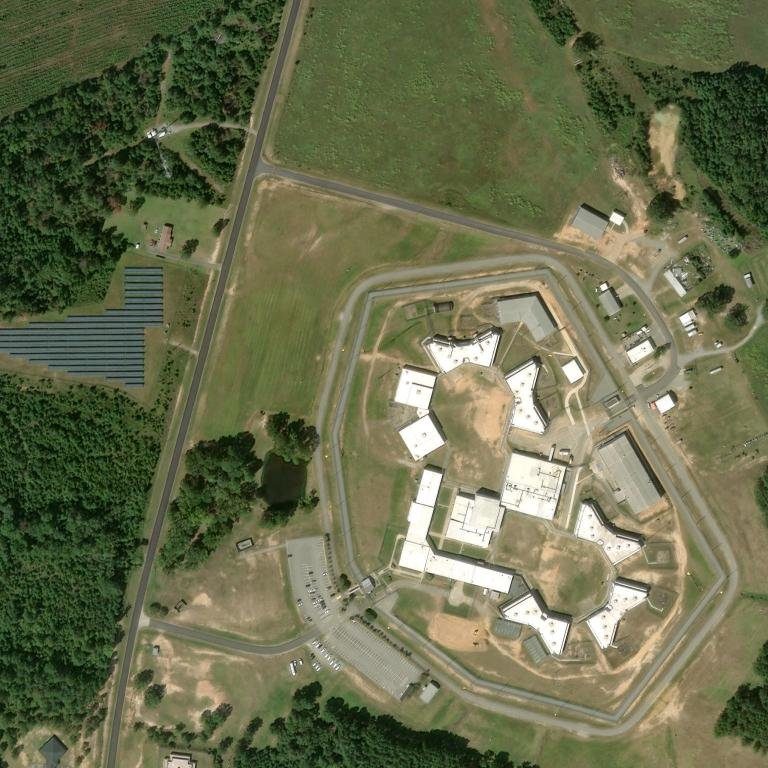
Satellite image: Esri World Imagery. Architecture documents what the building was designed to hold. See the system-wide receipts at gps.press/warehouse.
Then and now
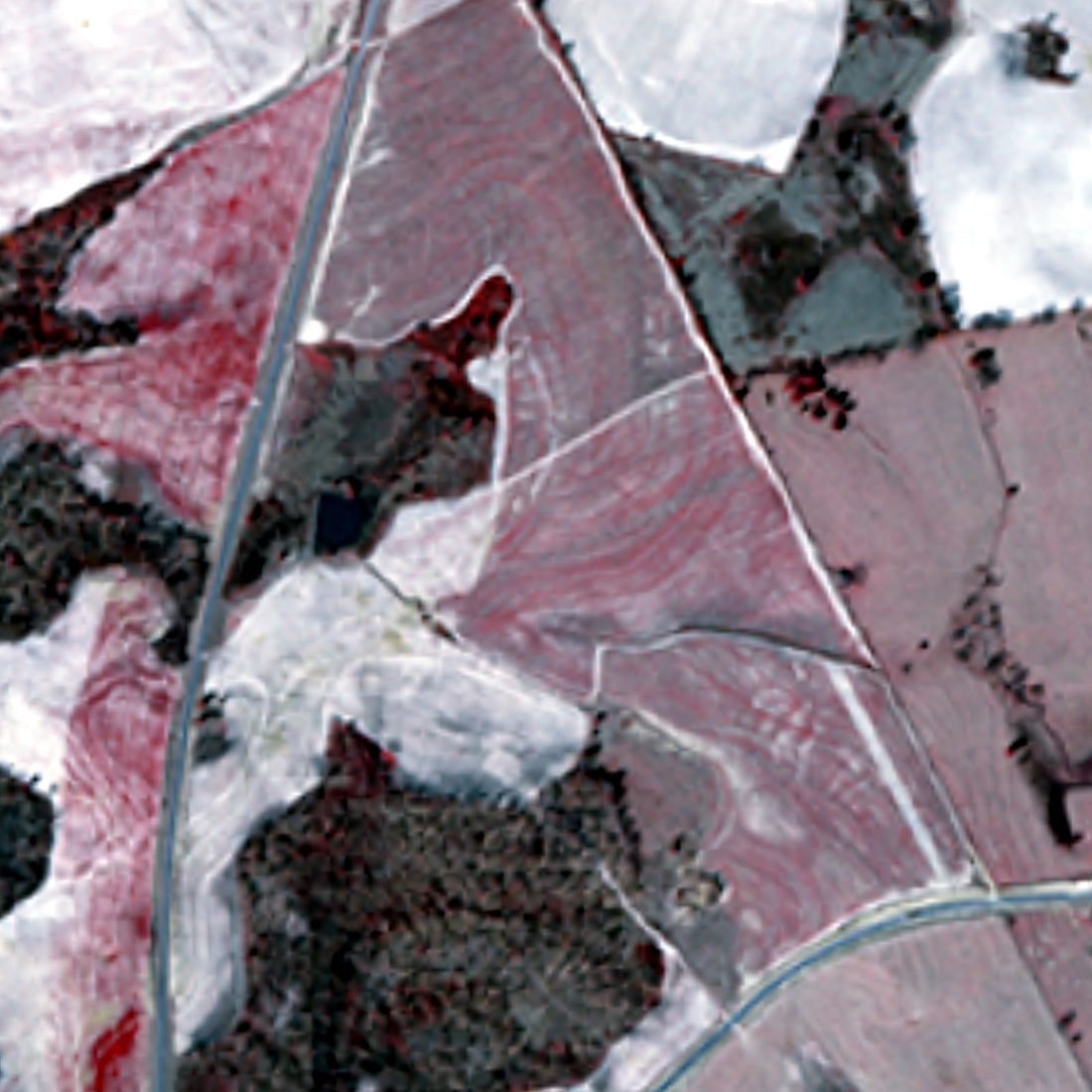

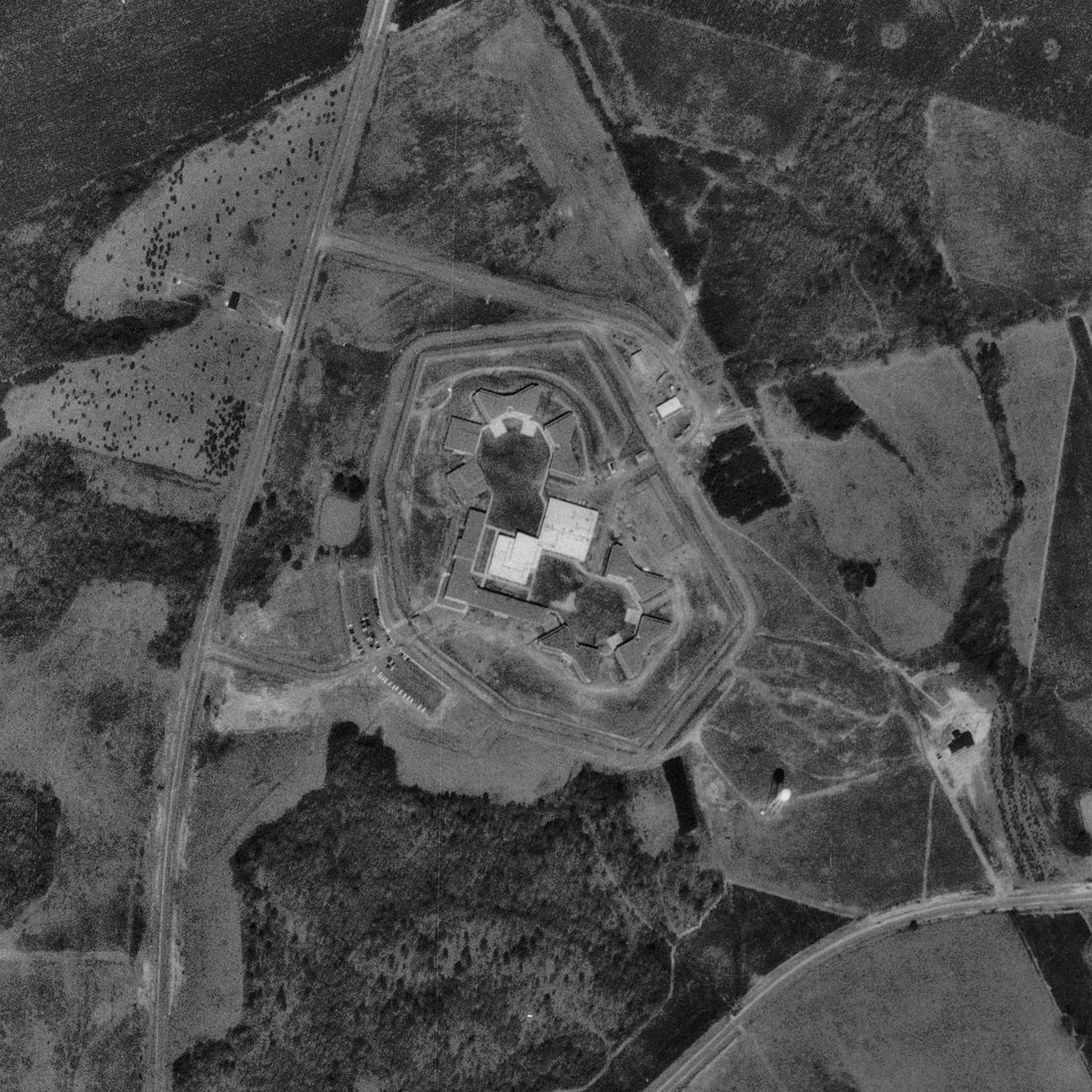
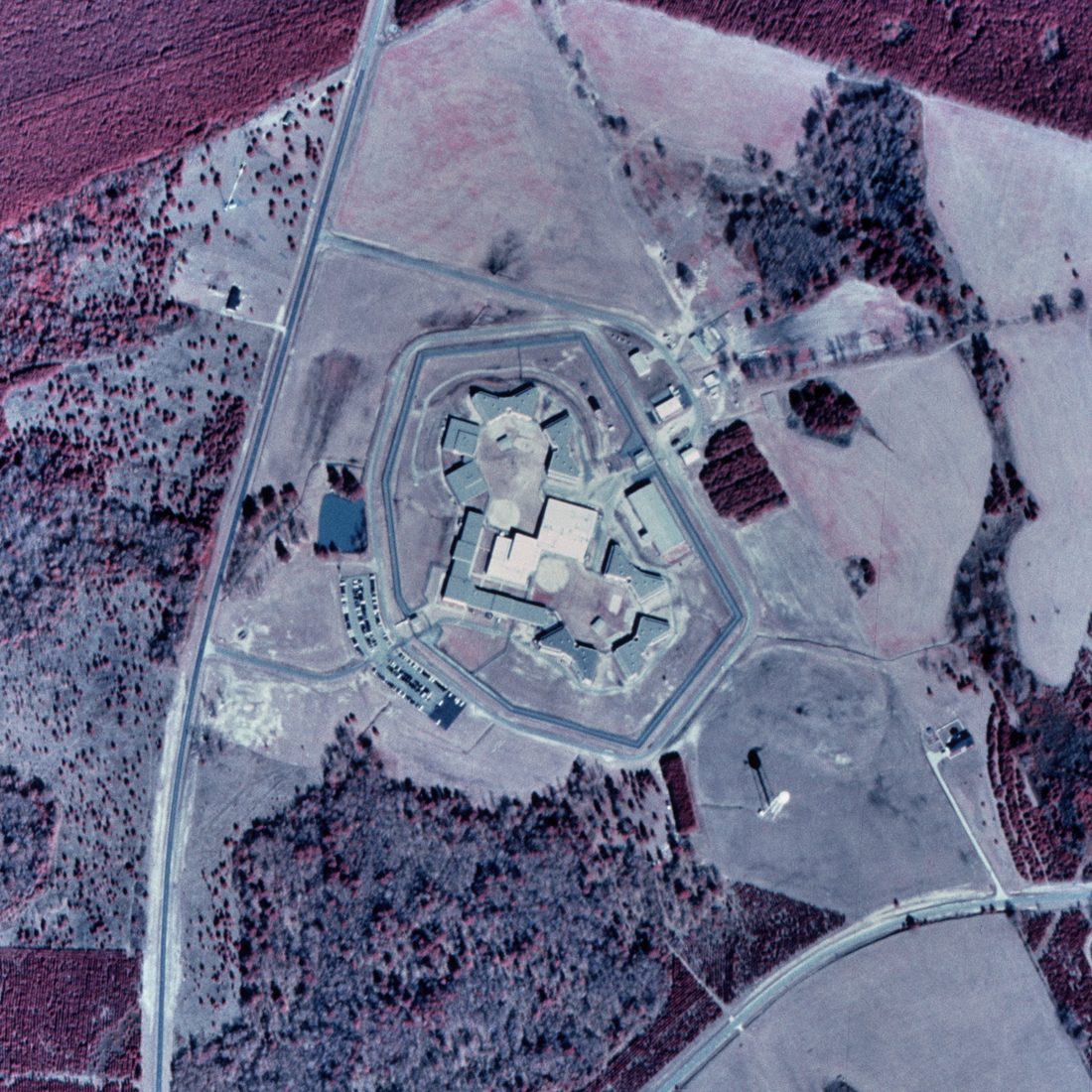
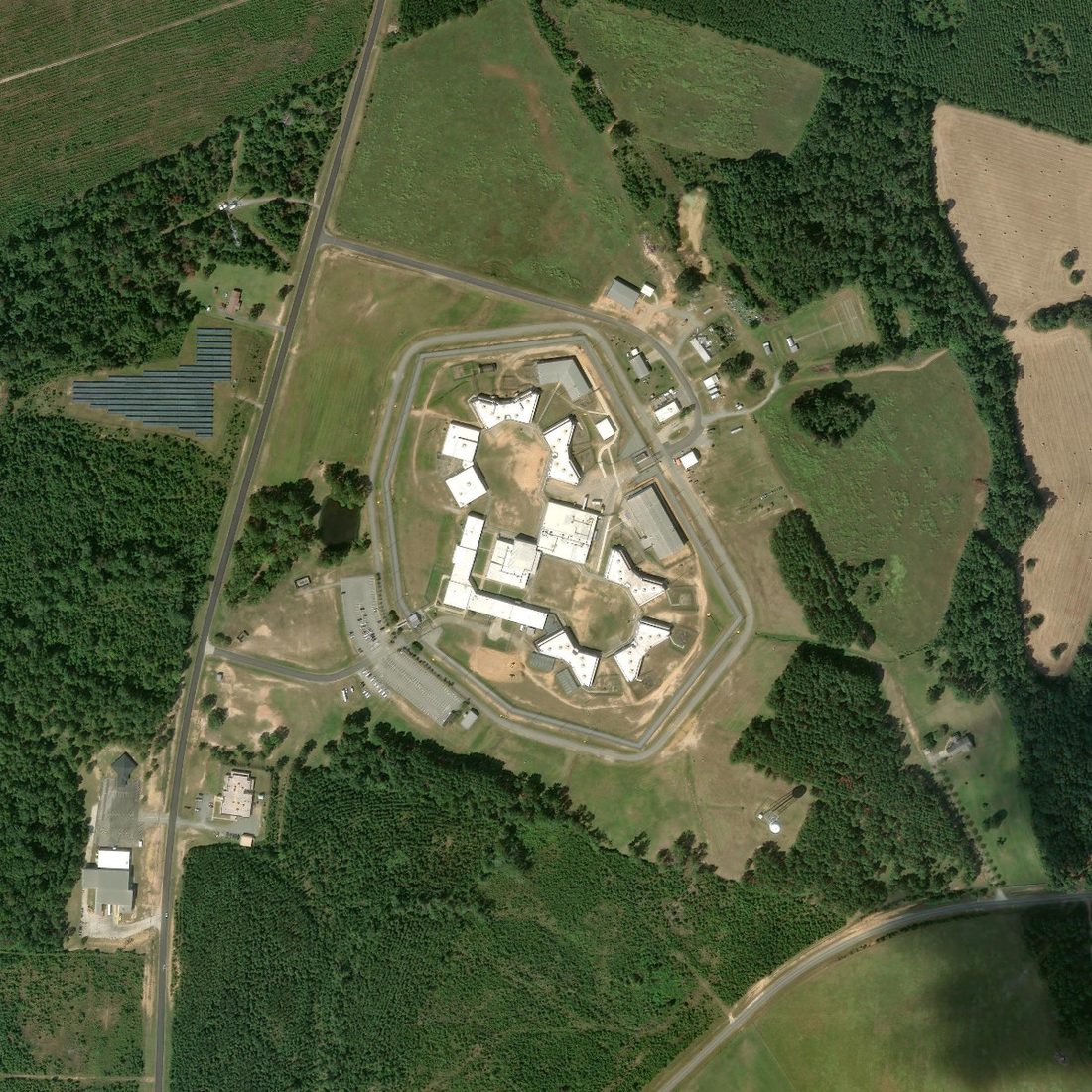
Each photo shows the same 1.2 km square, north up, so buildings line up from one year to the next. The older photos are U.S. Geological Survey aerial photographs. The photos from 1988 and earlier were taken on film and lined up with the later ones by their roads, so their positions are approximate. The early-1980s photos were taken from very high up and are less sharp. Select a photo to see it full size.