MONTGOMERY STATE PRISON
Facility Information
- Original Design Capacity
- 206 (at 187% capacity)
- Bed Capacity
- 900 beds
- Current Population
- 386
- Active Lifers
- 6 (1.6% of population) · Oct 2026 GDC report
What the courts held in Brown v. Plata, and how Georgia compares →
- Address
- 650 Mount Vernon Alston Road, Mt. Vernon, GA 30445
- Phone
- (912) 583-3600
- Fax
- (912) 583-3667
- Mailing Address
- PO Box 256, Mt. Vernon, GA 30445
- County
- Montgomery County
- Opened
- 1972
- Operator
- GDC (Georgia Dept. of Corrections)
Security Classification
Last updated: September 23, 2026
0 of the 393 people held here are classified Close security (0.0%), as of September 23, 2026.
| Security level | People | Share |
|---|---|---|
| Medium | 235 | 59.8% |
| Minimum | 158 | 40.2% |
| Total | 393 |
Earlier count (undated table, produced October 22, 2025): 0 of 415 Close (0.0%).
Source: Georgia Department of Corrections records produced to GPS under the Open Records Act (R031471-090226, R024615-101925). A person's security level is GDC's classification of that person, which can differ from the prison's own designation.
Follow Montgomery State Prison
Leadership & Accountability (as of 2026 records)
Officials currently holding positional authority at this facility, with deaths attributed to GPS-tracked records during their leadership tenure. Inclusion reflects role-based accountability, not legal findings of personal culpability. Death counts shown as facility / career.
| Role | Name | Since | Deaths this facility / career |
|---|---|---|---|
| WARDEN 1 (facility lead) | Page, Tracy Glynn | 2024-06-16 | 1 / 6 |
| Deputy Warden of Care and Treatment (facility deputy) | Crapps, Tony D | 2026-06-01 | 1 / 1 |
| Deputy Warden of Administration (facility deputy) | Calhoun, Stefanie Cooper | 2023-11-22 | — / — |
About
Last updated October 18, 2026.(DS)
Montgomery State Prison: A Small Population, a Long Record, and the Gap Between the Two
Montgomery State Prison sits in Mount Vernon, in Montgomery County, a medium-security prison for adult male felons that opened in 1972 and was renovated in the mid-1990s. Its rated capacity is 900; GPS's current population figure for the facility is 386, or 42.9 percent of rated capacity — a striking number in a system where crowding is the norm. The people held there are general-population prisoners who also staff Correctional Industries and outside work details, and the facility's stated mission emphasizes structured programs and reentry preparation. The public record around Montgomery is thin but not empty: a $500,000 state liability settlement from a 2020 incident, two deaths in GPS's registry since 2020, a run of near-perfect food-safety inspection scores, and a family's account of a Hepatitis C diagnosis and what they describe as withheld curative treatment. This page reads those threads against the systemwide findings GPS has documented — staffing collapse, classification drift, infrastructure decay, and a food-service pattern that inspection scores do not capture.
The Physical Plant and the Population It Actually Holds
Montgomery opened in 1972 as a medium-security facility and was renovated in the mid-1990s. GPS's standing record lists a rated capacity of 900 beds and an original design capacity of 206 — a figure that, read literally, describes a facility that has been expanded roughly fourfold over its life. The current population GPS records is 386, well under the rated figure.
That gap matters analytically. Georgia's prison system has spent years under federal scrutiny for crowding and understaffing, and a facility running at 42.9 percent of rated capacity is an outlier within it. GPS does not have evidence in hand explaining why Montgomery's population sits where it does — whether beds are offline, whether the rated figure is aspirational, or whether classification decisions have routed people elsewhere. What can be said is that the facility's staffing and infrastructure are sized to a 900-bed plant while the population it holds is less than half that.
The facility's programming, per GPS's record, centers on structured programs and reentry preparation, with general-population prisoners staffing Correctional Industries and outside work details. GPS's record does not enumerate specific educational, vocational, or treatment programs at Montgomery beyond that description.
A Half-Million-Dollar Settlement and What the Ledger Records
The most concrete accountability document tied to Montgomery in GPS's records is a state liability payout. According to the Georgia Department of DOAS Risk Management settlement ledger, obtained through open records, the state paid $500,000 to settle the case of Richard Alan Lankford, tied to Montgomery State Prison and an incident dated February 17, 2020. GPS's records classify the matter as a GDC settlement — a court-verified liability payout rather than an allegation.
The ledger entry establishes the payment and the facility; it does not, in the record GPS holds, describe the underlying conduct. What the settlement does establish is that a claim arising at Montgomery was serious enough to resolve for half a million dollars, and that the state's own risk-management accounting ties it to this facility. In a prison system where GPS has documented 1,918 deaths in GDC custody since 2020, liability settlements are one of the few places where the state's own books acknowledge harm.
Two Deaths in the Registry
GPS's mortality registry, which runs from January 2020 forward, records two deaths at Montgomery State Prison in that period.
Jimmy M Smith died July 31, 2020, at Montgomery State Prison; GPS's registry lists the cause as Natural/Medical. He was 61.
Dante Todd died July 12, 2026, at Montgomery State Prison. He was 50. GPS's registry lists the cause as Unknown/Pending — meaning GPS does not yet know the cause and does not guess at one.
Two deaths in more than six years at a facility of this size is a low count, and GPS treats its registry figures as floors rather than ceilings: GDC reports deaths roughly two months late, so recent deaths may not yet appear. The registry count is not an all-time figure, and GPS separately holds death records from 2015 through 2019 obtained through open records that are not included in this count.
Inspection Scores and the Sanitation Question They Don't Answer
Montgomery's food-safety record, as documented by the Georgia Department of Public Health, is close to flawless. DPH inspectors — Dale Krosting conducted each of the five inspections GPS holds — scored the facility 100 (Grade A) on June 9, 2023; 98 (Grade A) on December 28, 2023, with three violations cited including in-use utensil storage, physical facilities maintenance and cleanliness, and ventilation and lighting; 98 (Grade A) on June 20, 2024, with one violation for physical facilities maintenance and cleanliness; 100 (Grade A) on February 18, 2025; and 100 (Grade A) on March 10, 2026. All five were routine inspections.
Those scores sit inside a contradiction GPS has documented systemwide. GPS's reporting has found a pattern of food-service sanitation failure across GDC kitchens that DPH scores systematically fail to capture — tray-sanitizing dishwashers broken for sustained periods, sustained roach and rodent infestation in kitchen and serving areas, and meals served on visibly contaminated trays. The pattern is hidden from inspection scores, in GPS's analysis, because DPH inspections are scheduled walkthroughs that do not assess equipment under load, and because GPS has documented professional overlap between inspectors and facility staff in small-county settings. The Marshall Project's May 16, 2026 investigation of Georgia prison food independently reported rats in kitchens, insects in food, moldy trays, and visible malnutrition across Georgia facilities.
None of that reporting names Montgomery. What it establishes is that a perfect DPH score is not, by itself, evidence that a kitchen is sound — and that the score is the only public window into Montgomery's food service that exists.
What the Systemwide Findings Imply Here
GPS's systemic findings do not name Montgomery as an exemplar facility, and this page does not claim they do. But several bear directly on the conditions a medium-security prison in this system operates under.
GPS has documented that officer vacancies in Georgia's prisons have run between 49.3 and 60 percent systemwide for multiple years, against a national standard of no more than 10 percent; that the hiring pipeline cannot close the gap, with an acceptance rate under 15 percent and 82.7 percent of new hires leaving in their first year; and that Georgia ranks last of 50 states for correctional-officer pay. The October 2024 DOJ findings letter concluded that "the leadership of the Georgia Department of Corrections has lost control of its facilities" and faulted GDC for placing "too much blame on gangs and insufficient emphasis on understaffing." Former GDC sergeant Tyler Ryals, forced out in 2024 after whistleblowing, told GPS he had personally been the only security person on an entire Telfair compound of roughly 1,250 maximum-security inmates. Separately, former GDC assistant warden Russell Zirkle has said on record, in a timestamped interview, that Telfair and Smith State Prisons were running officer vacancy rates of 70 to 80 percent — testimony GPS reported in "Two Commanders Say Georgia Hides Its Prison Staffing Crisis."
GPS has also documented classification drift: medium-security facilities housing close-security inmates without the staffing and infrastructure that designation implies. GPS published a report titled "The Classification Crisis: How Four Medium Security Prisons Are Killing People" documenting the pattern. That report's title does not establish which four facilities it examined, and nothing in GPS's records ties it to Montgomery.
On infrastructure, GPS has documented that most GDC facilities are 30 to 40 or more years old, with deferred maintenance producing broken cell-door locks, inoperative surveillance and fire-alarm systems, mold and water failures, broken kitchen sanitization equipment, and pest infestations — a pattern corroborated by the DOJ's October 2024 findings, the Guidehouse 2024 assessment, and Commissioner Oliver's public "end of life" statements. Montgomery, opened in 1972, is squarely within that age cohort.
Medical Care and a Family's Account
GPS has received accounts from family members of an incarcerated person at Montgomery describing a Hepatitis C diagnosis verified at the facility in 2026, advanced liver disease, and severe fatigue, pain, and cognitive difficulties. Those accounts allege that facility medical staff are aware of the condition but are withholding a curative antiviral protocol, and the family has characterized the withholding as deliberate indifference to a serious medical need. GPS has also received accounts describing repeated attempts to reach facility leadership — including the warden, a deputy warden, and the medical department — by phone, email, and letter, and describing promised follow-ups that did not materialize. The family has sought review by the GDC Ombudsman and Central Health and legal advocacy from an outside organization.
These are family allegations, not verified findings, and GPS presents them as such. They are consistent with a broader pattern GPS has documented: the system's healthcare contractor is Centurion, and GPS's systemic reporting treats medical rationing as a recurring feature of GDC care rather than a facility-isolated failure.
The facility's current leadership, per GPS's personnel records, is Warden Tracy Glynn Page, who has held the post since June 2024; Deputy Warden of Care and Treatment Tony D Crapps, since June 2026; and Deputy Warden of Administration Stefanie Cooper Calhoun. Elizabeth Scott also appears in GPS's records as a deputy warden.
Sources
This analysis draws on Georgia Department of Public Health food-safety inspection records for Montgomery State Prison, including full reports from inspections conducted between June 2023 and March 2026; the Georgia Department of Administrative Services Risk Management settlement ledger, obtained through open records; GPS's mortality registry and facility records; and GPS's own systemic reporting on staffing, classification, infrastructure, food service, and medical care across the Georgia Department of Corrections, including the October 2024 Department of Justice findings letter, the 2024 Guidehouse assessment, and The Marshall Project's May 2026 investigation of Georgia prison food. Family accounts referenced here were collected by GPS and are presented as allegations.
Mortality Statistics
2 deaths documented at this facility from 2020 to present.
Deaths by Year
- 2026: 1
- 2025: 0
- 2024: 0
- 2023: 0
- 2022: 0
- 2021: 0
- 2020: 1
County Public Health Department
Food service and sanitation at MONTGOMERY STATE PRISON fall under the jurisdiction of the Montgomery County Environmental Health Department. Incarcerated people cannot choose where they eat — public health inspectors carry an elevated responsibility to hold this kitchen to the same standards applied to any restaurant.
Contact
- Title
- EH Specialist
- Name
- Curtis (Dale) Krosting
- Address
-
P.O. Box 212
Mt. Vernon, GA 30445 - Phone
- (912) 583-4602
- Curtis.Krosting@dph.ga.gov
- Website
- Visit department website →
Why this matters
GPS has documented black mold on chow-hall ceilings, cold and contaminated trays, spoiled milk, and pest contamination at Georgia prisons. The Department of Justice's 2024 report confirmed deaths from dehydration and untreated diabetes tied to food and water deprivation. Advance-notice inspections let facilities stage temporary fixes that disappear once inspectors leave.
Unannounced inspections by the county health department are one of the few outside checks on kitchen conditions behind the fence.
How you can help
Write to the county inspector and request an unannounced inspection of the kitchen and food service operation at this facility. A short, respectful letter citing Georgia food-safety regulations is more powerful than you think — inspectors respond to public concern.
Sample Letter
This is the letter Georgia Prisoners' Speak mailed to all county environmental health inspectors responsible for GDC facilities. Feel free to adapt it.
October 24, 2026
RE: Request for Unannounced Public Health Inspection of Food Service Operations at MONTGOMERY STATE PRISON
Dear Curtis (Dale) Krosting,
I am writing to respectfully request that your office conduct a thorough, unannounced inspection of food service and sanitation practices at MONTGOMERY STATE PRISON, located in Montgomery County.
Documented concerns
Georgia Prisoners' Speak, a 501(c)(3) nonprofit investigative newsroom, has published extensive investigative reporting on food safety and nutrition failures across Georgia's prison system, including:
- Dangerous sanitation conditions — black mold on chow hall ceilings and air vents, contaminated food trays, and spoiled milk served to inmates.
- Severe nutritional deficiency — roughly 60 cents per meal; inmates receive only 40% of required protein and less than one serving of vegetables per day.
- Preventable deaths — the U.S. Department of Justice's 2024 report confirmed deaths from dehydration, renal failure, and untreated diabetes following food and water deprivation.
- Staged compliance — advance-notice inspections allow facilities to stage temporary improvements, then revert once inspectors leave.
Firsthand testimony
In Surviving on Scraps: Ten Years of Prison Food in Georgia, a person who has spent more than ten years in GDC custody describes no functional dishwashing sanitation, chronic mold on food trays, and roaches found on the undersides of trays at intake facilities. Full account: gps.press/surviving-on-scraps-ten-years-of-prison-food-in-georgia.
Specific requests
- Conduct an unannounced inspection of the kitchen and food service operations at this facility, with particular attention to dishwashing equipment, tray sanitation procedures, and food storage conditions.
- Evaluate compliance with applicable Georgia food safety regulations, including O.C.G.A. § 26-2-370 and the Georgia Food Service Rules and Regulations (Chapter 511-6-1).
- Verify permit status and confirm whether the facility is subject to the same inspection schedule as other institutional food service establishments in the county.
- Make inspection results available to the public, as permitted under Georgia's Open Records Act (O.C.G.A. § 50-18-70).
Incarcerated individuals cannot advocate for their own health and safety in the way a restaurant patron can — they cannot choose to eat elsewhere. This places an elevated responsibility on public health officials to ensure these facilities meet the same sanitation standards applied to any food service establishment.
Thank you for your attention to this important public health matter.
Sincerely,
[Your name]
Food Safety Inspections
Georgia Department of Public Health
What the score doesn't measure. DPH grades kitchen compliance on inspection day — food storage, temperatures, pest control. It does not grade whether today's trays are clean. GPS reporting has found broken dishwashers at most Georgia state prisons we've documented; trays go out wet, stacked, and visibly moldy — including at facilities with recent scores near 100.
Who inspects. Most Georgia state prisons sit in rural counties — often with fewer than 20,000 people, several with fewer than 10,000. The environmental health inspector lives in that community and often knows the kitchen staff personally. Rural inspection regimes don't have the structural independence you'd expect in a city-sized health department. Read the scores accordingly.
Read the investigation: “Dunked, Stacked and Served: Why Georgia Prison Trays Are Making People Sick”
Recent inspections
| Date | Score | Purpose | |
|---|---|---|---|
| Mar 10, 2026 | 100 | Routine | |
| Feb 18, 2025 | 100 | Routine | |
| Jun 20, 2024 | 98 | Routine | |
| Dec 28, 2023 | 98 | Routine | |
| Jun 9, 2023 | 100 | Routine |
March 10, 2026 — Score 100
Routine · Inspector: Dale Krosting
No violations recorded for this inspection.
February 18, 2025 — Score 100
Routine · Inspector: Dale Krosting
No violations recorded for this inspection.
June 20, 2024 — Score 98
Routine · Inspector: Dale Krosting
| Code | Violation | Pts | Inspector notes |
|---|---|---|---|
| 17C |
physical facilities installed, maintained, and clean 511-6-1.07(5)(f) - drying mops (c) Corrected Repeat | 1 | Observed wet mops sitting on floor rather than being hung to allow for proper air drying. CA: Items were corrected on site |
December 28, 2023 — Score 98
Routine · Inspector: Dale Krosting
| Code | Violation | Pts | Inspector notes |
|---|---|---|---|
| 14A |
in-use utensils: properly stored 511-6-1.04(4)(k) - in-use utensils, between-use storage (c) Corrected | 1 | In-use utensil in nonpotential hazardous food (sugar) not stored with handle above top of food within a closed container. CA: Items were corrected on site. |
| 17C |
physical facilities installed, maintained, and clean 511-6-1.07(5)(f) - drying mops (c) Corrected | 1 | Observed wet mops sitting on floor rather than being hung to allow for proper air drying. CA: Items were corrected on site |
| 17D |
adequate ventilation and lighting; designated areas used 511-6-1.07(5)(d) - cleaning ventilation system, nuisance & discharge prohibition, cleaned in way not to cause contamination or create a public health hazard (c) | 1 | Observed dust/debris build up on the vents in the kitchen area that needs to be cleaned. CA: Work order was placed to have these items corrected by date listed. |
June 9, 2023 — Score 100
Routine · Inspector: Dale Krosting
No violations recorded for this inspection.
Timeline (1)
Source Articles (2)
Former leadership
Officials who previously held leadership roles at this facility.
| Role | Name | Tenure | Deaths this facility / career |
|---|---|---|---|
| Warden (facility lead) | Clanton, Roderick | 2023-10-01 → 2024-06-15 | — / — |
| Deputy Warden (facility deputy) | Scott, Elizabeth | 2024-07-31 → present | 1 / 1 |
| DEPUTY WARDEN (facility deputy) | Epperson, Alicia | 2021-01-01 → 2021-12-31 | — / 5 |
| DEPUTY WARDEN (facility deputy) | West, Sandi R | 2019-01-01 → 2019-12-31 | — / 6 |
| Chaplain (specialty lead) | Houser, Russell | 2023-11-22 → 2026-08-27 | — / — |
| Chief Counselor (specialty lead) | Edwards, Deidra M | 2018-01-01 → 2018-12-31 | — / — |
Location
Aerial View
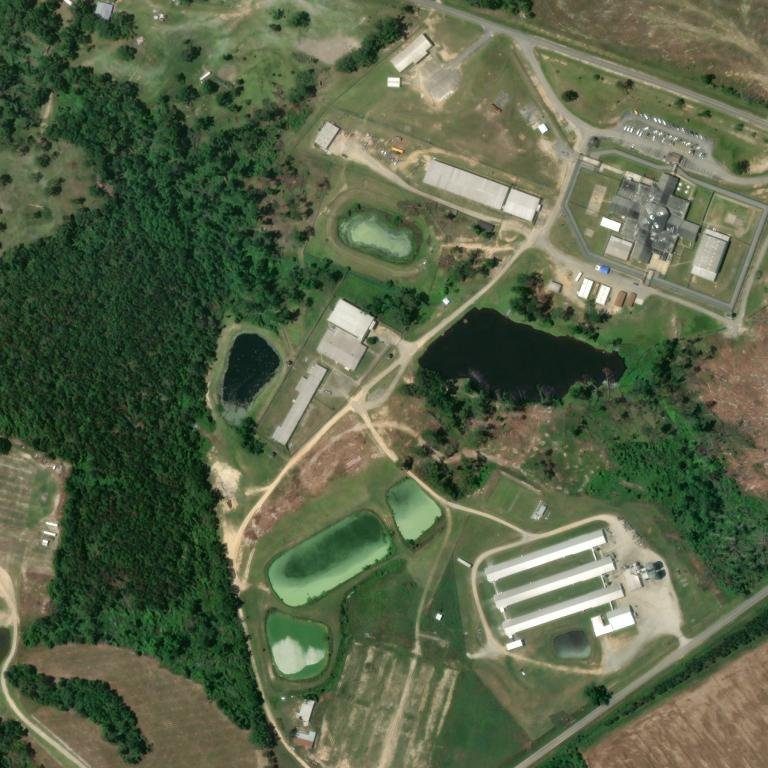
Satellite image: Esri World Imagery. Architecture documents what the building was designed to hold. See the system-wide receipts at gps.press/warehouse.
Then and now
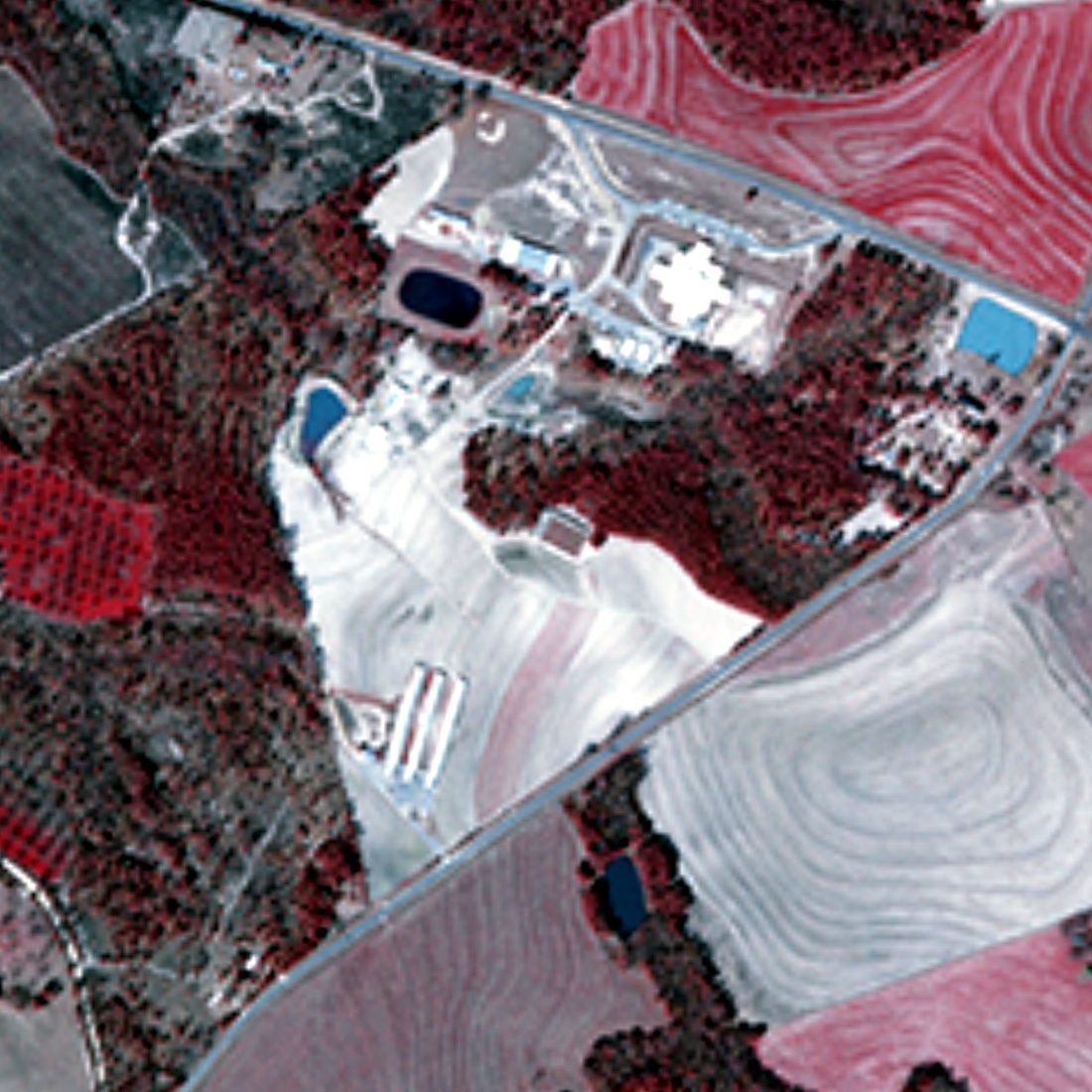

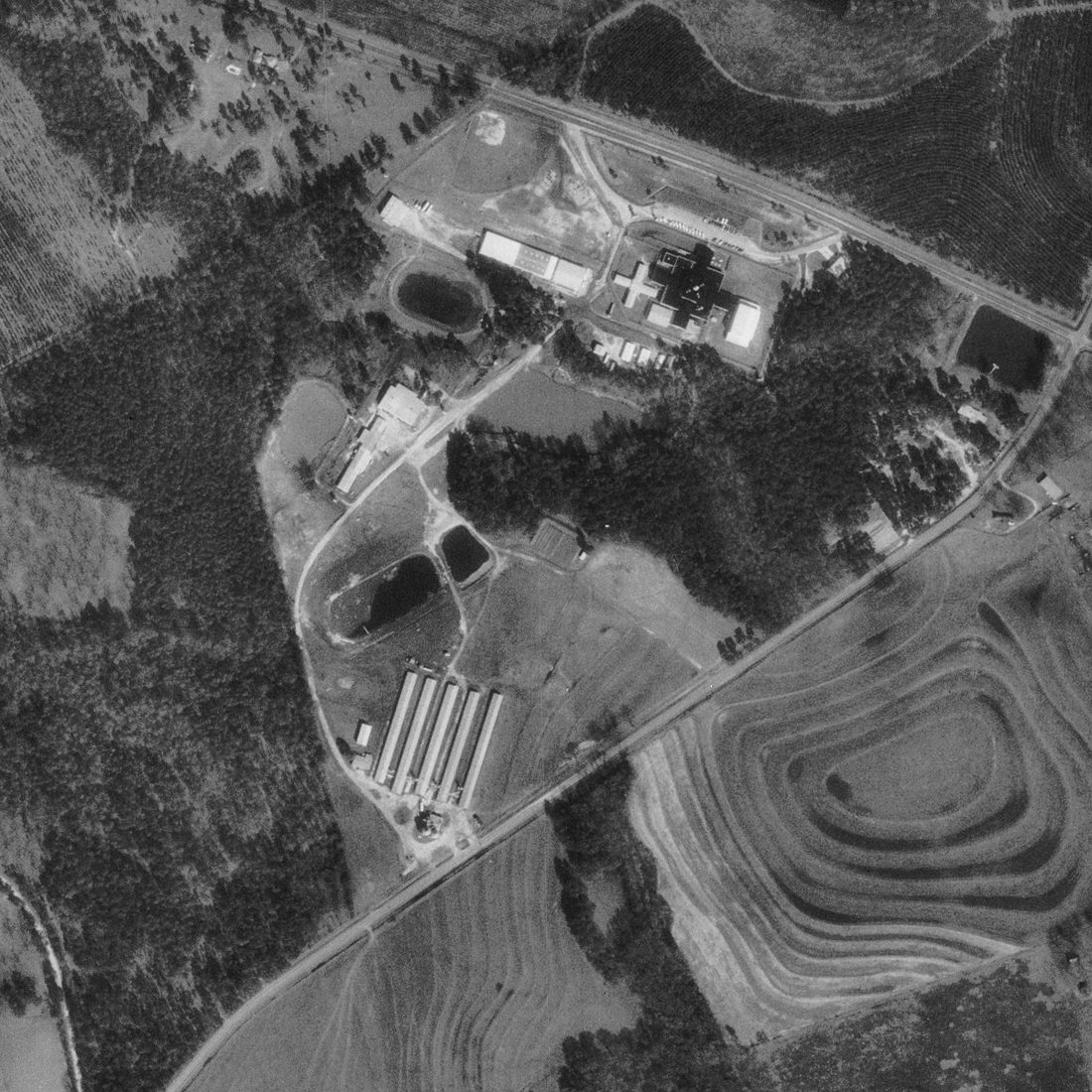

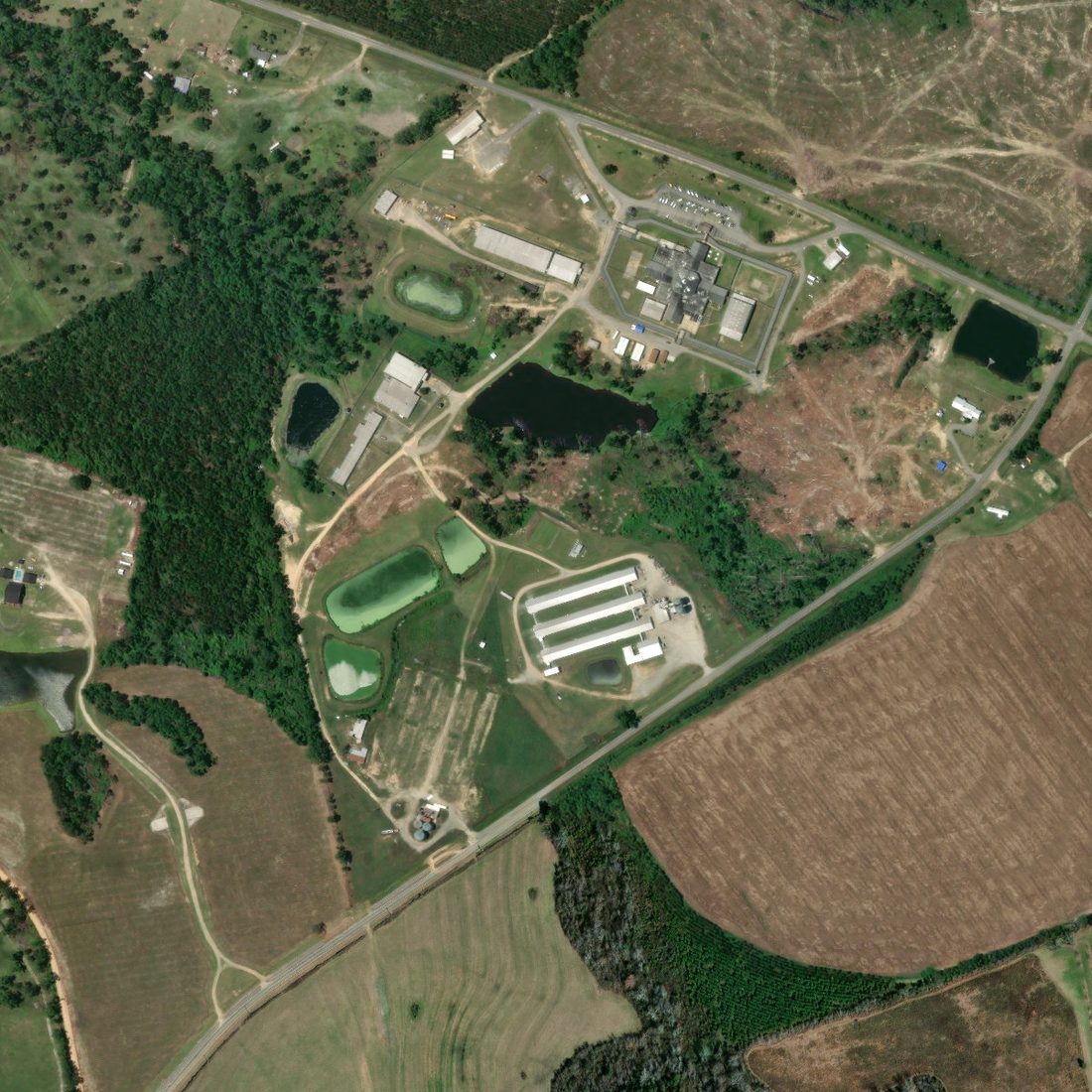
Each photo shows the same 1.2 km square, north up, so buildings line up from one year to the next. The older photos are U.S. Geological Survey aerial photographs. The photos from 1988 and earlier were taken on film and lined up with the later ones by their roads, so their positions are approximate. The early-1980s photos were taken from very high up and are less sharp. Select a photo to see it full size.