BURRUSS C.T.C
Facility Information
- Original Design Capacity
- 300 (at 226% capacity)
- Bed Capacity
- 806 beds
- Current Population
- 679
- Active Lifers
- 109 (16.1% of population) · Oct 2026 GDC report
What the courts held in Brown v. Plata, and how Georgia compares →
- Address
- 1000 Indian Springs Drive, Forsyth, GA 31029
- Phone
- (478) 994-7512
- Fax
- (478) 994-7561
- Mailing Address
- P.O. Box 5849, Forsyth, GA 31029
- County
- Monroe County
- Opened
- 1986
- Operator
- GDC (Georgia Dept. of Corrections)
Security Classification
Last updated: September 23, 2026
3 of the 675 people held here are classified Close security (0.4%), as of September 23, 2026.
| Security level | People | Share |
|---|---|---|
| Close | 3 | 0.4% |
| Medium | 468 | 69.3% |
| Minimum | 204 | 30.2% |
| Total | 675 |
Earlier count (undated table, produced October 22, 2025): 0 of 750 Close (0.0%).
Source: Georgia Department of Corrections records produced to GPS under the Open Records Act (R031471-090226, R024615-101925). A person's security level is GDC's classification of that person, which can differ from the prison's own designation.
Follow Burruss C.T.C
Leadership & Accountability (as of 2026 records)
Officials currently holding positional authority at this facility, with deaths attributed to GPS-tracked records during their leadership tenure. Inclusion reflects role-based accountability, not legal findings of personal culpability. Death counts shown as facility / career.
| Role | Name | Since | Deaths this facility / career |
|---|---|---|---|
| Warden (facility lead) | Samuel, Chanel | 2026-07-05 | 1 / 1 |
| Deputy Warden of Care and Treatment (facility deputy) | Fanning, Jacqueline | 2023-01-01 | 4 / 4 |
| Deputy Warden of Security (facility deputy) | Foster, Stephen | 2026-07-01 | 1 / 1 |
| Deputy Warden of Administration (facility deputy) | Henderson, Delores | 2026-07-16 | — / — |
About
Last updated October 18, 2026.(DS)
Burruss Correctional Training Center: A Training Mission Inside a System in Crisis
Burruss Correctional Training Center sits on the outskirts of Forsyth in Monroe County, a medium-security "special-mission" prison that opened in 1986 and today holds 679 men against a rated capacity of 806 — roughly 84 percent of capacity, and more than twice the 300 people its original design contemplated. It is unusual in the Georgia Department of Corrections for housing both adult and juvenile male offenders sentenced as adults, and it carries an educational mission — a charter high school, GED and adult basic education, and technical programs — alongside outside details and industries. What follows examines the facility through three lenses: the deaths GPS has recorded there since 2020, the contraband record GDC itself publishes, and the systemwide conditions that GPS has documented as shaping every GDC facility, Burruss included.
Six Deaths, Three of Them Unexplained
GPS's mortality registry records six deaths at Burruss Correctional Training Center since January 1, 2020 — a floor rather than a complete count, since GDC reports deaths roughly two months late. The registry's earliest entry is Robert Carey Seymour, who died March 9, 2022, at age 58; GPS's registry lists the cause as suicide.
The next three came in a single year. Jonathan Lee Mischloney died March 3, 2024, at age 46; Christopher Troy Campbell died June 26, 2024, at age 58; and Anthony James Walkertriplett died September 9, 2024, at age 21. For all three, GPS's registry lists the cause as Unknown/Pending — meaning GPS does not yet know why they died, not that no cause exists.
Tyler Michael Zacher died February 3, 2025, at age 22; the registry lists the cause as homicide. Ashley Lloyd Neesmith died July 15, 2026, at age 50; the registry lists the cause as accident. The homicide classification on Zacher's record is the only one of its kind in the Burruss registry, and it stands against a systemwide backdrop in which GPS has independently tracked 1,918 deaths in GDC custody since 2020.
The registry's shape — three of six deaths coded Unknown/Pending, spread across a facility that houses people as young as the juvenile population Burruss is designated to serve — is itself the finding. A cause category of "pending" is a placeholder, and GPS treats unresolved cause coding as a gap in the public record rather than a conclusion about any individual death.
Contraband, Officers, and the Pipeline Through the Front Gate
GDC's own published contraband reports — arrests as reported, not convictions, and GDC publishes no dispositions — record eight incidents at Burruss between 2011 and 2021. Four of them involve staff-class actors, all printed by GDC with the role "Officer."
The most serious is the April 24, 2021 arrest of Officer Brian Walker. In GDC's verbatim account, "security staff noticed a bulge in the waist area of Officer Brian Walker as he attempted to enter the facility." Walker consented to a search, and GDC reports that ecstasy pills, oxycontin, Xanax pills, marijuana, tobacco, and strips of paper were found. He was arrested and transported to the Monroe County jail. Three months earlier, on January 17, 2021, GDC reported that staff "spotted a package in the jacket of Officer Monica Patrick as she was entering the facility," containing tobacco; she too was arrested and taken to the Monroe County Jail.
The staff record reaches back further. On November 19, 2018, GDC reported that Officer Deasia George was arrested by the Monroe County Sheriff's Office "due to an ongoing investigation." And on January 15, 2012, Officer Darrell Hobbs was arrested by the same office at the facility; GDC's report states that "Hobbs admitted to having marijuana in his possession for an inmate."
Visitors account for the rest. In September 2016, the Monroe County Sheriffs Department arrested Visitors Natashia Lambert and Tammy Griff after a vehicle search turned up 27 plastic bags of tobacco, two lighters, and two rolls of black electrical tape; GDC's account states that Lambert admitted a previous contraband drop at the Butts County outside detail site. In April 2014, visitor Karen Scott was arrested after a white, rocky-like substance wrapped in clear plastic fell from beneath her shirt and a search of her vehicle produced a .380. In March 2018, visitor Katrazus Thompson was arrested after officers observed her give an incarcerated person a pack of cigarettes. In October 2011, Tamirra Oliver was arrested at the facility when crack cocaine was found in her possession during a visit.
The pattern is not unique to Burruss, but its composition is notable: half the facility's published contraband arrests involve the officers assigned to stop contraband coming in.
Food Service: High Scores and What They Do Not Measure
The Georgia Department of Public Health has inspected Burruss's food service nine times since June 2023, all routine, all conducted by inspector Larry Emery, and all scored Grade A. The scores run from 91 (October 7, 2024) to 99 (September 18, 2023). The most recent, on March 4, 2026, was a 97 with two violations cited: utensils, equipment and linens properly stored, dried, and handled, and physical facilities installed, maintained, and clean. The October 2024 inspection, the lowest of the run, cited food-contact surfaces cleaned and sanitized, contamination prevented during food preparation, storage, and display, and plumbing installed with proper backflow devices. The June 2025 inspection cited insects, rodents, and animals not present, alongside in-use utensil storage and equipment handling.
Those scores require context that the inspection form does not supply. GPS has documented a systemic pattern of food-service sanitation failure across GDC kitchens that DPH scores systematically fail to capture: tray-sanitizing dishwashers broken for sustained periods, sustained roach and rodent infestation in kitchen and serving areas, and meals served on visibly contaminated trays. The pattern is hidden from DPH scores, in GPS's analysis, because inspections are scheduled walkthroughs that do not assess equipment under load. High DPH scores at GDC facilities coexist with sustained witness reports of equipment failure and food contamination — the contradiction at the center of GPS's investigation "Dunked, Stacked, and Served."
The economics underneath are stark. GDC spends approximately $1.69 per person per day on food (2024) and has proposed $1.60 per day in FY27 — under 60 cents per meal — against the FDA Thrifty Food Plan estimate of roughly $10 per day for an adult man's nutritionally adequate diet. The Marshall Project corroborated the pattern on May 16, 2026, in Schwartzapfel's "Rats, Insects and Mold," independently reporting rats in kitchens, insects in food, moldy trays, and visible malnutrition across Georgia facilities, and quoting GPS connecting chronic underfeeding to the violence pattern the DOJ documented in October 2024.
Staffing Collapse, Classification Drift, and the System That Reaches Burruss
GPS has not documented a facility-specific staffing figure at Burruss. But the systemwide conditions GPS has documented apply to every GDC facility, and they frame what a 679-person medium-security prison with a juvenile population is actually operating under.
Officer vacancies in Georgia's prisons have run between 49.3% and 60% systemwide for multiple years, against a national standard of no more than 10%. The hiring pipeline cannot close the gap: an acceptance rate under 15%, and 82.7% of new hires leaving in their first year. Georgia ranks last of 50 states for correctional-officer pay. The October 2024 DOJ findings letter concluded that "the leadership of the Georgia Department of Corrections has lost control of its facilities" and faulted GDC for placing "too much blame on gangs and insufficient emphasis on understaffing." Approximately 31% of the system's ~49,000 incarcerated population are validated members of 315 different security threat groups — more than double the national average — and both DOJ and the Guidehouse 2024 consultant assessment independently concluded that gangs effectively run multiple facilities, controlling access to phones, showers, food, and bed assignments. Tyler Ryals, a former GDC sergeant forced out in 2024 after whistleblowing, told GPS he had personally been the only security person on the entire Telfair compound of roughly 1,250 maximum-security inmates.
Layered onto staffing is classification drift — the documented pattern of medium-security facilities housing close-security populations without the staffing and infrastructure that designation implies. GPS has published on this pattern, including a report titled "The Classification Crisis: How Four Medium Security Prisons Are Killing People." Burruss's own profile — a medium-security facility holding both adult and juvenile males sentenced as adults — is the kind of mixed mission that drift makes harder to run safely.
Infrastructure compounds it. Most GDC facilities are 30 to 40-plus years old, with documented patterns of deferred maintenance that have produced systemwide failures: broken cell-door locks, inoperative surveillance and fire-alarm systems, mold and water failures, broken kitchen sanitization equipment, and pest infestations. The DOJ October 2024 findings, the Guidehouse 2024 assessment, and Commissioner Oliver's public "end of life" statements all corroborate the pattern. GPS treats infrastructure collapse as a force multiplier for the violence, classification, gang-control, and mortality crises documented at the facility level.
Leadership and the Record Going Forward
Burruss is currently led by Warden Chanel Samuel, in post since July 5, 2026. Her deputies are Delores Henderson (Deputy Warden of Administration, since July 16, 2026), Jacqueline Fanning (Deputy Warden of Care and Treatment), and Stephen Foster (Deputy Warden of Security, since July 1, 2026). The near-total turnover of the leadership team in the summer of 2026 is a matter of record; GPS does not infer its cause.
What the public record supports about Burruss is this: a facility built for 300 holding 679, with a dual adult-juvenile mission and an educational program the state advertises; six deaths since 2020, three of them with causes GPS cannot yet state; a contraband record in which officers appear as frequently as visitors; and food-service scores that read clean while GPS's systemwide reporting describes kitchens that are not. Those threads are not separate stories. They are the same story told at different scales.
Sources
This analysis draws on Georgia Department of Public Health food-safety inspection records for Burruss Correctional Training Center (inspector Larry Emery, 2023–2026); GDC's own published contraband arrest reports, cited by incident and source URL; GPS's mortality registry for the facility; GPS personnel records for current facility leadership; and GPS's systemwide investigative findings on staffing, classification, infrastructure, food service, and sexual violence, which draw in turn on the U.S. Department of Justice's October 2024 findings letter, the Guidehouse 2024 consultant assessment, and The Marshall Project's May 16, 2026 investigation by Schwartzapfel. Firsthand accounts published in Georgia Prisoners' Speak — Tell My Story inform the broader context of GDC conditions but are not tied to specific incidents at this facility.
Mortality Statistics
7 deaths documented at this facility from 2020 to present.
Deaths by Year
- 2026: 2
- 2025: 1
- 2024: 3
- 2023: 0
- 2022: 1
- 2021: 0
- 2020: 0
County Public Health Department
Food service and sanitation at BURRUSS C.T.C fall under the jurisdiction of the Monroe County Environmental Health Department. Incarcerated people cannot choose where they eat — public health inspectors carry an elevated responsibility to hold this kitchen to the same standards applied to any restaurant.
Contact
- Title
- EH Specialist
- Name
- Macdonald Aloh
- Address
-
106 Martin Luther King, Jr. Dr.
Forsyth, GA 31029 - Phone
- (478) 993-3081
- Macdonald.Aloh@dph.ga.gov
- Website
- Visit department website →
Why this matters
GPS has documented black mold on chow-hall ceilings, cold and contaminated trays, spoiled milk, and pest contamination at Georgia prisons. The Department of Justice's 2024 report confirmed deaths from dehydration and untreated diabetes tied to food and water deprivation. Advance-notice inspections let facilities stage temporary fixes that disappear once inspectors leave.
Unannounced inspections by the county health department are one of the few outside checks on kitchen conditions behind the fence.
How you can help
Write to the county inspector and request an unannounced inspection of the kitchen and food service operation at this facility. A short, respectful letter citing Georgia food-safety regulations is more powerful than you think — inspectors respond to public concern.
Sample Letter
This is the letter Georgia Prisoners' Speak mailed to all county environmental health inspectors responsible for GDC facilities. Feel free to adapt it.
October 24, 2026
RE: Request for Unannounced Public Health Inspection of Food Service Operations at BURRUSS C.T.C
Dear Macdonald Aloh,
I am writing to respectfully request that your office conduct a thorough, unannounced inspection of food service and sanitation practices at BURRUSS C.T.C, located in Monroe County.
Documented concerns
Georgia Prisoners' Speak, a 501(c)(3) nonprofit investigative newsroom, has published extensive investigative reporting on food safety and nutrition failures across Georgia's prison system, including:
- Dangerous sanitation conditions — black mold on chow hall ceilings and air vents, contaminated food trays, and spoiled milk served to inmates.
- Severe nutritional deficiency — roughly 60 cents per meal; inmates receive only 40% of required protein and less than one serving of vegetables per day.
- Preventable deaths — the U.S. Department of Justice's 2024 report confirmed deaths from dehydration, renal failure, and untreated diabetes following food and water deprivation.
- Staged compliance — advance-notice inspections allow facilities to stage temporary improvements, then revert once inspectors leave.
Firsthand testimony
In Surviving on Scraps: Ten Years of Prison Food in Georgia, a person who has spent more than ten years in GDC custody describes no functional dishwashing sanitation, chronic mold on food trays, and roaches found on the undersides of trays at intake facilities. Full account: gps.press/surviving-on-scraps-ten-years-of-prison-food-in-georgia.
Specific requests
- Conduct an unannounced inspection of the kitchen and food service operations at this facility, with particular attention to dishwashing equipment, tray sanitation procedures, and food storage conditions.
- Evaluate compliance with applicable Georgia food safety regulations, including O.C.G.A. § 26-2-370 and the Georgia Food Service Rules and Regulations (Chapter 511-6-1).
- Verify permit status and confirm whether the facility is subject to the same inspection schedule as other institutional food service establishments in the county.
- Make inspection results available to the public, as permitted under Georgia's Open Records Act (O.C.G.A. § 50-18-70).
Incarcerated individuals cannot advocate for their own health and safety in the way a restaurant patron can — they cannot choose to eat elsewhere. This places an elevated responsibility on public health officials to ensure these facilities meet the same sanitation standards applied to any food service establishment.
Thank you for your attention to this important public health matter.
Sincerely,
[Your name]
Food Safety Inspections
Georgia Department of Public Health
What the score doesn't measure. DPH grades kitchen compliance on inspection day — food storage, temperatures, pest control. It does not grade whether today's trays are clean. GPS reporting has found broken dishwashers at most Georgia state prisons we've documented; trays go out wet, stacked, and visibly moldy — including at facilities with recent scores near 100.
Who inspects. Most Georgia state prisons sit in rural counties — often with fewer than 20,000 people, several with fewer than 10,000. The environmental health inspector lives in that community and often knows the kitchen staff personally. Rural inspection regimes don't have the structural independence you'd expect in a city-sized health department. Read the scores accordingly.
Read the investigation: “Dunked, Stacked and Served: Why Georgia Prison Trays Are Making People Sick”
Recent inspections
| Date | Score | Purpose | |
|---|---|---|---|
| Mar 4, 2026 | 97 | Routine | |
| Oct 8, 2025 | 94 | Routine | |
| Jun 17, 2025 | 95 | Routine | |
| Feb 5, 2025 | 95 | Routine | |
| Oct 7, 2024 | 91 | Routine | |
| May 28, 2024 | 93 | Routine | |
| Jan 29, 2024 | 95 | Routine | |
| Sep 18, 2023 | 99 | Routine | |
| Jun 8, 2023 | 98 | Routine |
March 4, 2026 — Score 97
Routine · Inspector: Larry Emery
| Code | Violation | Pts | Inspector notes |
|---|---|---|---|
| 14B |
utensils, equipment and linens: properly stored, dried, handled 511-6-1.05(10)(e)1,2,4 - equipment, utensil, linens, stored 6" off floor in clean, dry location (c) Repeat | 1 | Observed clean dishes being stacked wet after going through the dish machine in the kitchen area, Equipment and Utensils, Air-Drying Required. After cleaning and sanitizing, equipment and utensils:1. Shall be air-dried or used after adequate draining before contact with food. COS The manager will have all dishes air dried properly after being wash, rinse, and sanitized corrected on 3/4/26 |
| 17C |
physical facilities installed, maintained, and clean 511-6-1.07(5)(a),(b) - good repair, physical facilities maintained; cleaning, frequency & restrictions, cleaned often enough to keep them clean (c) | 1 | Observed missing tiles on the side walls on the floor in the kitchen, All floors within the facility should be in good repair and smooth, durable, and easily cleanable for areas where food service establishment operations are conducted. The manager will have maintenance repair the tiles by 4/1/26 |
October 8, 2025 — Score 94
Routine · Inspector: Larry Emery
| Code | Violation | Pts | Inspector notes |
|---|---|---|---|
| 2B |
food-contact surfaces: cleaned & sanitized 511-6-1.05(6)(l) - mechanical warewashing, hot water sanitization temperatures(p) | 4 | Observed the hot sanitization is not working on the dishmachine for the sanitizing cycle, in a mechanical operation, the temperature of the fresh hot water sanitizing rinse as it enters the manifold may not be more than 194ºF (90ºC), or less than: Pf(i) For a stationary rack, single temperature machine, 165ºF (74ºC); Pf or(ii) For all other machines, 180ºF (82ºC). The maintenance will fix the hot water sanatazation for 180 or higher by 10/30/25 |
| 14B |
utensils, equipment and linens: properly stored, dried, handled 511-6-1.05(10)(a) - equipment & utensils, air-drying required (c) Repeat | 1 | Observed clean dishes being stacked wet after going through the dish machine in the kitchen area, Equipment and Utensils, Air-Drying Required. After cleaning and sanitizing, equipment and utensils:1. Shall be air-dried or used after adequate draining before contact with food. COS The manager will have all dishes air dried properly after being wash, rinse, and sanitized |
June 17, 2025 — Score 95
Routine · Inspector: Larry Emery
| Code | Violation | Pts | Inspector notes |
|---|---|---|---|
| 14A |
in-use utensils: properly stored 511-6-1.04(4)(k) - in-use utensils, between-use storage (c) | 1 | Observed a ice scoop lying inside the ice machine, all in use utensil such a ice scoop must be stored in container or stored in the ice bend with the handle up between usage o prevent contamination. COS ice scoop removed and placed in a container for protection corrected 6/17/25 |
| 14B |
utensils, equipment and linens: properly stored, dried, handled 511-6-1.05(10)(a) - equipment & utensils, air-drying required (c) Repeat | 1 | Observed clean dishes being stacked wet after going through the dish machine in the kitchen area, Equipment and Utensils, Air-Drying Required. After cleaning and sanitizing, equipment and utensils:1. Shall be air-dried or used after adequate draining before contact with food. COS The manager will have all dishes air dried properly after being wash, rinse, and sanitized |
| 18 |
insects, rodents, and animals not present 511-6-1.07(2)(k) - insect control devices (c) | 3 | Observed lives flies in the kitchen area, . Insect control devices that are used to electrocute or stun flying insects shall be designed to retain the insect within the device.2. Insect control devices shall be installed so that:(i) The devices are not located over a food preparation area. The kitchen needs to keep the door closed much as possible because it has a fan at the backdoor. |
February 5, 2025 — Score 95
Routine · Inspector: Larry Emery
| Code | Violation | Pts | Inspector notes |
|---|---|---|---|
| 14B |
utensils, equipment and linens: properly stored, dried, handled 511-6-1.05(10)(a) - equipment & utensils, air-drying required (c) | 1 | Observed clean dishes being stacked wet after going through the dish machine in the kitchen area, Equipment and Utensils, Air-Drying Required. After cleaning and sanitizing, equipment and utensils:1. Shall be air-dried or used after adequate draining before contact with food. The manager will have all dishes air dried properly after being wash, rinse, and sanitized |
| 17C |
physical facilities installed, maintained, and clean 511-6-1.07(5)(a),(b) - good repair, physical facilities maintained; cleaning, frequency & restrictions, cleaned often enough to keep them clean (c) | 1 | Observed missing tiles on the floor in the kitchen, All floors within the facility should be in good repair and smooth, durable, and easily cleanable for areas where food service establishment operations are conducted. The manager will have maintanance repair the tiles by 3/1/25 |
| 18 |
insects, rodents, and animals not present 511-6-1.07(5)(k) - controlling pests (pf, c) | 3 | Observed live roaches in the dish room in the kitchen, The presence of insects, rodents, and other pests shall be controlled to minimize their presence on the premises by: Using methods, if pests are found, such as trapping devices or other means of pest control. |
October 7, 2024 — Score 91
Routine · Inspector: Larry Emery
| Code | Violation | Pts | Inspector notes |
|---|---|---|---|
| 2B |
food-contact surfaces: cleaned & sanitized 511-6-1.05(6)(o) - manual warewashing equipment, chemical sanitization using detergent sanitizers(c) | 4 | Observed the employee sanitizing the clean dishes with chlorine sanitizer low than 100 ppm, Manual Warewashing Equipment, Chemical Sanitization Using Detergent-Sanitizers. If a detergent-sanitizer is used to sanitize in a cleaning and sanitizing procedure where there is no distinct water rinse between the washing and sanitizing steps, the agent applied in the sanitizing step shall be the same detergent-sanitizer that is used in the washing step. The manger added the proper chlorine bleach to the sanitizer so the concentration level were correct at 100ppm |
| 12A |
contamination prevented during food preparation, storage, display 511-6-1.04(4)(q) - food storage (c) | 3 | OBserved a carton of stored in the clean ice of the ice machine, food shall be protected from contamination by storing the food. COS The manager removed the carton of milk from the ice |
| 16B |
plumbing installed; proper backflow devices 511-6-1.06(2)(r) - system maintained in good repair (p, c) | 2 | Observed broken pipe under the rinse sink wouldn't hold the rinse water in the sink, System Maintained in Good Repair. A plumbing system shall be repaired according to law; P and maintained in good repair. The maintenance will be repairing the plumbing under the sinks. |
May 28, 2024 — Score 93
Routine · Inspector: Larry Emery
| Code | Violation | Pts | Inspector notes |
|---|---|---|---|
| 2B |
food-contact surfaces: cleaned & sanitized 511-6-1.05(7)(b) - food contact surfaces and utensils - cleaning frequency (p, c) | 4 | Observed mildew inside the walls of the ice machine , all food contact surface need to be cleaned and sanitized every 4hr or as needed to prevent the food contact surface from becoming contaminated. COS the inside the walls of the ice machine were cleaned by 6/1/24 |
| 12B |
personal cleanliness 511-6-1.03(5)(j) - hair restraints (c) | 3 | Observed no hair restraint while dishes were being washed, rinses and sanitized, . Employees preparing or handling food shall use effective and clean, disposable or easily cleanable nets or other hair restraints approved by the Health Authority, worn properly to restrain loose hair including beards and mustaches longer than one half inch. The manager will have employee wear hair restraint. corrected on 5/28/24 |
January 29, 2024 — Score 95
Routine · Inspector: Larry Emery
| Code | Violation | Pts | Inspector notes |
|---|---|---|---|
| 2B |
food-contact surfaces: cleaned & sanitized 511-6-1.05(7)(b) - food contact surfaces and utensils - cleaning frequency (p, c) | 4 | Observed mildew inside the walls of the ice machine , all food contact surface need to be cleaned and sanitized every 4hr or as needed to prevent the food contact surface from becoming contaminated. COS the inside the walls of the ice machine were cleaned by 1/30/24 |
| 14B |
utensils, equipment and linens: properly stored, dried, handled 511-6-1.05(10)(a) - equipment & utensils, air-drying required (c) | 1 | Observed clean dishes being stacked wet after going through the dish machine in the kitchen area, Equipment and Utensils, Air-Drying Required. After cleaning and sanitizing, equipment and utensils:1. Shall be air-dried or used after adequate draining before contact with food. The manager will have all dishes air dried properly after being wash, rinse, and sanitized in the kitche area |
September 18, 2023 — Score 99
Routine · Inspector: Larry Emery
| Code | Violation | Pts | Inspector notes |
|---|---|---|---|
| 17C |
physical facilities installed, maintained, and clean 511-6-1.07(5)(a),(b) - good repair, physical facilities maintained; cleaning, frequency & restrictions, cleaned often enough to keep them clean (c) | 1 | Observed the FRP walls under dishwasher pulling away from the walls because of the excess water in the area, All floors within the facility should be in good repair and smooth, durable, and easily cleanable for areas where food service establishment operations are conducted. The manager will have maintenance repair the walls under the dishwasher by 9/30/23 |
June 8, 2023 — Score 98
Routine · Inspector: Larry Emery
| Code | Violation | Pts | Inspector notes |
|---|---|---|---|
| 14B |
utensils, equipment and linens: properly stored, dried, handled 511-6-1.05(10)(e)1,2,4 - equipment, utensil, linens, stored 6" off floor in clean, dry location (c) Repeat | 1 | Observed the plate were being stack while still wet in the kitchen , Clean equipment and utensils shall be stored as specified under paragraph 1 of this subsection and shall be stored:(i) In a self-draining position that allows air drying; . the manager will train the employee on the proper air drying of wet dishes correctly |
Source Articles (3)
Associated Facilities
The following facilities are located on these grounds:
- WEST CENTRAL INTEGRATED TREATMENT FACILITY (Integrated Treatment Facility)
Former leadership
Officials who previously held leadership roles at this facility.
| Role | Name | Tenure | Deaths this facility / career |
|---|---|---|---|
| WARDEN 2 (facility lead) | McMillan, Meosha S | 2023-11-22 → 2025-12-31 | 4 / 18 |
| WARDEN 1 (facility lead) | Spann, James Clarence | 2021-01-01 → 2022-12-31 | 1 / 43 |
| WARDEN 1 (facility lead) | Payne, James Oneal | 2017-01-01 → 2020-12-31 | — / — |
| DEPUTY WARDEN (facility deputy) | Samuel, Chanel Andrea | 2021-01-01 → 2025-07-15 | 1 / 1 |
| DEPUTY WARDEN (facility deputy) | Carter, Curtis | 2020-01-01 → 2023-12-31 | 1 / 17 |
| Deputy Warden (facility deputy) | Green, Chanel Andrea | 2023-11-22 → 2023-11-22 | — / — |
| Deputy Warden (facility deputy) | Hawkins, Lena Faye | 2023-11-22 → 2023-11-22 | — / — |
| Chaplain (specialty lead) | Samuels, Samantha | 2026-08-27 → 2026-08-27 | — / — |
| Chaplain (specialty lead) | Potts, Windel | 2026-08-27 → 2026-08-27 | — / — |
| Chaplain (specialty lead) | Dunlap, Tammie E | 2023-11-22 → 2023-11-22 | — / — |
Location
Aerial View
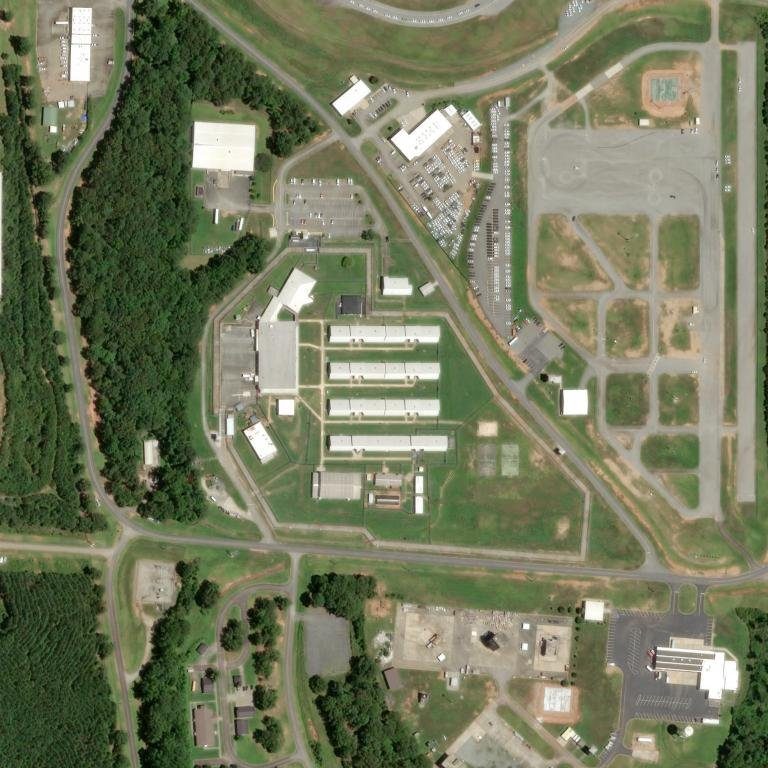
Satellite image: Esri World Imagery. Architecture documents what the building was designed to hold. See the system-wide receipts at gps.press/warehouse.
Then and now
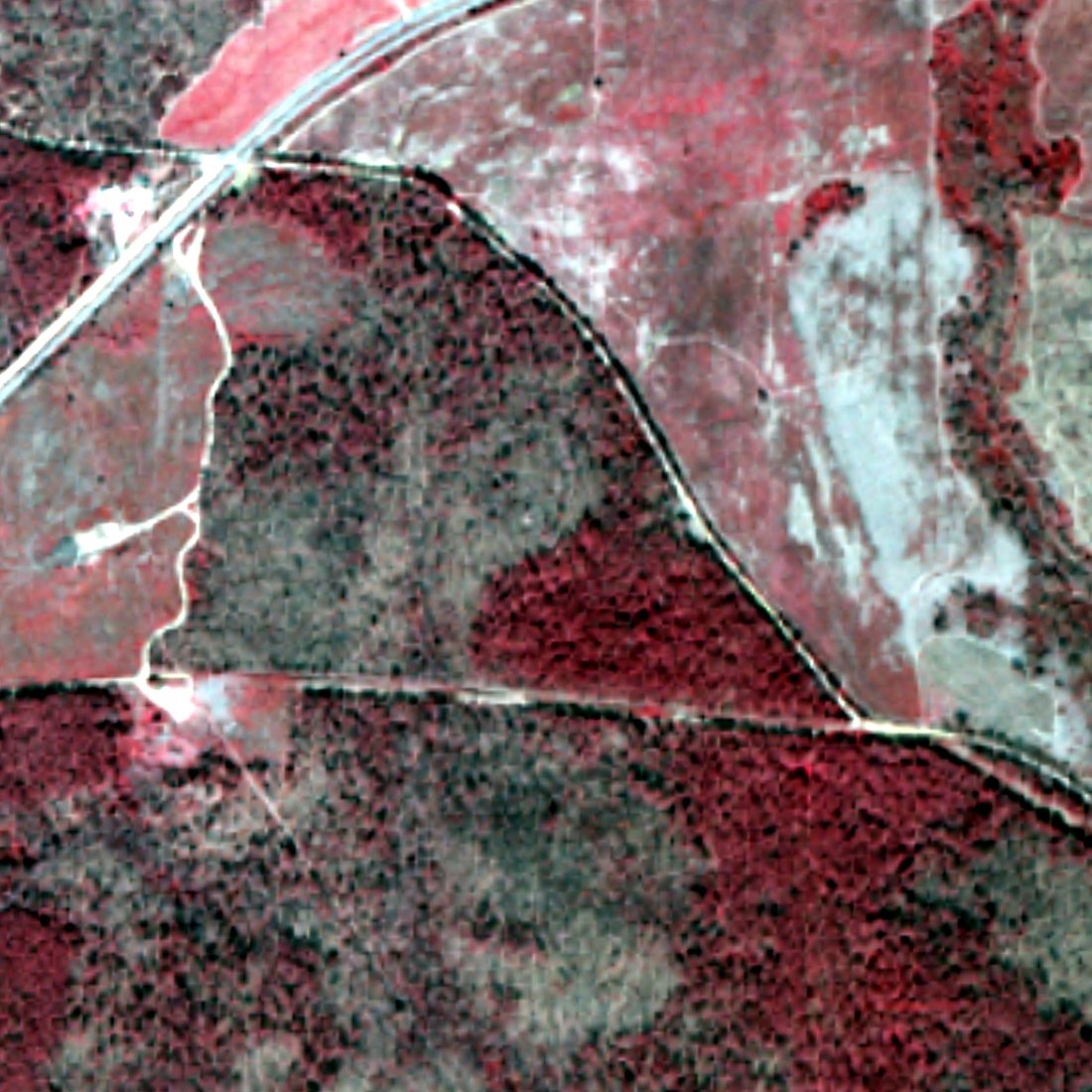

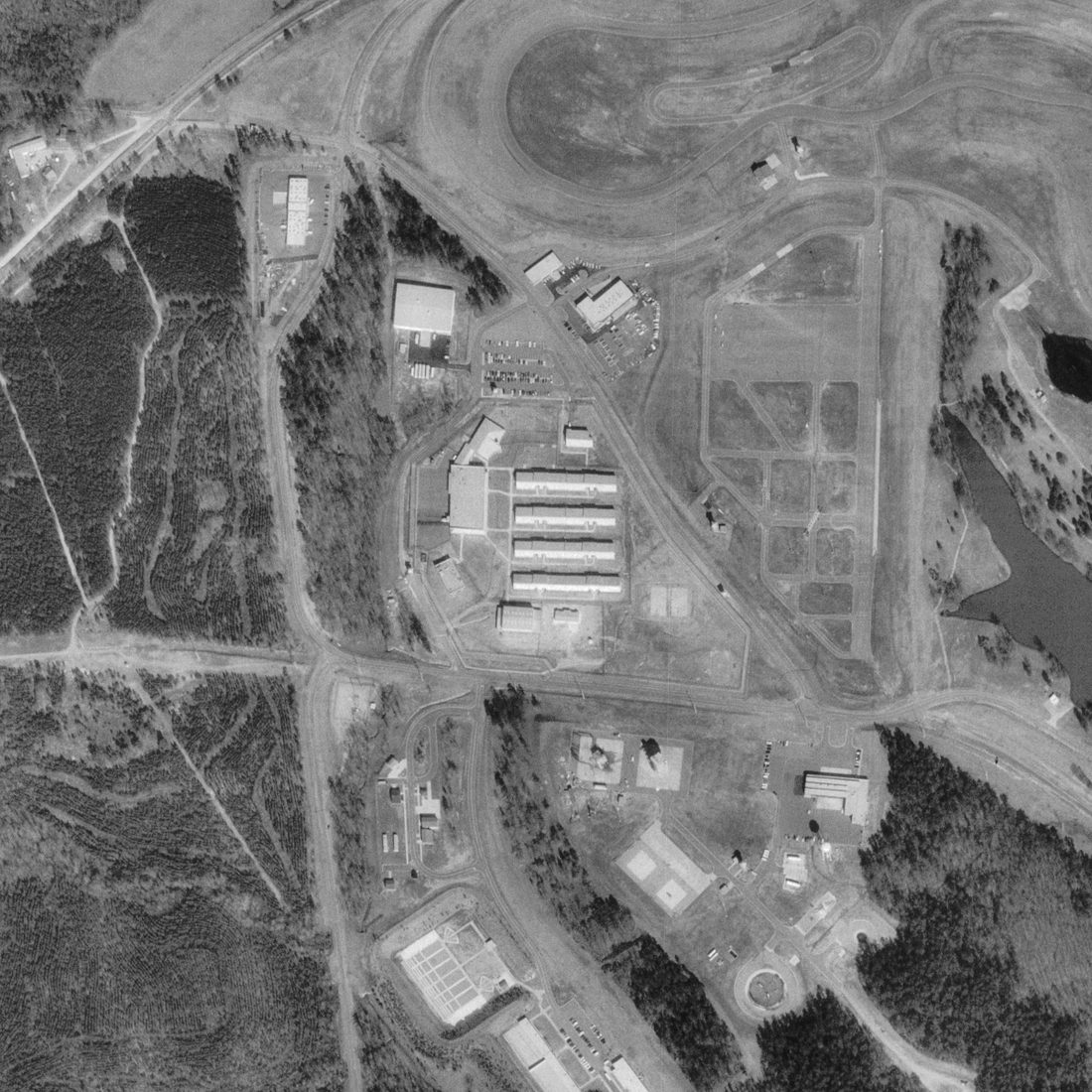
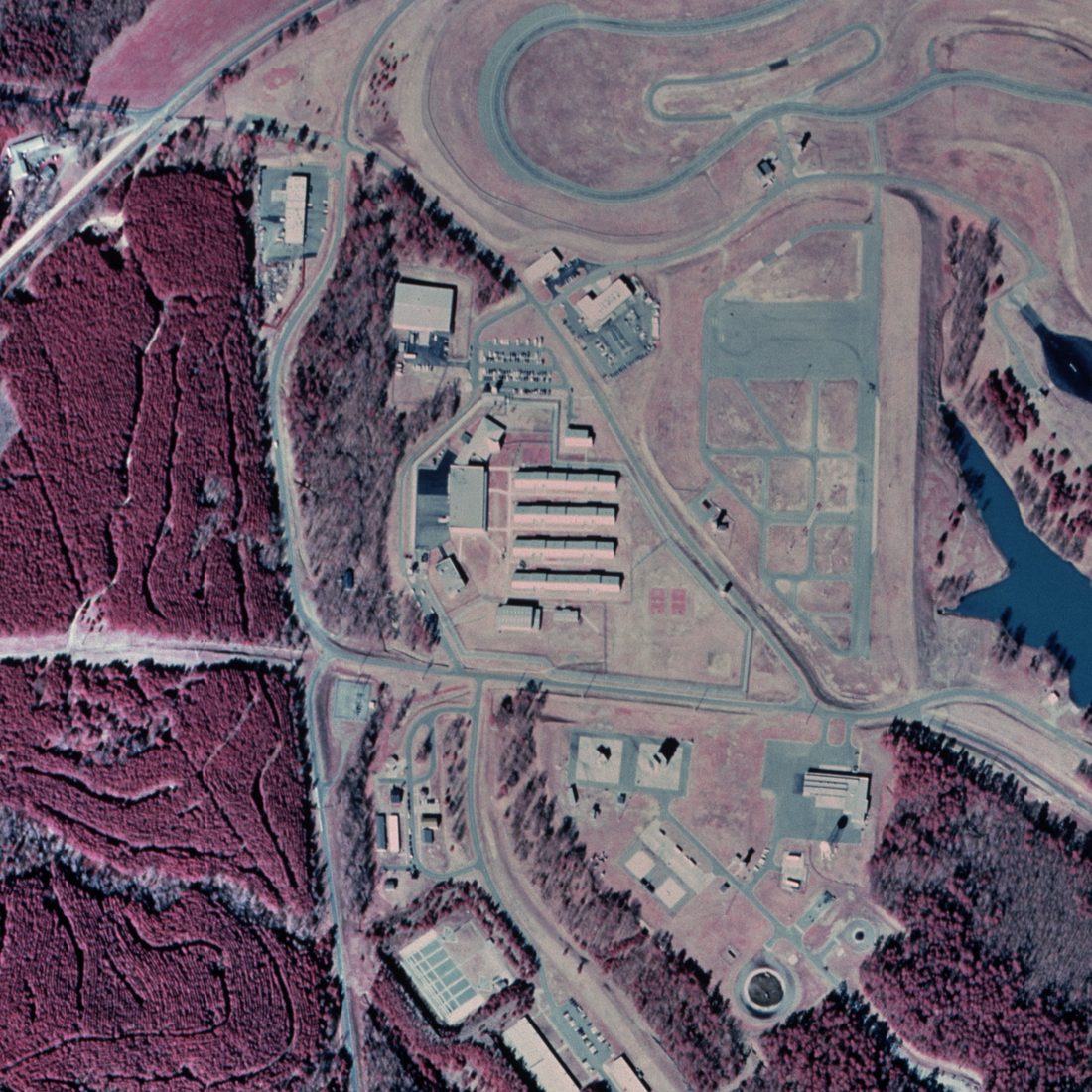
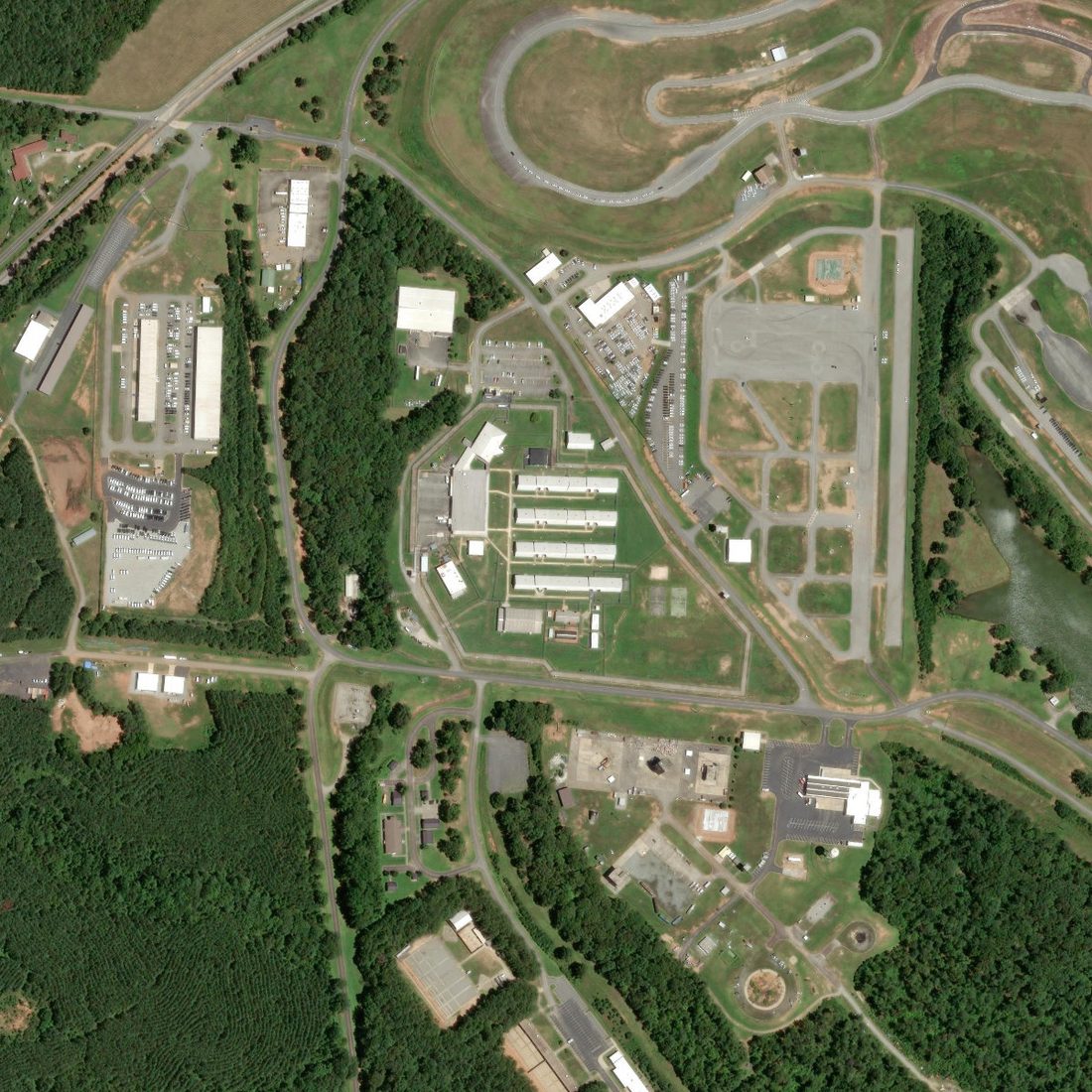
Each photo shows the same 1.2 km square, north up, so buildings line up from one year to the next. The older photos are U.S. Geological Survey aerial photographs. The photos from 1988 and earlier were taken on film and lined up with the later ones by their roads, so their positions are approximate. The early-1980s photos were taken from very high up and are less sharp. Select a photo to see it full size.