What’s Really Behind Georgia’s Prison Crisis?

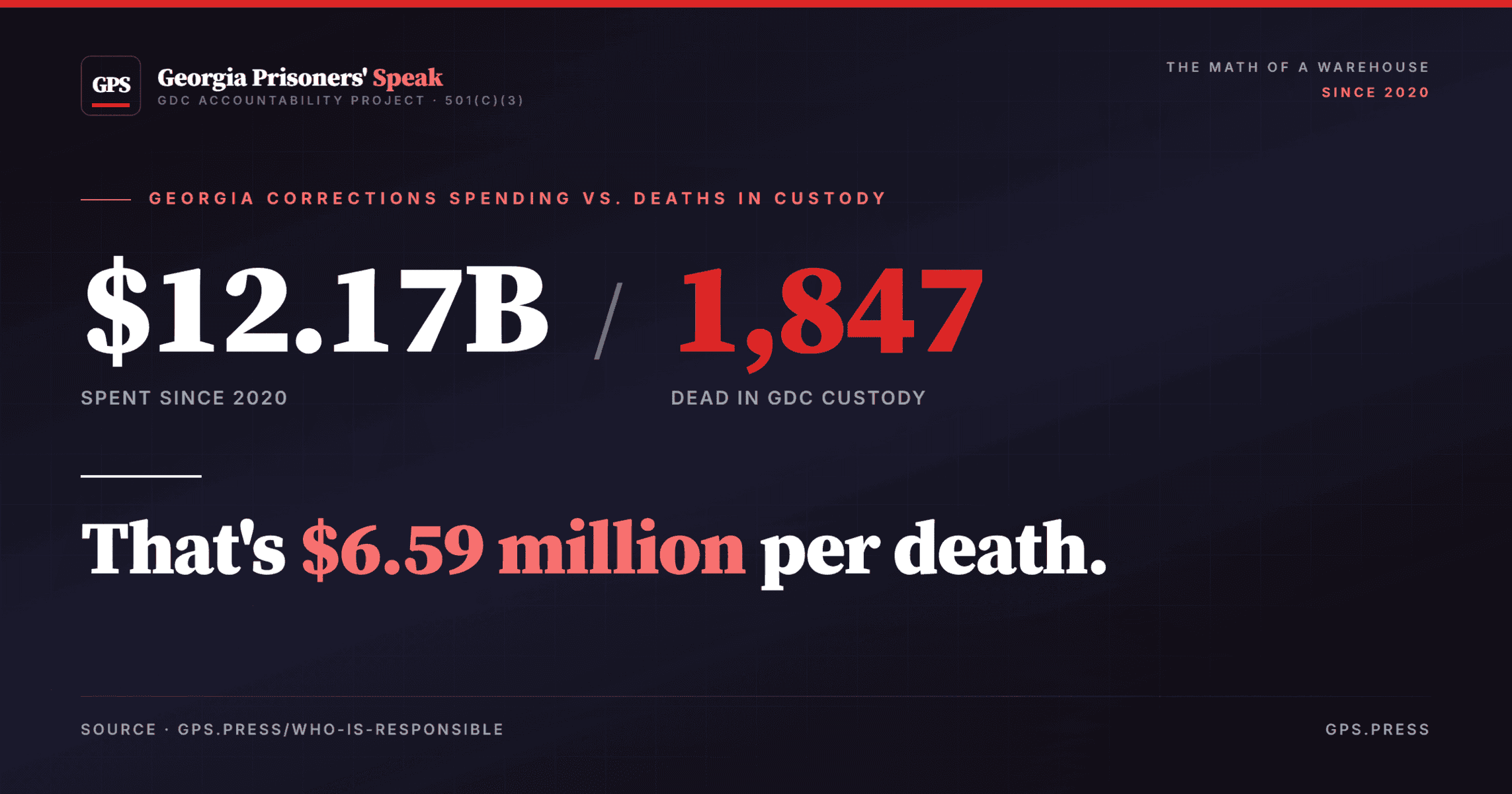
Georgia poured $2.4 billion in new money into its prisons since 2021 — on top of $12.2 billion spent since 2020 — and bought the deadliest years in the system’s history. Follow the money to see who really built the crisis, and why firing one commissioner fixes nothing.

Two Commanders Say Georgia Hides Its Prison Staffing Crisis

A large, mostly empty staff parking lot outside a state prison with a guard tower and razor-wire perimeter fence, illustrating the correctional-officer staffing collapse.

Two former GDC commanders — a CERT commander pushed out after a sworn warning, and a deputy warden of security who quit rather than comply — independently say Georgia hides its prison staffing collapse by manipulating the numbers it reports to the public.

The Punishment for Speaking Up in Georgia’s Prisons

In Georgia’s prisons, the surest way to become a target is to use the system as designed — file a grievance, sign a lawsuit, report an assault, talk to a lawyer. A review of Georgia Prisoners’ Speak’s own case files shows retaliation isn’t a series of accidents. It is a system, and its purpose is silence.

The Abuse Provision: Georgia’s Forgotten Prison Clause

Georgia’s constitution contains a clause no other state has: a ban on abusing any person “in being arrested, while under arrest, or in prison.” Written by Reconstruction delegates in 1868, cited only ten times since, it may be the most powerful untested legal tool against the prison crisis.

The Crisis Georgia’s Prison Leaders Call ‘Propaganda’

The DOJ found Georgia’s prisons unconstitutional. The state’s own consultant called it an emergency. A federal judge asked whether the department considers itself above the law. Georgia’s corrections leaders had a different word for the crisis: propaganda.

The Georgia Prison Commander Who Warned the State

Tyler Ryals rose to emergency-response commander across three Georgia prisons, then warned leadership in a sworn statement that conditions were unconstitutional. Twelve days later the state marked him “resigned.” Two months after that, the DOJ agreed with him.

Buried Alive: The Four-Year Deadline That Killed Habeas Corpus in Georgia

Georgia exempted death row from its four-year habeas deadline — the one group it gives lawyers and unlimited time. Everyone else gets four years, no attorney, and rationed law-library access to teach themselves a profession that takes seven years to learn. The deadline doesn’t reject wrongful-conviction claims. It buries them unheard.