The Crisis Georgia’s Prison Leaders Call ‘Propaganda’

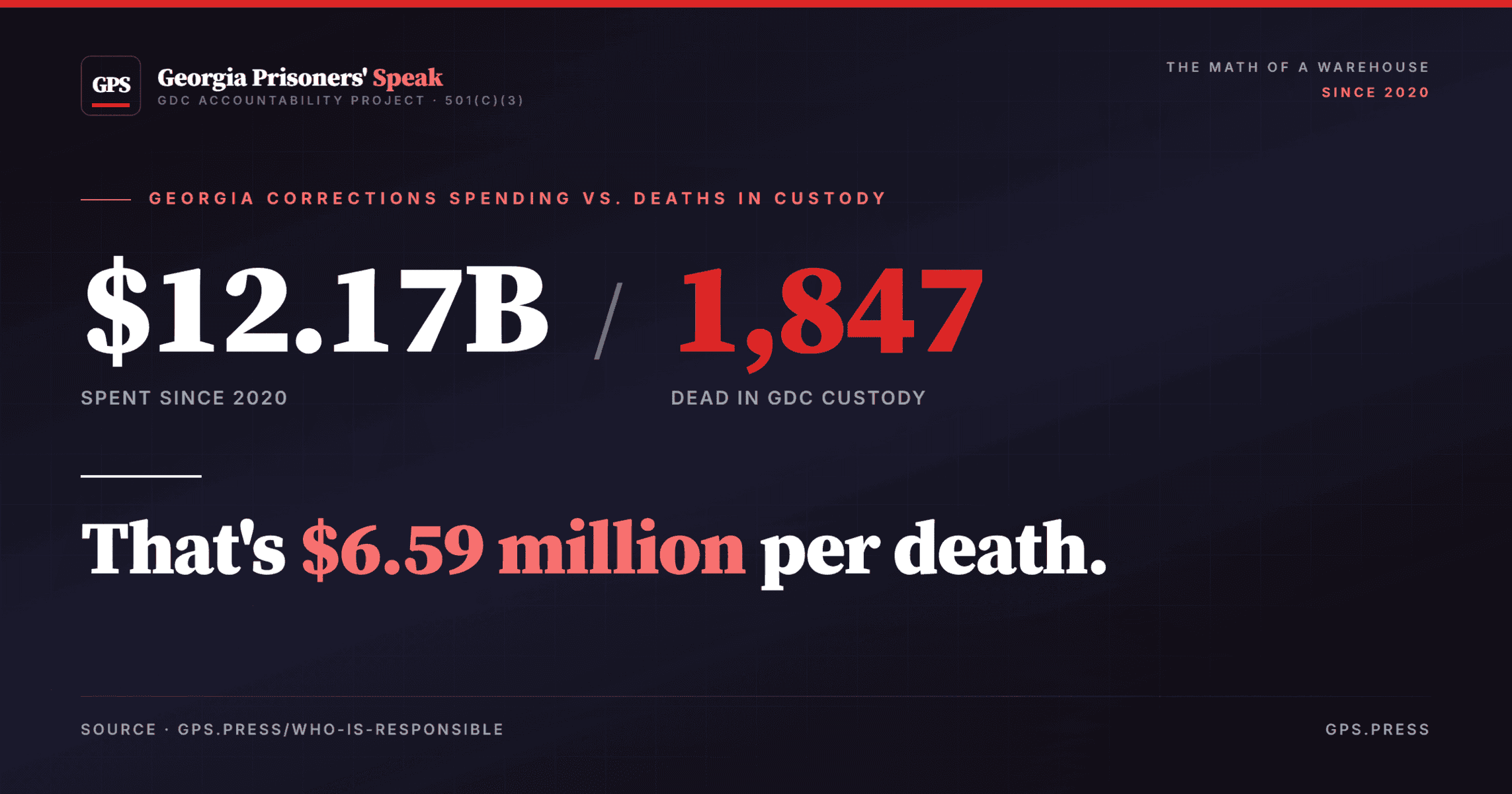
The DOJ found Georgia’s prisons unconstitutional. The state’s own consultant called it an emergency. A federal judge asked whether the department considers itself above the law. Georgia’s corrections leaders had a different word for the crisis: propaganda.

The Georgia Prison Commander Who Warned the State

Tyler Ryals rose to emergency-response commander across three Georgia prisons, then warned leadership in a sworn statement that conditions were unconstitutional. Twelve days later the state marked him “resigned.” Two months after that, the DOJ agreed with him.

Buried Alive: The Four-Year Deadline That Killed Habeas Corpus in Georgia

Georgia exempted death row from its four-year habeas deadline — the one group it gives lawyers and unlimited time. Everyone else gets four years, no attorney, and rationed law-library access to teach themselves a profession that takes seven years to learn. The deadline doesn’t reject wrongful-conviction claims. It buries them unheard.

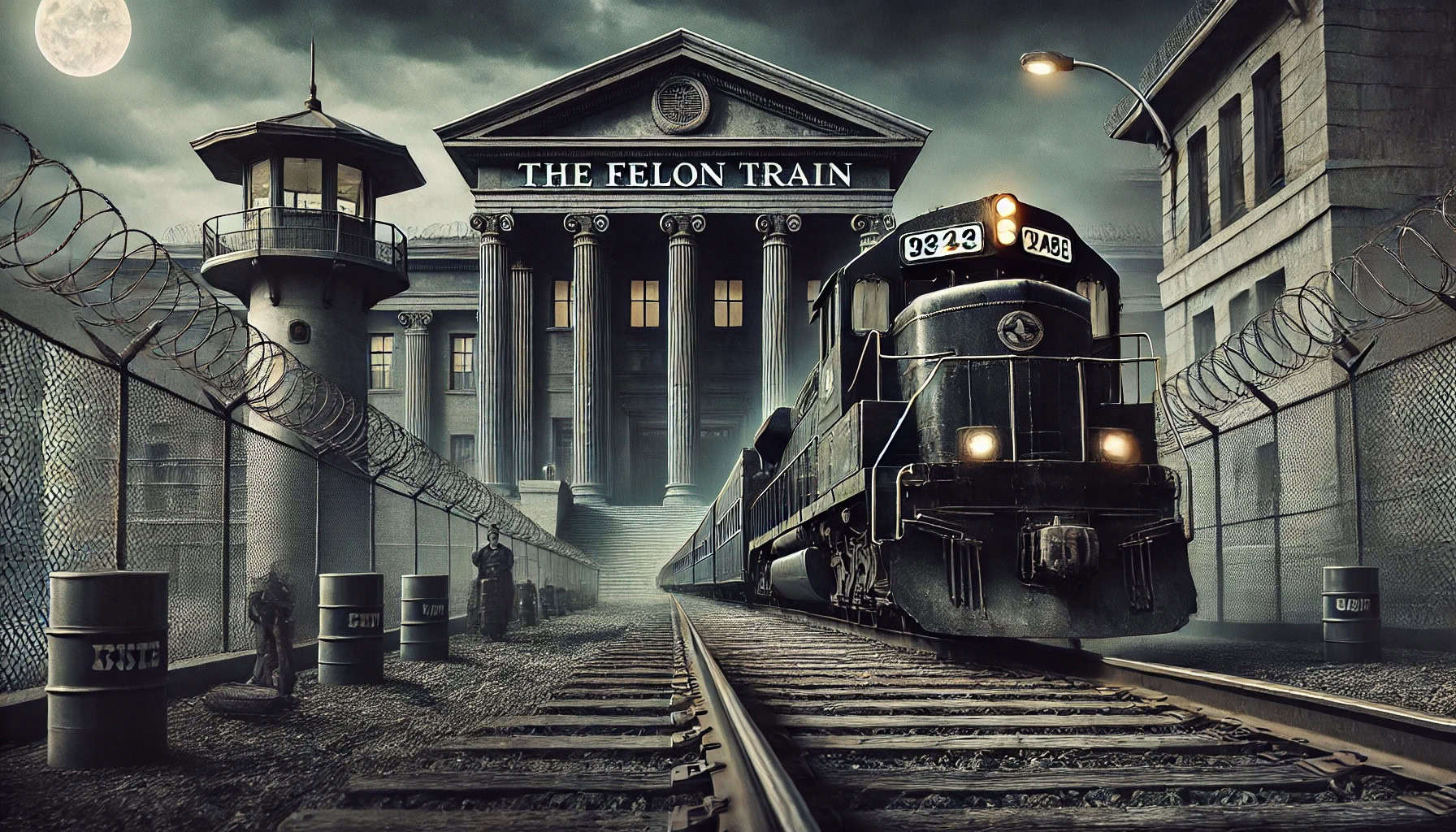
The Felon Train: How Georgia Turns Citizens into Convicts

“One in seven adults in Georgia is a felon. Do you really believe over a million people are just criminals? No. This system is rigged to keep the prisons full.”

Georgia’s justice system isn’t about justice—it’s about control. It’s about turning everyday people into lifelong convicts, feeding a machine built to profit from mass incarceration. People like Wayne Key, who spent a decade behind bars—not for violence, not for endangering others, but for the same substances now sold legally on every street corner.

The Felon Train isn’t just real—it’s running full speed, and once you’re on it, there’s almost no way off. Overcharging, forced plea deals, probation traps, and a parole board that answers to no one—it’s all designed to keep Georgia’s prisons full and its citizens powerless.

If you think this can’t happen to you, think again.
There’s Nothing Wrong with the Water

A corroded, rust-stained institutional faucet drips discolored water beside aging exposed pipes in a decaying state facility.

Georgia’s public-health agency confirmed Legionella in a South Georgia prison’s water. Thirty days later, the corrections department told the men living there — in writing — that no outbreak existed. The contamination, and the antibiotics, followed them to the next prison.

Reopen the Doors — Normalization

Every harm this series documented flows from one choice: Georgia warehouses people instead of preparing them to return. There is a proven alternative — normalization — that is humane, far cheaper, and may be legally required. The finale of End the Warehouse, and the blueprint out.